 China Trip
Entering China by Train from Laos: A Practical Guide to Xishuangbanna Station and the Mohan Border
Status check (verified 23 November 2026): The Mohan railway port handled its largest inbound foreign tour group since the China–Laos Railway opened — roughly 1,200–1,270 travellers from Thailand, Laos, Myanmar and Cambodia on 19–20 November 2026. Cross-border seat capacity on the international trains has risen from 250 to 420, and clearance at Mohan has been cut from 90 minutes to 52. Schedules and fares change with each timetable revision; confirm both on 12306 before you book.

On this page
The short answer

You can enter China by train from Laos. The train runs from Vientiane to Kunming South, and Xishuangbanna station (西双版纳站) in Jinghong is the first Chinese stop where you can get off — which makes it the practical "first stop in China" for anyone arriving overland from Southeast Asia.
Three things decide whether the trip works for you. Your passport number is printed on the ticket and checked at the gate. You will get off the train twice at the border, at Mohan on the Chinese side and Boten on the Lao side, roughly 52 minutes each. And the ASEAN group visa-free scheme that fills these trains applies to tour groups only — not to independent travellers.
Where Xishuangbanna station actually is
The station sits in Gasa township (嘎洒镇), on the airport road in Jinghong, next to the Man Nan Buddhist temple — about 5 to 6 km from the city centre and roughly the same distance from Xishuangbanna Gasa International Airport. It opened with the Yumo section of the China–Laos Railway, which began operating on 3 December 2021; international passenger trains followed on 13 April 2023.
In front of the station you will find bus K1 and a tourist shuttle. The shuttle reaches Gaozhuang Xishuangjing (告庄西双景), the riverside district where most visitors stay, in about 20 minutes for around 5 yuan. A taxi into town runs about 15–20 yuan. These are map and travel-guide figures — check the signs at the stand.
The station is not a sight in itself. Ten minutes and you have seen it. Its value is that it is the only station in southwest China where you can step off an international train and be in a Chinese city without taking a flight.
Buying the ticket: your passport is the ticket
This is where most independent travellers get caught out. The international trains are sold as international through tickets, not domestic ones.
You buy with your passport, or your passport number, and the number is recorded on the ticket and on the travel record. It is checked at the station and again on board. If the number does not match, the ticket is void and you will not be allowed to board. Tickets cannot be transferred or altered. Sales generally open about one month before departure.
Two pairs of trains cover the route:
- D87 — Kunming South 08:08, Xishuangbanna 11:24 (departs 11:30), Mohan 12:31–13:23, Vientiane 17:44.
- D88 — the return working: Mohan 13:19–14:11, Xishuangbanna 15:10 (departs 15:16), Kunming South 18:34.
Fares for Kunming South–Vientiane are quoted at 542 yuan second class and 864 yuan first class on third-party timetable sites. There is no sleeper — these are daytime trains — so the "overnight train saves a hotel night" plan does not apply here.
The 52 minutes at Mohan (and 52 at Boten)
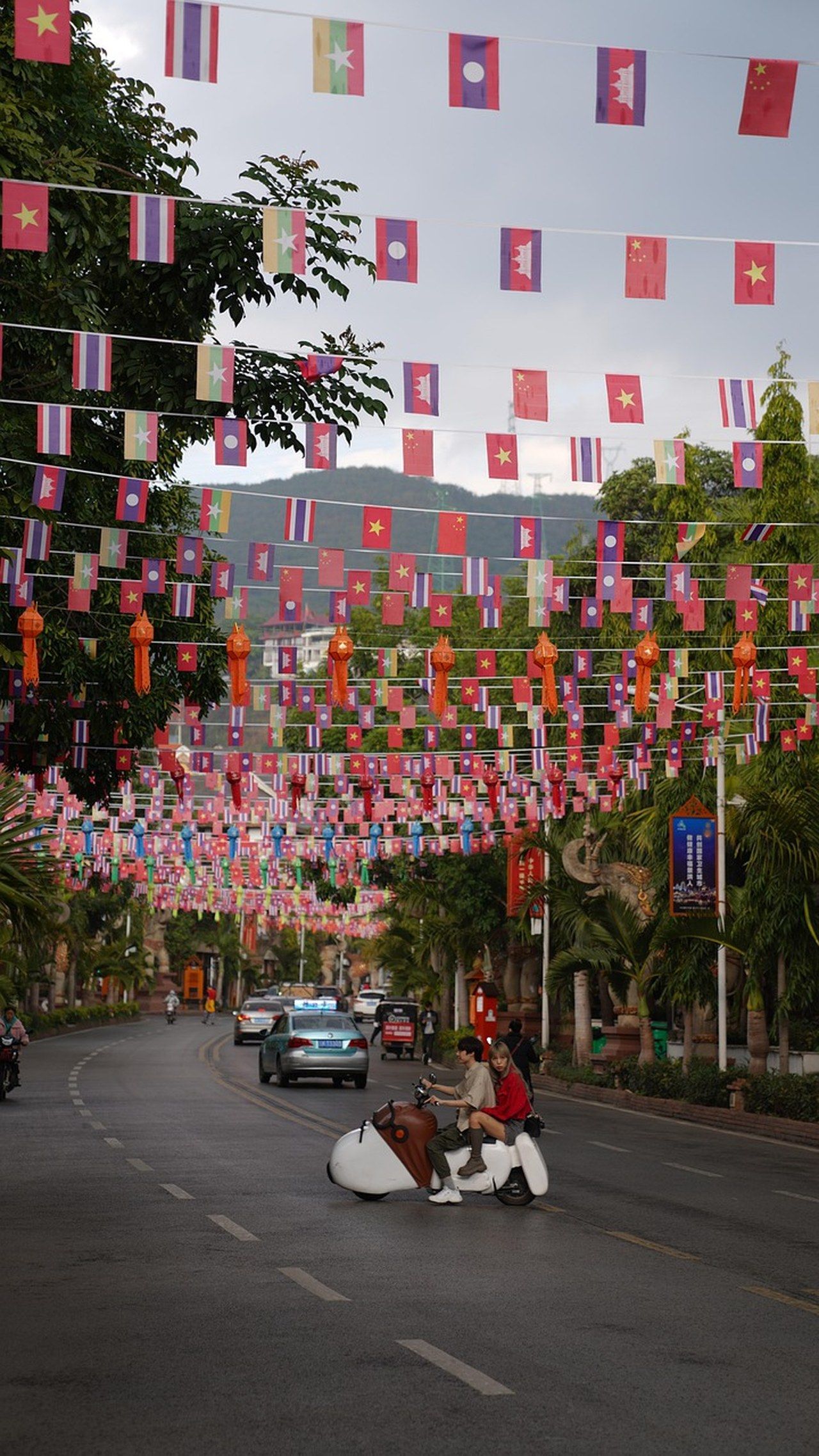
The border is handled as two separate checks in two countries. The train stops at Mohan on the Chinese side; everyone gets off, clears Chinese formalities, and reboards. It then crosses to Boten on the Lao side for a second stop of roughly the same length. Together that is close to two hours, all in daylight.
Mohan border inspection has been optimising exactly this. For the November group arrivals it ran pre-registration and pre-screening for the whole group, moved the foreigner arrival-card filling forward onto the train, opened dedicated lanes, and fielded officers speaking Lao, Thai and English. The published result — clearance down from 90 to 52 minutes — is a group-processing benchmark; independent travellers usually take longer.
Two practical notes. Keep your bags with you — you get off twice, and a large checked suitcase becomes a liability. And do not book a tight onward connection: the train reaches Xishuangbanna at 11:24, and you still have to walk out of the station.
After you step off: 5 km, and 96 km
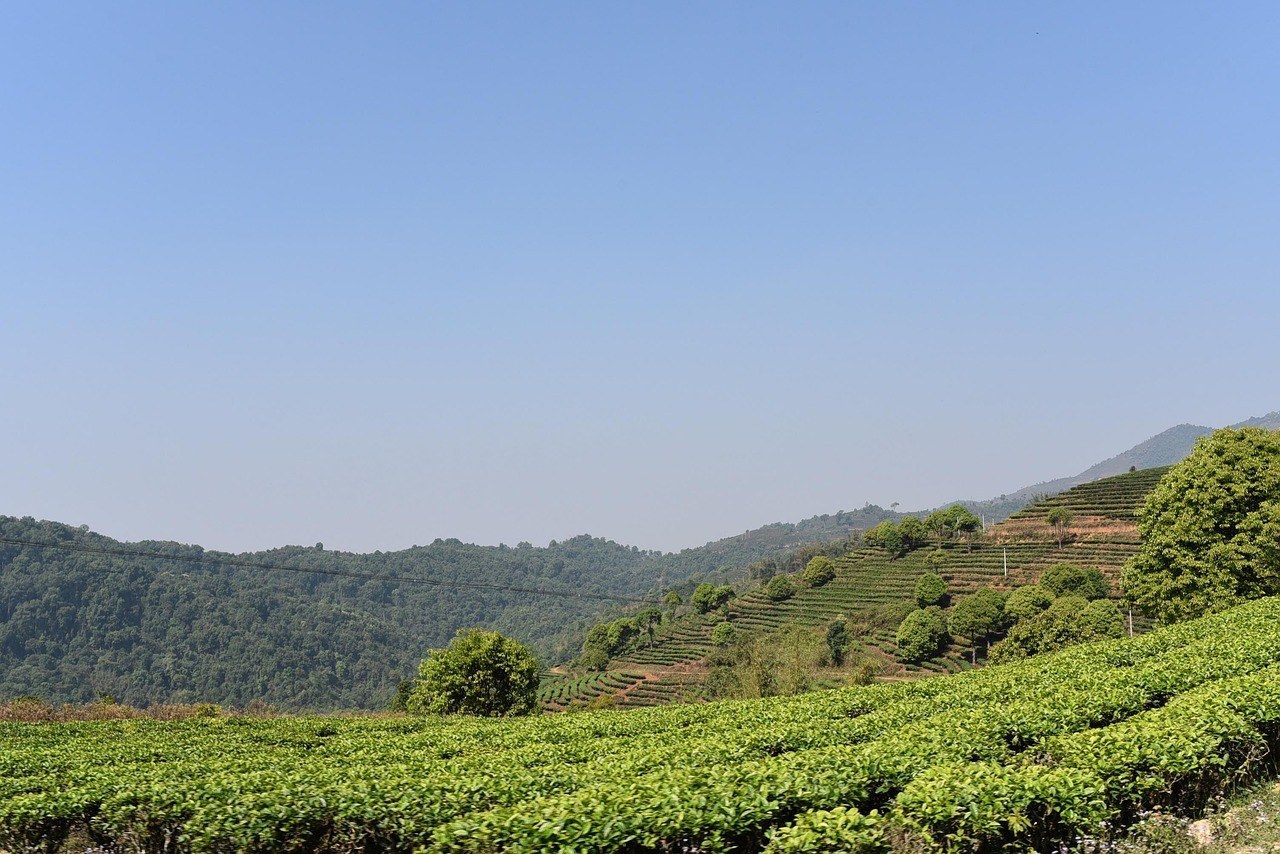
Jinghong's sights sort themselves into three distance bands, and the order matters more than the list.
Within 5 km. Gaozhuang Xishuangjing is the base: open around the clock, with the riverside night market taking over after dark. Manting Park (曼听公园), the old royal garden, charges 40 yuan and opens 08:00–18:00, last entry 17:00. Mengle Great Buddha Temple (勐泐大佛寺) sits on a hill to the south, 60 yuan, with a view over the whole basin.
6–40 km. Primeval Forest Park (原始森林公园) is about 6 km from the station — 15 minutes by taxi — and runs a scheduled peacock release; entry including the shuttle is around 80 yuan. Wild Elephant Valley (野象谷) is 36 km out at 85 yuan. Either one takes half a day.
96 km. The Xishuangbanna Tropical Botanical Garden of the Chinese Academy of Sciences, at Menglun, is roughly 1 hour 15 minutes to 1 hour 30 minutes by road, with a rainforest east section and an ornamental west section. Give it a full day.
My suggested order: city band on arrival day, near band on day two, far band on a day you are not catching a train. Doing it the other way round — botanical garden straight off the train — tends to collapse in the heat and humidity.
Attraction prices above come from platform listings; check the ticket window on the day.
The visa-free rule that only applies to tour groups
This is the part most likely to be misread, so here is the National Immigration Administration's wording, not a paraphrase.
Tour groups from ten ASEAN states — Brunei, Cambodia, Indonesia, Laos, Malaysia, Myanmar, the Philippines, Singapore, Thailand and Vietnam — may enter and exit China visa-free through Xishuangbanna Gasa International Airport, Mohan railway port or Mohan highway port, provided the group has two or more members holding ordinary passports, is organised and received by a travel agency registered in China, and travels in and out as a group. They may stay within Xishuangbanna Dai Autonomous Prefecture for up to six days, counted from midnight of the day after entry.
Four words carry the weight: as a group. This is not individual visa-free entry for ASEAN citizens, and it does not let you continue to Dali, Lijiang or Kunming on the same arrangement. If you want to travel independently, you are back to the ordinary rules — a visa, or one of the separate schemes such as the 240-hour transit visa-free policy, which requires an onward ticket to a third country and has its own list of eligible nationalities.
Those lists change. Check the National Immigration Administration site and China's consular service site before you fly, and treat any "visa-free countries" list on a travel blog as out of date until proven otherwise.
Practical verdict
Worth it? Yes, if you treat the station as a gateway rather than a destination. As a way of moving from Laos into China it is cheap, daylight-only and far more comfortable than a long-distance bus.
How long? Three days minimum: one for the city band, one for the near band, one for the far band or as buffer. Two days means choosing between the rainforest and the botanical garden.
When? November to April is the dry season — cooler, less rain, and the most comfortable window for this route. May to October brings afternoon downpours; the forest is greener but your schedule needs slack.
The mistake to avoid. Assuming that "ASEAN visa-free" applies to you as an individual. Group visa-free, transit visa-free and unilateral visa-free entry are three different schemes with three different lists.
Sources
- Yunnan Net, 23 November 2026 — largest inbound foreign tour group on the China–Laos Railway, 19–20 November; port and train statistics.
- Yunnan Net (Xishuangbanna channel), 23 November 2026 — 1,200-strong Mekong–Lancang group in four batches, six-day ASEAN group visa-free entry, three-night itinerary.
- National Immigration Administration, Regional visa-free entry policies for foreign nationals; Shanghai Foreign Affairs Office FAQ, 15 October 2026 — ASEAN group scheme conditions.
- China Daily and CNR, 22 November 2026 — Kunming Changshui airport China–Thailand traffic, arrival-card pre-declaration.
- Published D87/D88 and D86/D84 timetables and fares (third-party railway references); re-check on 12306.