Heihe Border Market: A Dawn Street Where Half the Shoppers Crossed a River
Status check (verified 2026-10-22): the market runs daily, roughly 05:00–08:30, on Wenhua Street in Aihui district. No ticket, no booking. The cross-border cable car is structurally complete but not in service — do not plan around it.
On this page
- Why this is worth the trip
- What the market actually is
- The river, and the four ways across
- What is nearby
- Getting there
- Practical notes
- FAQ
- What time is the Heihe border market?
- Do I need a ticket?
- Can I cross to Blagoveshchensk from Heihe?
- Is the cross-border cable car open?
- How do I get to Heihe from Harbin?
- Is one morning enough?
- When is the best season?
- Check dates and availability
Heihe is a small Chinese city on the southern bank of the Amur, which the Chinese call the Heilongjiang. The river here is only a few hundred metres wide. On the far bank is Blagoveshchensk, the capital of Russia's Amur Oblast — a city of over 200,000 people whose residents can, and do, cross for breakfast.
That is the strange and specific thing about Heihe: this is not a border you look at through a fence. It is a border people commute across. By five in the morning, the food street behind the riverfront is already running, and a good half of the customers have come from the other side.
Why this is worth the trip
Most of China's border towns are places you visit to see a line on a map. Heihe is a place you visit to see what happens when the line is porous.
The economics are blunt. According to local traders, the same household goods cost roughly half or less on this side. Residents of Blagoveshchensk come over for bedding, small appliances, winter clothing — not souvenirs. After the market closes, the flow moves to the shopping centres inland. It is a working trade route with a food street attached, not a tourist attraction with a market attached.
The volume is real and documented. Heihe port recorded more than one million border crossings by 14 September 2026, its fastest run to that figure since the port opened. Province-wide, Heilongjiang's ports had processed 2.908 million crossings by 14 October 2026, with Russian nationals forming the clear majority — Russian arrivals into the province reached 535,000, up 84% year on year, and three ports accounted for 79.2% of that traffic.
The policy backdrop changed twice in two years. China began a visa-free trial for Russian ordinary passports on 15 September 2025; Russia reciprocated in December; and in 2026 both sides extended the arrangement to 31 December 2027, with a 30-day stay per entry. Thirty days is the detail that matters. It converted a day-trip border into a corridor — people now come across and keep going, to Harbin, to Wudalianchi, inland.
What the market actually is
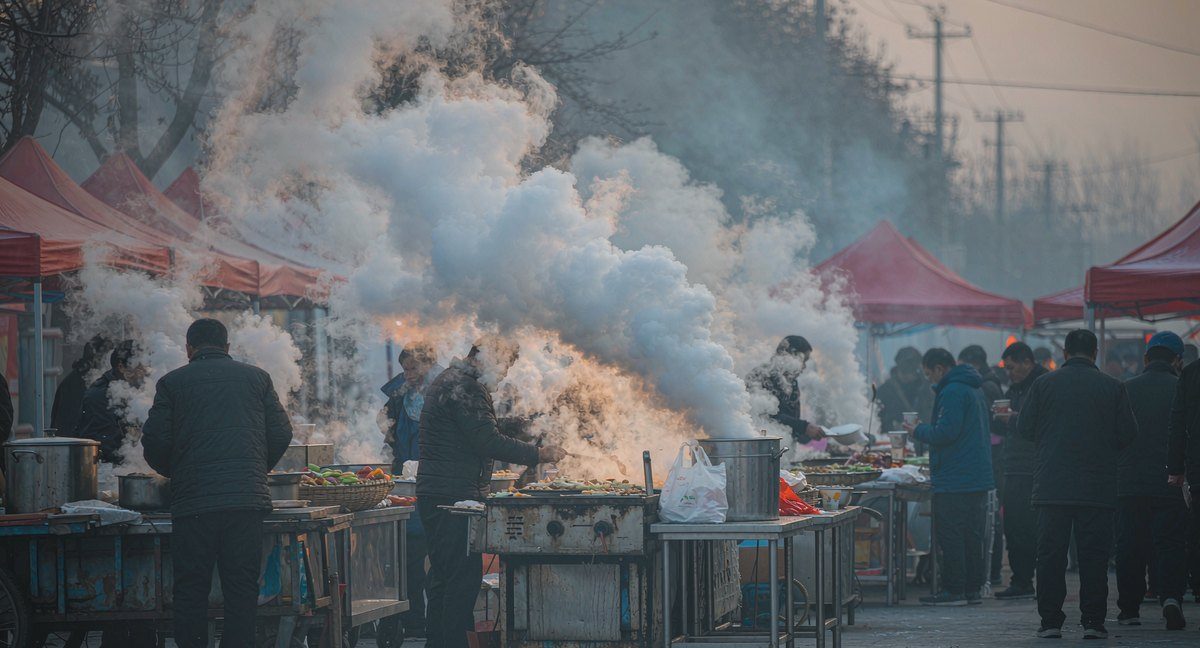
Six to nine is the honest window. Before six, stalls are still setting up. After eight-thirty, the pack-down begins and the street empties fast.
Expect a low, wide street with metal griddles, soy milk buckets, steamers and gas burners, running in the cold blue light before sunrise. In October and November there is often frost on the pavement and the steam reads as fog.
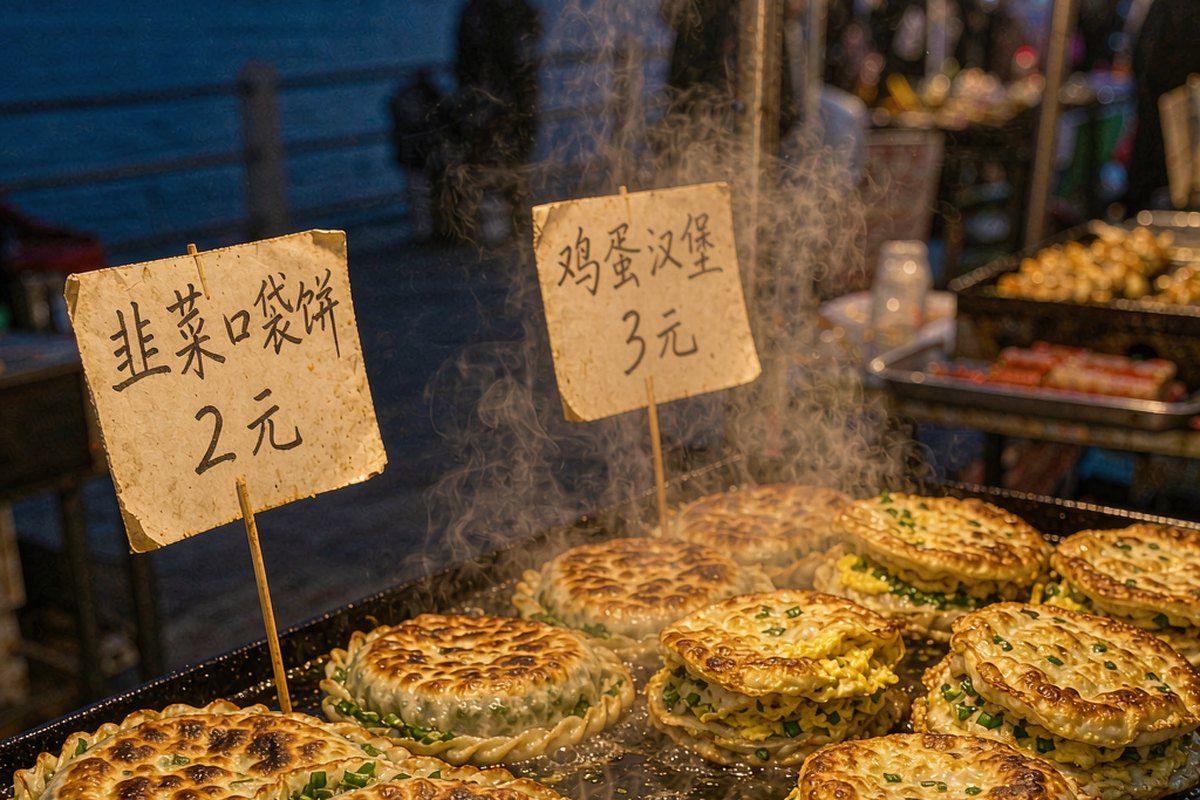
The signature item is the chive pocket — a flat, pan-fried turnover of chives and egg. Russian visitors have their own name for it: Chinese pizza. Alongside it you will find egg burgers, steamed buns, soy milk, millet porridge and candied hawthorn sticks. Prices are quoted in yuan, mostly single-digit figures, and change hands as cash or a scanned code.
The signage is the giveaway. Many stalls print prices in two lines, Chinese and Russian. Vendors quote in Russian without switching language first, because they have been doing it every morning for years.
The river, and the four ways across
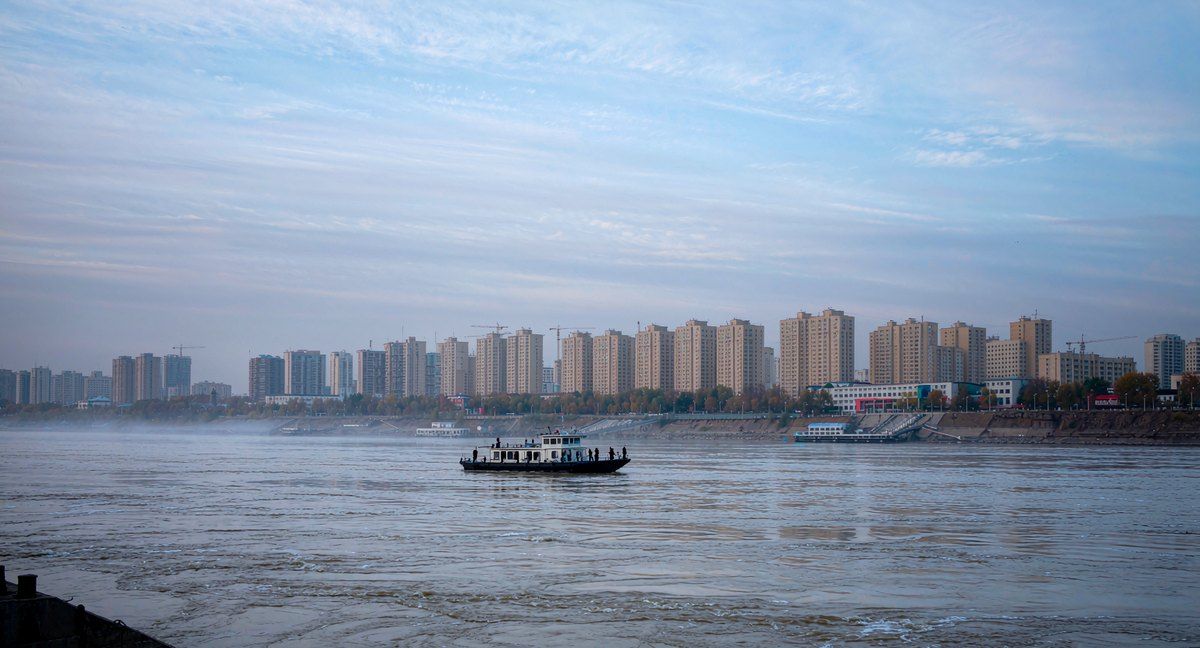
For a visitor, the river is scenery. For the people on it, it is a commute with a seasonal timetable — and this is the detail almost no English-language guide carries:
| Season | Crossing |
|---|---|
| Open water | Passenger ferry |
| Ice floe period | Hovercraft |
| Deep freeze | Vehicles on an ice road |
| All year | The road bridge, 365 days, 16 hours a day |
The road bridge is the reason the pattern changed. Before it, a freeze or a thaw could shut the crossing entirely; now there is a year-round option, and the seasonal craft handle the shoulder weeks when the ice is neither solid nor gone.
The cable car is not running. A cross-border cableway between the two cities finished its main structure in August 2026: a six-to-eight-minute single crossing, designed for 2.6 million passengers a year. It is widely described online as open. It is not — it still has to clear inspection and trial operation. If you are planning a trip around riding it, you will be disappointed, and the error is coming from sources that copied each other.
What is nearby
The market is one street. The rest of the day needs a plan.
The riverside park runs along the embankment facing Blagoveshchensk and is where you get the clearest view of the far bank — the signboards, the buildings, the distance. It is free and it takes twenty minutes.
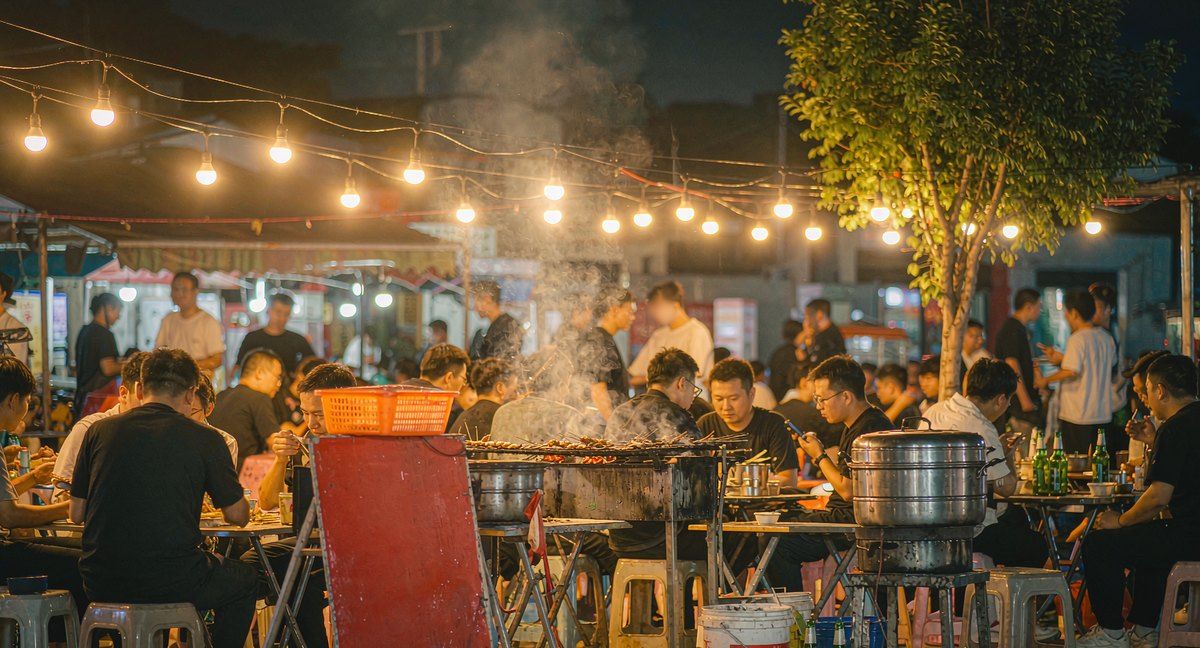
The night market opens in the warmer months and is a different animal: a long row of skewer stalls and games that drew 30,000 people and 1 million yuan in takings on its first night of the 2026 season. If you are there between spring and early autumn, it is the evening counterpart to the dawn street.
Wudalianchi, two to three hours away by road, is a UNESCO-listed volcanic field with cold mineral springs. It is the standard add-on and it justifies a second night.
Aihui, the old district north of the city centre, holds the treaty history — this is where the 1858 Treaty of Aihui was signed — plus a museum and a rebuilt garrison town.
Getting there
By air. Heihe has its own airport, Aihui (HEK), with domestic flights from Harbin and Beijing. Harbin is the usual gateway: around two hours in the air.
By rail. Overnight and daytime trains run from Harbin. It is a long ride — plan on twelve hours or more from Harbin and considerably longer from Beijing, which is why most visitors fly.
Getting into Heihe. Chinese visa policy for your nationality is the thing to check first, and it changes. The visa-free arrangements above apply specifically to Russian ordinary passports — a fact that gets muddled in English coverage. If you hold a European, North American or Australasian passport, your entry route is your own country's current arrangement with China, and the 240-hour transit policy has its own list of eligible ports. Heihe is a land border crossing, not an international air hub; the usual pattern is to enter China at a major airport and fly domestically to Heihe.
In town. The market street is walkable from the central hotels. Taxis are cheap and metered; ride-hailing works. There is no need for a car unless you are heading to Wudalianchi or Aihui.
Practical notes
- Go early, and go hungry. By nine the street is a street again. The food is the point; arrive before the light does.
- Bring cash or set up a payment app. Vendors take mobile payment readily and cash without complaint; foreign cards are not a market-level payment method.
- Dress for a river valley in the cold season. October mornings here are near freezing and the wind comes off the water.
- Do not cross the river on a whim. Entering Russia requires Russian entry permission on your own passport; the visa-free flow described above is one-directional policy for Russian citizens, not a general border-opening.
- Check the cable car status on the day, not on a travel blog. As of October 2026 it is complete and closed.
- English is thin. Beyond hotels, expect to rely on a translation app. Vendors dealing with Russian customers all day are practised at hand signals and calculators.
FAQ
What time is the Heihe border market?
Roughly 05:00 to 08:30, daily, on Wenhua Street in Aihui district. The busiest and best window is six to eight in the morning.
Do I need a ticket?
No. It is an open street market with no entry charge and no booking.
Can I cross to Blagoveshchensk from Heihe?
Not visa-free unless you hold a Russian passport covered by the current arrangement. The 30-day visa-free entry applies to Russian ordinary passports entering China, not the reverse, and not to other nationalities. Check Russian entry requirements for your own passport before planning it.
Is the cross-border cable car open?
No. The main structure was completed in August 2026, but it has not entered service and still requires inspection and trial operation.
How do I get to Heihe from Harbin?
Flights take about two hours from Harbin to Heihe Aihui airport. Trains take twelve hours or more. Flying is the practical choice.
Is one morning enough?
For the market, yes. For the trip, no — pair it with the riverside park and either Wudalianchi or the Aihui history sites, or you will have travelled a long way for two hours.
When is the best season?
Late September to early November for the cold-morning steam and the autumn colour, and June to August for the night market. Midwinter is dramatic but the river crossing shifts to ice roads.
Some links in this section are affiliate links — we may earn a commission if you book through them, at no extra cost to you. Affiliate disclosure.
Check dates and availability
Heihe has no timed entry and nothing to book for the market itself. What is worth arranging ahead is the domestic flight from Harbin, which fills in the cold season, and any multi-day Heilongjiang itinerary that includes the volcanic field at Wudalianchi:
👉 Check Heilongjiang and Harbin tour options
Disclosure: This article includes an affiliate link. I may earn a commission if you book through it, at no extra cost to you. This guide describes publicly listed information only — I have not personally taken these tours.
Image sources: AI-generated illustrative images, not on-site photographs. See the caption notes for what each shows.