 China Trip
Wuxi's Canal District: The City Foreign Groups Now Sleep In
Status check (verified 2026-11-17): Wuxi is no longer only a stop between Shanghai and Suzhou. The city's inbound group traffic rose about 30% in the first ten months of 2026, and the change that matters for a traveller is the one underneath it: groups are now sleeping here, not day-tripping through. Plan two nights if the canal district is the point of the trip. One night is enough only if Wuxi is a stop on the way somewhere else.
On this page
Why Wuxi is turning up in itineraries that used to skip it
The numbers come from the city's own tourism group, reported by Wuxi Daily on 15 November 2026, and they describe a shift in kind rather than in volume.
Between January and October the city received about 50,200 inbound group visitors, up roughly 30% year on year. That figure is group traffic, not the city's total inbound arrivals, and the two should not be used interchangeably — but the composition is more interesting than the total.
Foreign individual travellers buying scenic-area tickets through Ctrip reached 5,500, a channel that was, in the operators' words, basically zero a year earlier. That is the number to watch, because independent travellers behave differently from coaches: they choose where to sleep, and they stay longer when the evening is worth staying for.
The source-market mix moved too. European and American groups used to account for 1% to 2% of inbound visitors; the municipal group now puts them at up to 15%. On 2 November a 253-person group from Senegal, Ghana, Côte d'Ivoire and neighbouring countries stayed three nights in the city. On 9 November a 41-person Korean cultural exchange group followed.
Treat the percentages as a single operator's figure, because that is what they are. The overnight pattern is the part that survives the caveat: a coach that stays three nights is a coach whose passengers eat three dinners, and that is a decision made in an itinerary, not in a press release.
What the canal district actually is
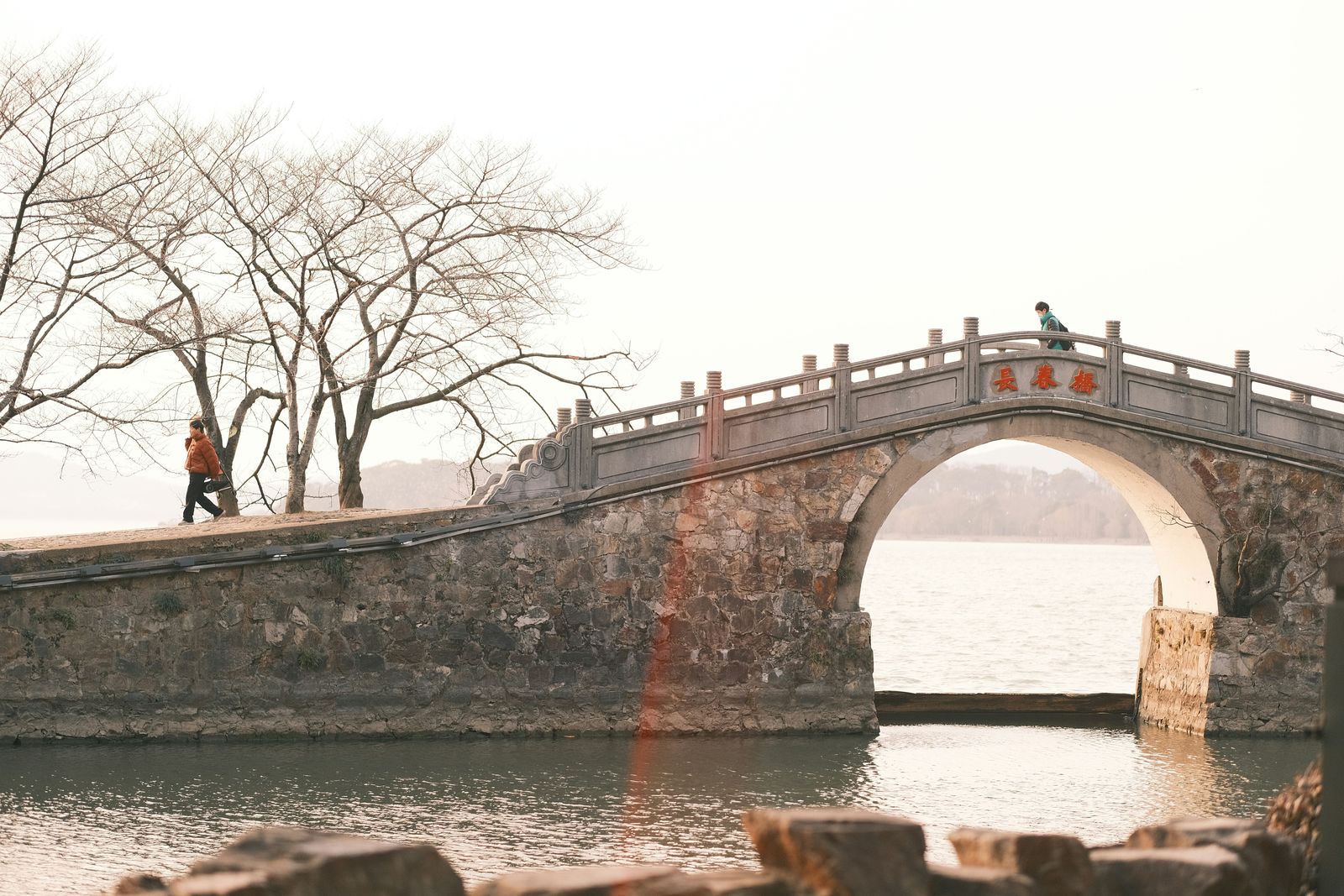
Wuxi's draw is not a garden and not a temple. It is a stretch of the Grand Canal — the waterway that carried the grain tax north for more than a thousand years, and which UNESCO inscribed in 2014 — running through a district that kept its scale.
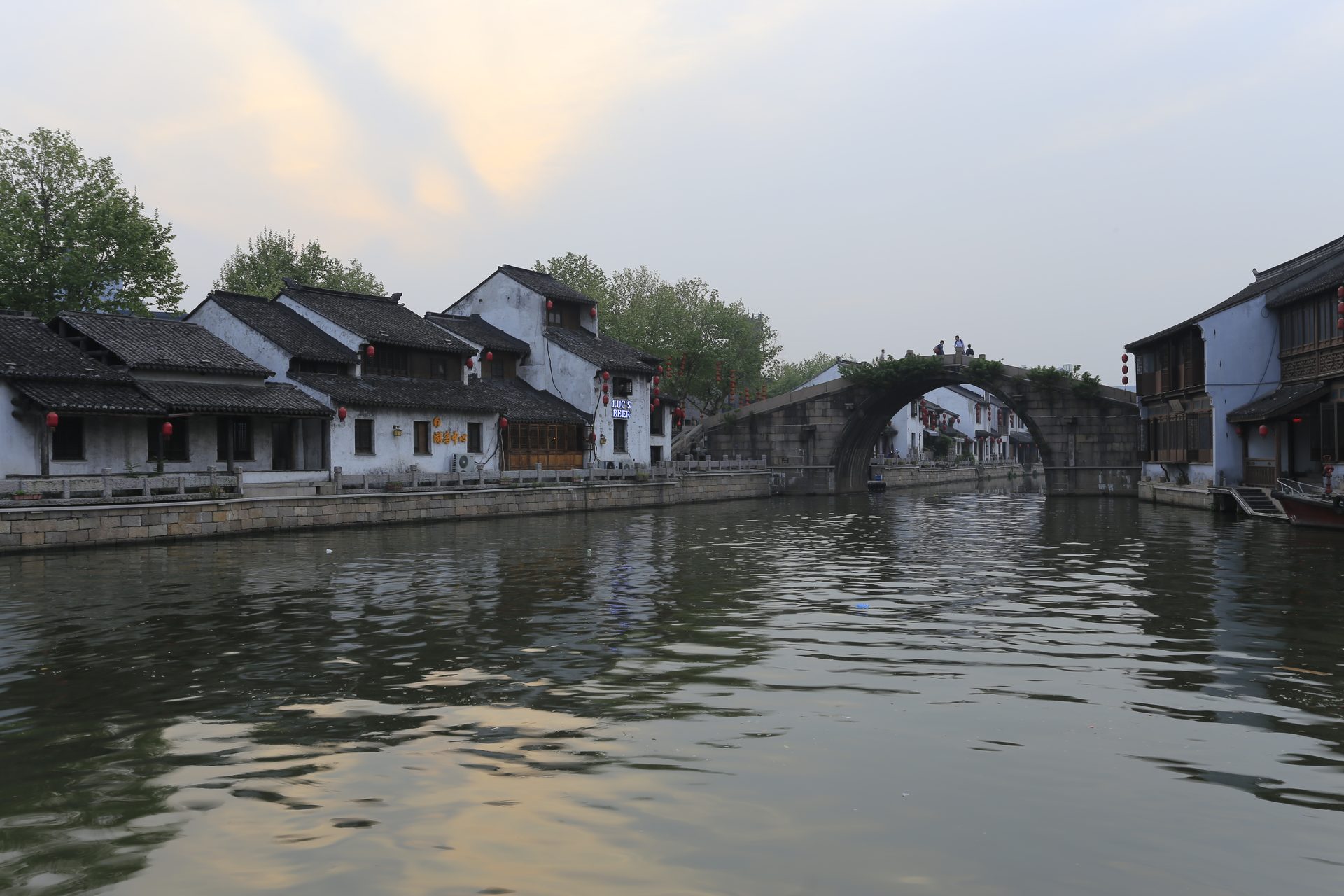
The Qingming Bridge historical district follows Nanchang Street on the south bank and South Xiatang on the north. The bridge itself, a single stone arch of the Ming Wanli era, still carries foot traffic, and the lanes on both sides are whitewashed houses with black tile roofs, red lanterns and shopfronts at ground level.
This is the part worth understanding before you book anything: the district is a working street, not a walled attraction. You walk into it from an ordinary road, past a metro exit and a bank, and the canal appears between the buildings. There is no gate, no turnstile and no ticket to enter.
The evening is when the geometry works. Lanterns come on, the water turns matt, and the bridge frames the far bank. If you are in Wuxi for one evening, this is where it should be spent — and it is the reason the cruise sells out at dusk rather than at noon.
What is free, and what you actually pay for
Walking the district costs nothing. That is genuinely true, and it is also where most visitors spend money they did not plan to.
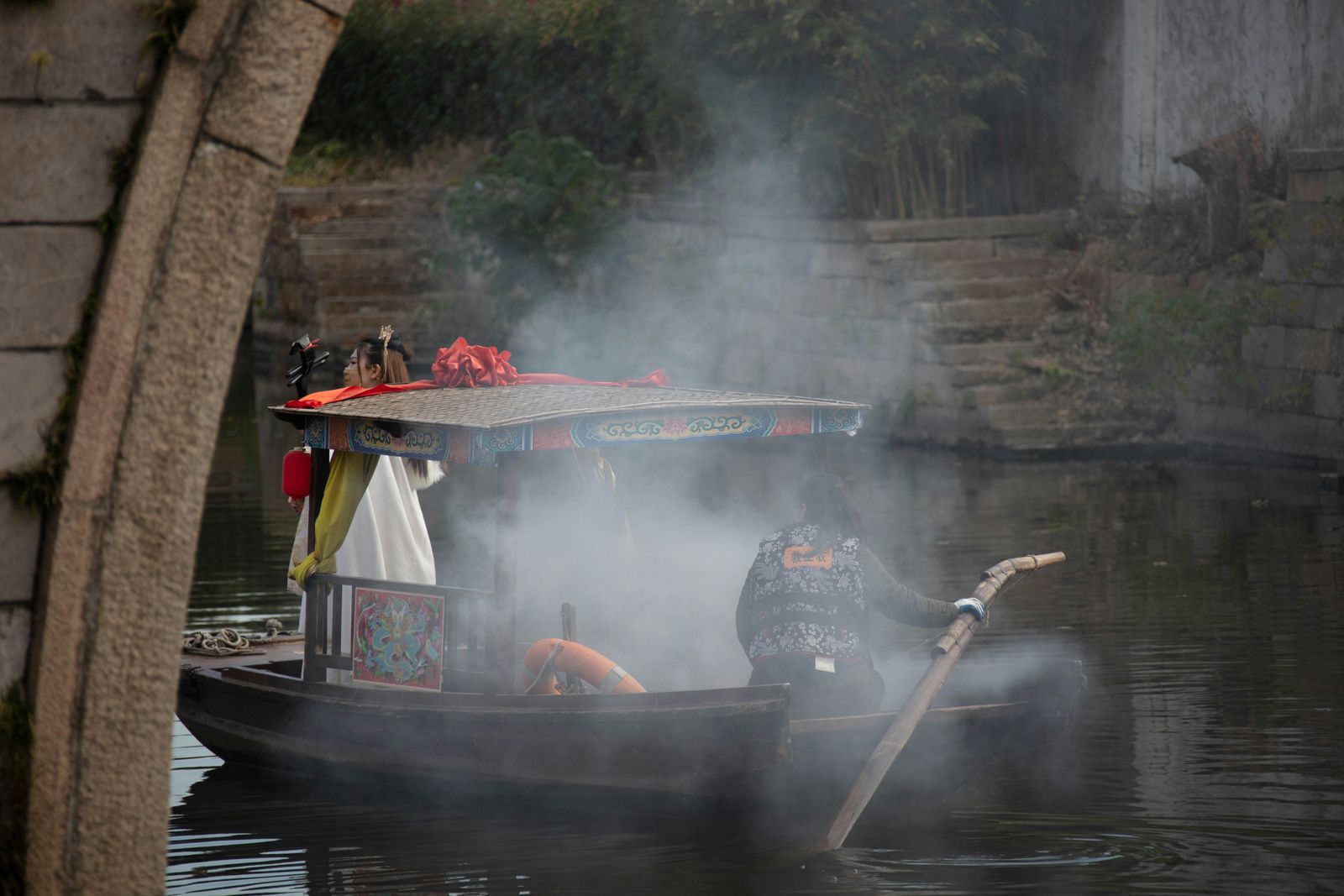
The canal cruises. Tickets are sold at the wharves, most conveniently at Kuangtang Bridge wharf, where Nanchang Street meets Yongle Road. Checking resale listings on 17 November 2026, the day cruise ran about ¥70–80 and the night cruise about ¥90–100, with the immersive evening production that uses the canal as a stage priced higher, around ¥158–168. The district's own published list prices sit above the resale figures — roughly ¥100 for the day route, ¥120 for the night route and ¥218 for the immersive show. Prices move with season and platform promotions, so treat both sets as a range to check at the wharf, not a fixed number.
The heritage zone at Huishan. The old town's streets are open; the walled heritage core and Jichang Garden are ticketed, and the price on the day is what counts. If a garden is the reason you came to this part of Jiangsu, that is a separate decision from the canal — see the next section.
Everything else in the old city. Nanchang Temple, the Donglin Academy and the Wuxi Museum are free to enter; special exhibitions at the museum are ticketed separately.
Two practical notes. The cruise is a 20-minute walk from Nanchang Temple metro station on Line 1, and the district is about 15 minutes by car from Wuxi railway station, 30 minutes from Wuxi East and 30 minutes from Sunan Shuofang airport — those times are the district's own visitor information, so add a margin at rush hour. Boats run on a schedule and stop in bad weather; a canal that looks calm at four in the afternoon can be closed by seven.
Wuxi or Suzhou: the decision most people are actually making
If you have one free day out of Shanghai, the real choice is between two cities an hour apart, and it is worth being honest about what each is for.
Suzhou has the canonical gardens — the Humble Administrator's Garden, the Lingering Garden — and the crowd that comes with a World Heritage listing. Its canals are famous and, in the oldest lanes, busy in a way that changes the experience.
Wuxi is roughly twenty minutes further by rail and quieter. It has one great garden (Jichang, inside the Huishan heritage zone) rather than a portfolio of them, and its signature is a canal lane you walk at dusk rather than a garden you queue for at nine in the morning.
The practical split: choose Suzhou if gardens are the reason for the trip and you want the version in every photograph. Choose Wuxi if you want an evening on the water, fewer people in the frame, and a city that does not require a timed entry.
There is also a version where you do both, and it is the one most first-timers get wrong: Suzhou as a day trip from Shanghai, Wuxi as an overnight. Doing it the other way round puts you in Wuxi at midday, when the district is at its least interesting, and in Suzhou at dusk, when the gardens are closing.
Two days, in the order that works
Day one, afternoon. Arrive at Wuxi station or Wuxi East, drop bags near Nanchang Street. Walk the district from Nanchang Temple south — temple, then the lanes, then Qingming Bridge. Eat before the cruise rather than after; the kitchens along Nanchang Street thin out by nine.
Day one, dusk. Take the night cruise from Kuangtang Bridge wharf. Fifty minutes on the water, then walk back along the opposite bank, which is the quieter side and the better photograph.
Day two, morning. Huishan old town for the heritage core and Jichang Garden, or Yuantouzhu on Taihu if the weather is clear and you would rather see water and hills than masonry. Both are half-day commitments; pick one, not both.
Day two, afternoon. Back through the district for the part you missed in the dark, then a train out. If your onward train is after six, the district at lantern-light is worth the second pass.
Practical, in the order you will need it
Trains. Shanghai Hongqiao to Wuxi is a forty-odd-minute ride on the fastest services, and there are dozens a day. Buy on the day or a day ahead; the constraint is the return leg, not the outbound. Wuxi East is the station most high-speed trains use, and it is a 30-minute drive from the district — budget that, not the ten minutes a map suggests for the old station.
Visas. Wuxi sits inside the Shanghai-centred 240-hour visa-free transit area, which lets eligible travellers move through Shanghai, Jiangsu, Zhejiang and Anhui. The conditions still apply in full — an eligible nationality, entry through a listed port, an onward ticket to a third country — and the list of ports and nationalities is revised. Check the National Immigration Administration's current published list before you rely on it; a separate visa is still the simple answer for most travellers.
Paying. Foreign cards work when linked to Alipay or WeChat Pay, and both are accepted in the district's shops and at the wharves. Carry a few hundred yuan in cash for the small stalls that have not switched, and expect the cruise wharf to prefer a phone.
Crowds. The district is busiest on Friday and Saturday evenings and during public holidays. A Tuesday dusk in the same place is a different experience, and the difference is not small.
Some links in this section are affiliate links — we may earn a commission if you book through them, at no extra cost to you. Affiliate disclosure.
What's worth booking ahead
Cruise times and whether it is running. Weather closes the water before it closes the street. Check at the wharf on the day rather than trusting a schedule printed last season.
The night cruise price you are quoted. Resale platforms discount the list price heavily; the same fifty minutes can cost ¥90 or ¥120 depending on where you buy. Decide at the wharf.
Whether the heritage zone at Huishan is open. The walled core closes for maintenance and takes different hours in winter. A garden you cannot enter is a wasted morning.
Which station your train uses. Wuxi and Wuxi East are 30 minutes apart by road, and the names look interchangeable on a booking screen.
Whether two nights are justified. They are, if the canal district is the point. If Wuxi is a stop between Shanghai and Nanjing, one night is enough and the district can be walked in an evening.
👉 Check Shanghai and Wuxi day tours
Image sources: the feature photograph of Qingming Bridge and the Grand Canal in Wuxi is by Zhangzhugang, CC BY-SA 4.0 via Wikimedia Commons, credited in the caption; the two inline canal scenes are from Unsplash and the garden bridge from Pixabay, both under licences that require no attribution and neither of which records a precise location. Prices, cruise schedules and visa conditions change; verify before travelling.