 China Trip
Miaomenqian Village, Guilin: The Free Village Beside Reed Flute Cave
In one line: Miaomenqian is not an attraction. It is a working village of roughly a few hundred households on the edge of Guilin city, next to Reed Flute Cave, that happens to be free to walk, threaded by a 6.8-kilometre greenway, and — as of this autumn — on the itinerary of inbound tour groups who come to make dumplings with the people who live there.
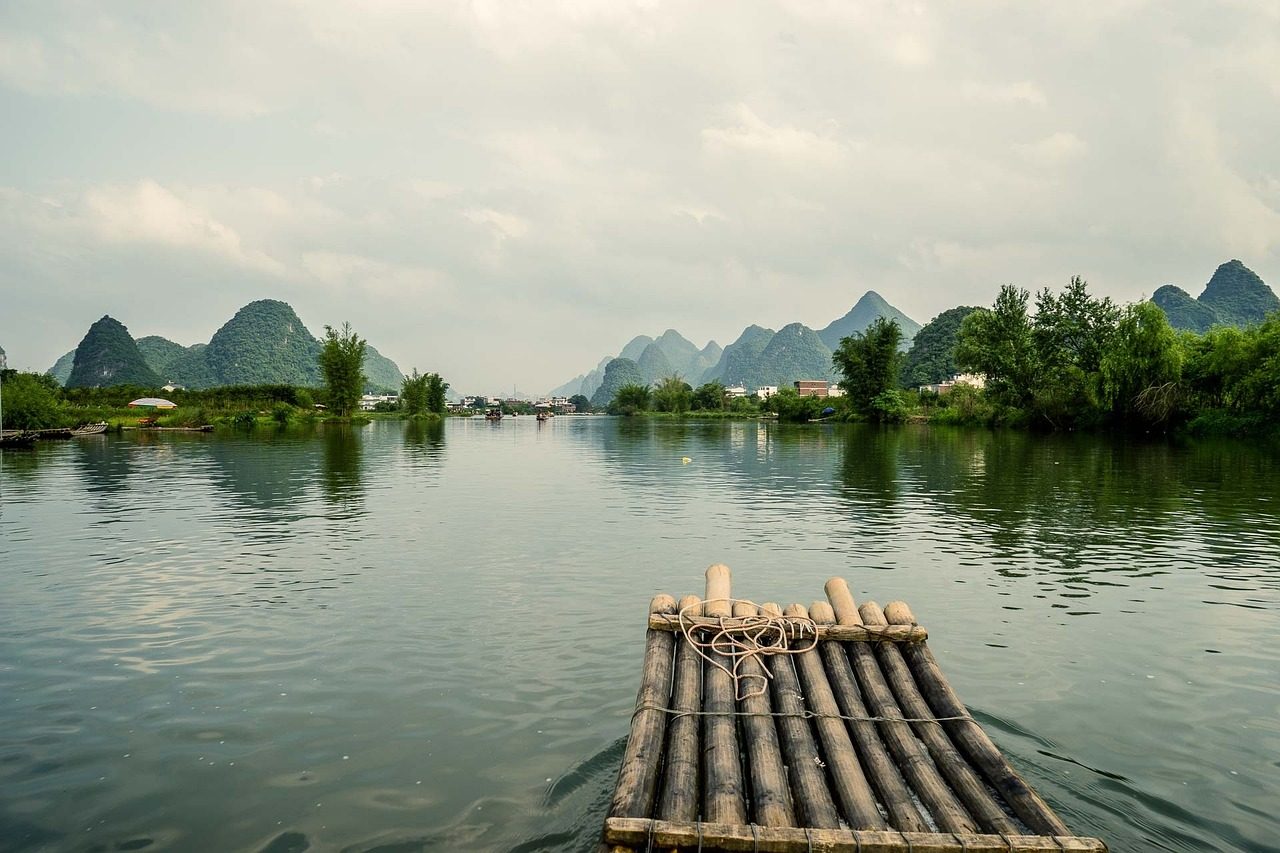
On this page
- Where it is, and what it actually is
- Why tour groups started stopping
- The greenway is the actual reason to come
- Reed Flute Cave is next door
- The painting connection most visitors miss
- Getting there
- What this place is not
- FAQ
- Is Miaomenqian worth visiting?
- Do I need a ticket or a reservation?
- How long should I allow?
- Can I do it without a tour?
- Is it accessible?
- When is the best time to go?
- Is there food?
That last part is the reason it is worth twenty minutes of your planning. Guilin's classic route is airport, city, Li River cruise, Yangshuo, and it is a route built almost entirely around looking at things from a boat or a viewing platform. Miaomenqian is the opposite: a place you walk through, where the thing you do is sit down with somebody's family and fold dough.
Where it is, and what it actually is
Miaomenqian (庙门前) sits in Xiufeng District, on the western edge of Guilin's built-up area, inside the administrative village of Qiaotou. It is one of three hamlets — with Zhangjia and Lujia — that are jointly promoted as the "Three Ludin Villages" (芦笛三村), named for the Reed Flute Cave they cluster around.
Qiaotou as a whole covers about 16 square kilometres and holds seven natural hamlets and around 2,900 residents. In 2019 it was named one of China's "Beautiful and Leisure Villages" by the Ministry of Agriculture and Rural Affairs — an official designation that carries more weight locally than it sounds, because it comes with infrastructure money.
That money is visible. From 2010 the district spent upwards of 200 million yuan on the three hamlets: roofs, lanes, drainage, water systems, and the greenway. The brief was explicit — keep the Guangxi-north building vocabulary (sloped roofs, grey tile, whitewashed walls, lattice windows, stone paving) and add only what a village could plausibly have. What you walk through now is renovated rather than preserved, which is worth knowing before you arrive with a romantic idea of an untouched hamlet.
Admission is free. There is no gate, no ticket window, no closing time for the village itself.
Why tour groups started stopping

In late October 2026, Guilin Evening News reported foreign visitors making dumplings in Miaomenqian — the local framing being that Guilin's inbound travel has shifted from rural sightseeing to farmhouse hands-on experience.
Read that as an industry signal rather than a single event. The same week, Umetrip's third-quarter figures put Guilin on the short list of Chinese cities where inbound arrivals grew fastest, alongside Luoyang, Zhangjiajie, Nanchang and Lijiang. When a city's inbound volume climbs, operators run out of new things to show and start buying things for people to do.
A village fits that gap precisely. It is free, so the operator's margin survives. It is twenty minutes from a major ticketed sight, so it slots into an existing half-day. And a dumpling lunch is a genuine cultural exchange rather than a demonstration — the visitor is doing the work, not watching somebody else do it.
Whether that is your idea of travel is a separate question, and this page is not going to pretend the answer is obvious.
The greenway is the actual reason to come
Six point eight kilometres of paved path runs through and between the three hamlets, along the upper reaches of the Taohua River (桃花湾). It is flat, it is shaded for long stretches, and it is used by local people for exactly what you would expect — walking, jogging, taking a grandparent out.
Two things make it better than a random village stroll:
It connects rather than loops. You can walk Miaomenqian to Zhangjia to Lujia and end somewhere different from where you started, which means the walk has a destination rather than a return leg.
The karst is right there. Guilin's limestone towers do not sit politely on the horizon here; the path runs beneath them, past ponds and vegetable plots, with the peaks reflected in standing water after rain. This is the landscape people fly eleven hours to see, at ground level, for nothing.
Zhangjia, one of the other two hamlets, is where the village's nuo opera (傩舞) tradition is kept — a masked ritual dance listed as intangible cultural heritage, with a small display space in the village. Opening is not guaranteed; ask locally rather than planning around it.
Reed Flute Cave is next door
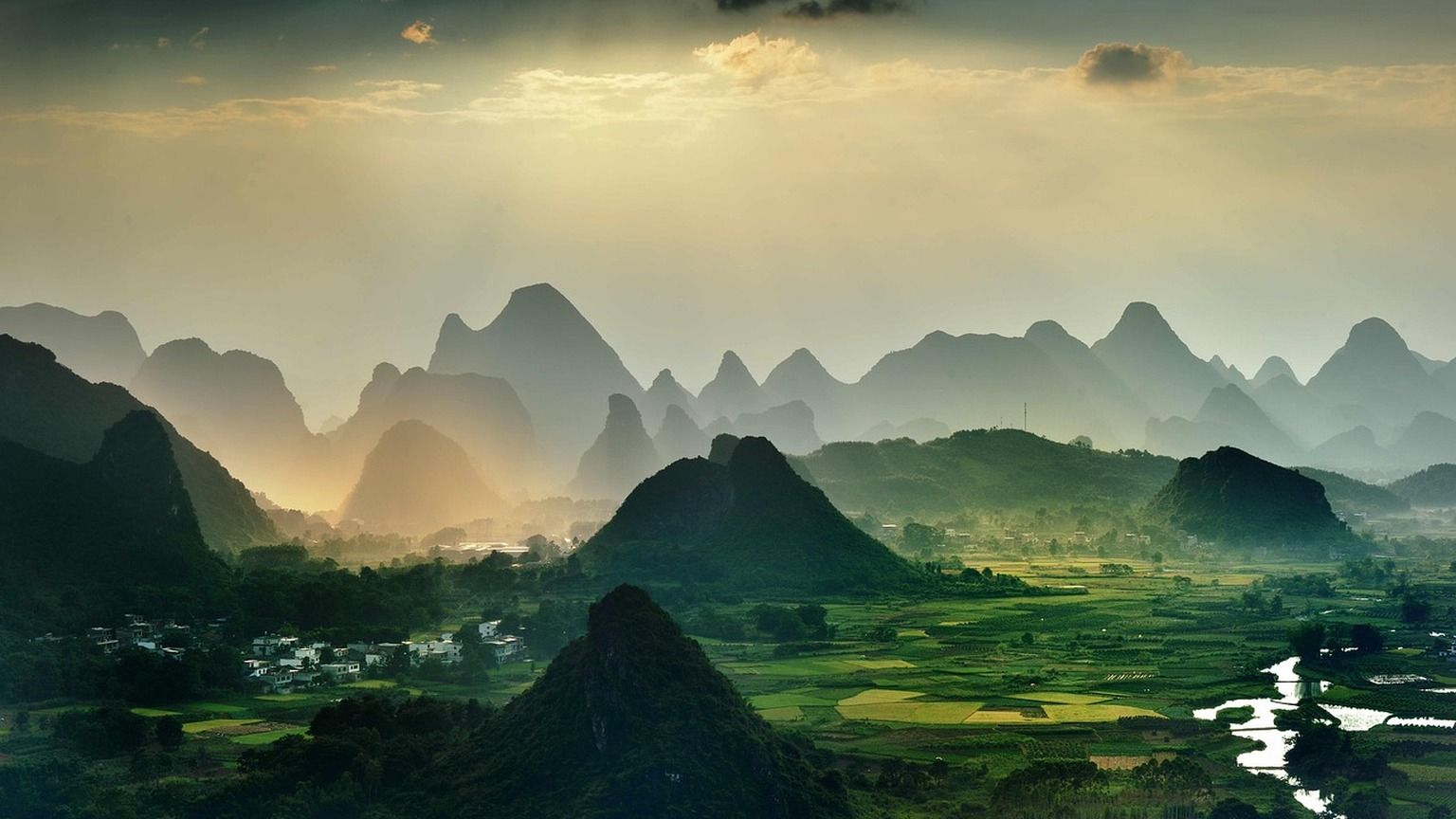
The cave that gave the district its name is a few minutes' walk from the hamlet — close enough that the two are usually done together.
Reed Flute Cave is a ticketed, separately operated sight with coloured lighting, a fixed one-way route and timed entry when busy. It is not part of the village, the village ticket does not exist, and nothing about the greenway gives you access to it. Budget for it as its own line item, and check current prices and hours with the operator on the day — cave pricing in Guilin has changed more than once in recent years, and any figure quoted in a blog (including this one) ages badly.
The pairing is what makes Miaomenqian practical: one ticketed sight plus one free walk is a half day that does not feel like a theme park queue.
The painting connection most visitors miss
Miaomenqian is the birthplace of Yang Taiyang (阳太阳, 1909–2009), a founder of the Lijiang School (漓江画派) — the Guilin-centred landscape movement that made the region's karst scenery a national painting subject rather than a local curiosity.
His former residence has been rebuilt on its original site as a small memorial hall, with a forecourt, a bronze statue and a cluster of painting studios around it. It is small, it is free, and it is usually empty.
Two caveats that matter if you are planning around it: the hall keeps limited hours and closes over midday, and the studios are working spaces rather than exhibits. Neither is a reason to skip it — a ten-minute look gives you the vocabulary for what you are seeing in the landscape outside — but do not build a tight schedule around a building whose door may be shut.
Getting there

Miaomenqian is inside Guilin's urban area, not out in the county. That makes it one of the easiest countryside experiences in the region to reach.
- By taxi or ride-hailing: the simplest option, and cheap by European standards. From central Guilin (around the Two Rivers and Four Lakes area) it is a short suburban run; from Guilin Liangjiang International Airport it is a considerably longer one, so do it on a city day rather than a transit day.
- By city bus: local routes serve the Reed Flute Cave approach road, and the village is a walk from the cave entrance. Route numbers and stops change; check a live map on the day rather than trusting a number printed in a guide.
- On foot or by bike: the greenway itself is the arrival route if you are staying nearby, and cycling the three hamlets plus the cave road is a genuinely good half day.
If you are arriving on the 240-hour transit-without-visa scheme, note that Guilin Liangjiang International Airport is one of the scheme's approved ports, and Guangxi has multiple cities inside the permitted stay area. The scheme is transit, not tourism: it requires an onward ticket to a third country and entry through an approved port. Confirm your own eligibility with the National Immigration Administration's current list before you book — the port list and the country list have both been revised more than once.
What this place is not
Honesty is more useful here than enthusiasm.
- It is not a scenic area. No gate, no map board at the entrance, no English signage of the kind you get at a ticketed sight.
- It is not a demonstration village. People live here. Doorways are doorways, not exhibits.
- It is not a shopping street. The tofu workshops and experience spaces are small and intermittent; there is no row of souvenir stalls.
- It is not a substitute for Yangshuo. If your image of Guilin is a bamboo raft on the Li River between sheer peaks, that is Yangshuo, an hour or more away, and Miaomenqian will not replace it.
- It is not photogenic in the postcard sense. It is photogenic in the lived-in sense — laundry, scooters, drying grain, a pond with ducks on it.
And one rule that is not negotiable: ask before you photograph people. A village is somebody's home, not a set. The single most common way this kind of visit goes wrong is a visitor treating a front yard as a backdrop.
FAQ
Is Miaomenqian worth visiting?
If you are already going to Reed Flute Cave and want an hour of flat walking through real countryside without another ticket, yes. As a destination in itself — a special trip across Guilin for this village alone — no. It is a complement, not a headline.
Do I need a ticket or a reservation?
No. The village and the greenway are free and open. Reed Flute Cave next door is separately ticketed, and the Yang Taiyang memorial keeps limited hours.
How long should I allow?
Ninety minutes covers the hamlet and a stretch of greenway. Half a day covers all three hamlets on foot plus the cave. Under an hour and you will have seen a car park and a pond.
Can I do it without a tour?
Yes, and comfortably. This is a public village with public paths, not a gated experience that requires an operator. What a tour buys you here is the dumpling session and a translator, not access.
Is it accessible?
The greenway is paved and flat, which makes it better than most countryside in the region for wheels and for older travellers. The village lanes are stone-paved and uneven in places, and the memorial hall has steps.
When is the best time to go?
Morning, before the tour groups arrive, and outside the July–August heat. Guilin's autumn (October–November) gives the clearest light and the most comfortable walking; spring is wet and the ponds are full, which some people prefer.
Is there food?
Small local places and the tofu workshops, intermittently. Do not arrive hungry and assume a restaurant. Guilin city is close enough that most visitors eat there.
Village status, the greenway, the Yang Taiyang memorial and free admission were checked on 2026-11-01 against the Xiufeng District government's published village profile and the Guangxi provincial release on the Three Ludin Villages. Reed Flute Cave prices, hours and entry rules are set by its operator and are not quoted here, because they change; confirm on the day. The 240-hour transit-without-visa scheme is administered by the National Immigration Administration — eligibility, the approved port list and the permitted stay area are all subject to revision, and nothing on this page constitutes visa advice. The October 2026 dumpling visits were reported by Guilin Evening News; the inbound growth ranking is Umetrip's third-quarter data as reported by China Civil Aviation Network. Photographs on this page show Guilin's karst countryside and are credited individually; none is presented as a photograph of Miaomenqian village itself. No affiliate links are used in this article.