 China Trip
Suzhou Jinji Lake: Check Your Bag Here, Fly Out of Shanghai
Status check (verified 30 November 2026): Suzhou runs no airport of its own, but the Shanghai Airport Suzhou City Terminal holds the IATA code SZO, checks bags through to Pudong and Hongqiao international departures for 16 airlines, and stays open 05:00–20:30 with check-in closing at 20:00. It has handled more than 250,000 passengers since opening. Suzhou sits inside the 240-hour visa-free transit area for travellers who enter through a Shanghai port — the scheme covers 57 nationalities and gives 10 days, on a confirmed onward ticket to a third country or region.
On this page
- The short answer
- A city with no airport that still sells itself as a departure point
- The 240-hour rule, precisely
- Pudong to the lake, three ways
- West shore is for looking, east shore is for living
- The terminal that is also a shop
- Money: the 200 yuan line
- Ten days, arranged
- Practical notes for an inbound trip
- What's worth booking ahead
The short answer
If you are flying into Shanghai and out again within ten days, Suzhou is the one city in the Yangtze delta where you can hand over your suitcase before you leave for the airport. The city terminal on the west side of Jinji Lake takes the bag, prints the boarding pass and puts you on a coach to Pudong; you meet the suitcase at the far end.
That single arrangement changes what the last night of a China trip looks like. Instead of a dawn taxi to Pudong with two suitcases, you get a slow morning by a lake, a 20-minute check-in, and an empty-handed coach ride.
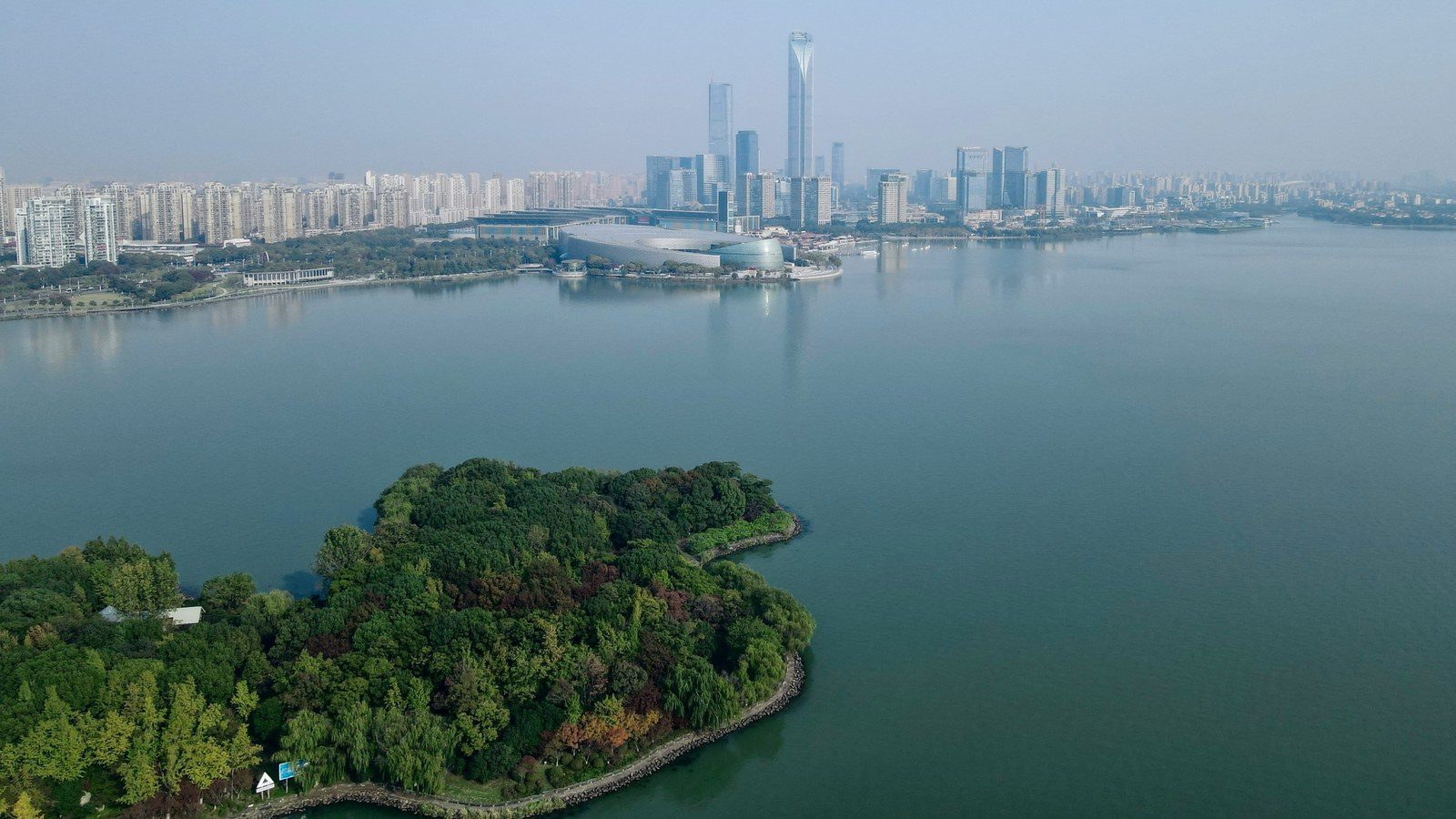
Jinji Lake itself is not ancient China. It is a 7.18 sq km sheet of water with a skyline on one side and gardens, museums and restaurants on the other, ringed by a 10 km path. Come for the logistics; stay because the evenings are genuinely good.
A city with no airport that still sells itself as a departure point
The joke locals tell is that Suzhou has no airport and never will, because Shanghai built two. The second half of that joke is less well known: Suzhou holds an origin status anyway.
The city terminal carries SZO, an IATA code issued for a place that is not an airport. Type "Suzhou" into a booking engine and a through-fare can appear — a coach leg and a flight leg sold as one journey. On the ground it works like this: you check in at the terminal, hand over the bag, and it is tagged to your final destination. At Pudong or Hongqiao you clear immigration and the security check on your person, not on your luggage.
The limit is the airline list. Sixteen carriers accept bags here, and only for international and regional flights departing Shanghai. A domestic connection, or an airline outside the sixteen, means the bag travels with you instead.
On 26 November 2026 the Suzhou Industrial Park added a second layer to this: three self-guided routes aimed at visitors from abroad — a lakeside walk, an urban shopping loop and an after-dark Jiangnan route — plus a free "Jiangnan colour card", a piece of card with a viewfinder cut into it, collected at the city terminal or at Jinji Post 09, and 35 shops in the park signed up for departure tax refunds. None of it is a landmark. All of it is the part of an inbound trip that usually goes wrong: playing, buying, claiming the tax back and leaving, in that order, without a mistake.
The 240-hour rule, precisely
Ten days sounds unconditional. It is not, and the three conditions are where people come unstuck.
One: you must be in transit, not visiting. The scheme requires a confirmed onward ticket, with a date and a seat, to a third country or region. Land in Shanghai, leave from Shanghai, fly home — that is not transit, and you need a visa.
Two: the map is fixed by your entry port. Enter through a Shanghai port and the 240 hours cover Shanghai, Jiangsu, Zhejiang and Anhui. Suzhou is in Jiangsu, so it is inside. Xi'an or Chengdu on a Shanghai entry permit is not.
Three: use an eligible port in both directions. Whether you can exit from a different airport in the delta than the one you flew into is a detail that varies by port. Ask the airline desk or the immigration officer rather than reasoning it out from a blog.
One small thing worth doing in advance: the foreign national arrival card can now be completed online, and at Beijing's ports more than 97% of arrivals fill it in that way. There are terminals and staff on hand if you would rather do it on the spot.
How to spend ten days: do not put them all in the big delta cities. Four in Shanghai, three in Suzhou, two in Hangzhou or Nanjing, one held back. Every leg is inside an hour by high-speed rail, which means the suitcase gets packed once.
Pudong to the lake, three ways
High-speed rail, fastest, one extra change. Metro Line 2 or the maglev from Pudong to Hongqiao, then a train to Suzhou or Suzhou North in 25–30 minutes. A taxi from Suzhou station to the lake runs 40–60 yuan. Door to door, about 2 hours 40 minutes, and it runs on time.
The coach, least effort. Direct services from Pudong to Suzhou take around two and a half hours and you never touch the bag. The trade-off is frequency: land at the wrong hour and you wait.
A car, most direct. 500–600 yuan from Pudong, more at night or in rain. Split between two people it is close to rail plus taxi, and it ends at your hotel door.
Once in Suzhou, Metro Line 1 runs straight into the lake district — Gate of the Orient station and Culture and Arts Centre station both put you a few minutes' walk from the water.
West shore is for looking, east shore is for living
Jinji Lake is 7.18 sq km, a little larger than Hangzhou's West Lake, and it holds a 5A scenic grading awarded in 2012 — the top tier, with no ticket and no closing time, which is rare at that grade.
The two banks do different jobs, and that decides how you spend a day.
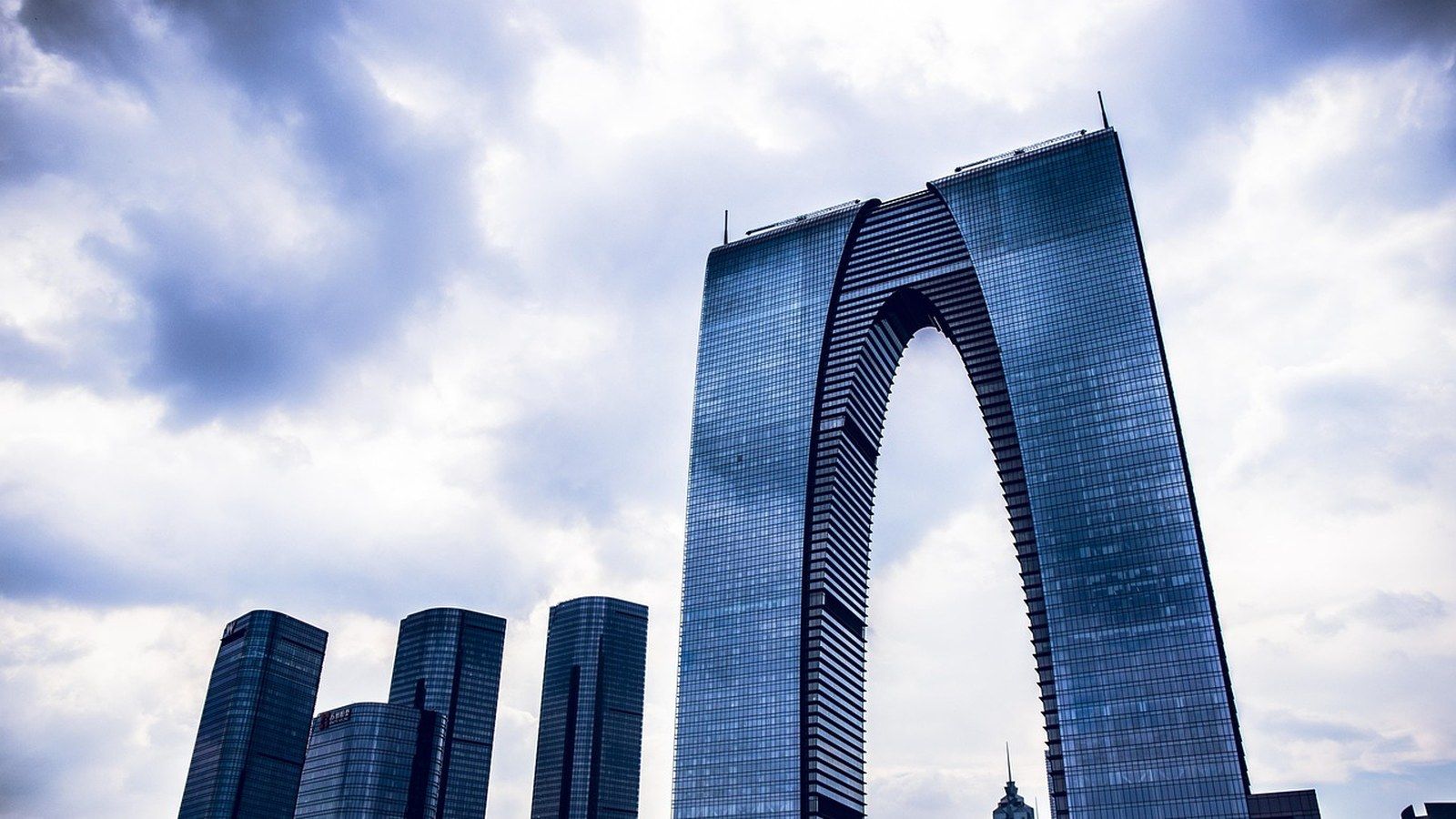
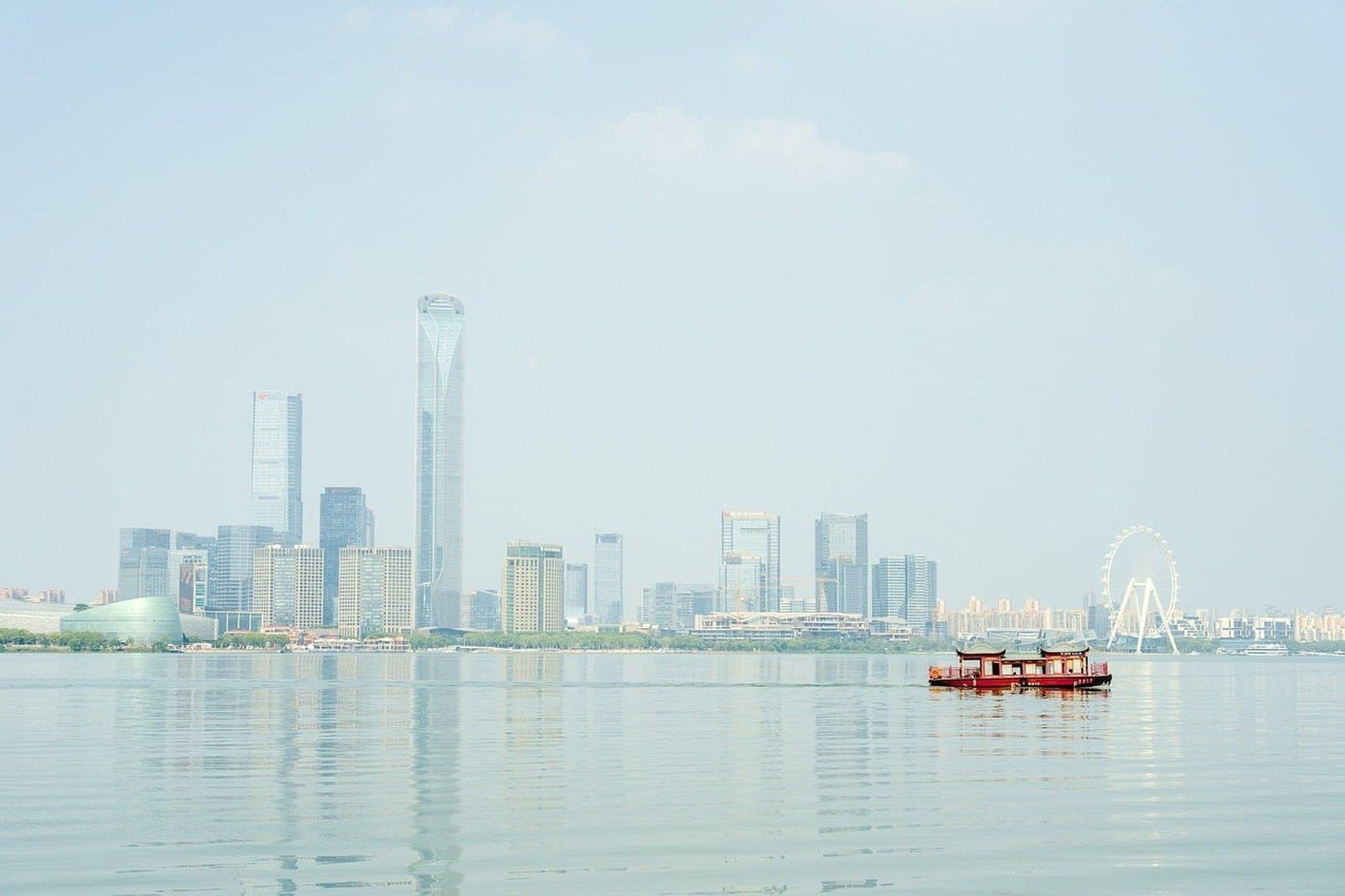
The west and north shores are for looking. The Gate of the Orient stands about 301.8 m tall, two towers that lean together and join at the top; locals call it the long johns. Next to it is Suzhou Center, its roof one long undulating plane. Come at dusk: from the east bank the sun drops behind those towers, and when the lights come on the whole skyline lands in the water.
The east and south shores are for living. Eslite Spectrum, the Suzhou Culture and Arts Centre, Li Gongdi and the Suzhou Contemporary Art Museum all sit on this side. Li Gongdi is a levee built in the late Qing and named after the magistrate who ordered it, Li Chaoqiong; today it is a row of lakeside restaurants where you eat on a terrace with the lights of the far bank in front of you.
The loop path is about 10 km, two and a half to three hours at a walk. Do not plan to finish it. The point of the path is that you can stop anywhere.
One warning that catches people out: the old ferris wheel has been taken down and rebuilt, and a lot of Chinese-language pages still use it as their cover image. Check whether a replacement attraction is running before you build half a day around it.
The terminal that is also a shop
The city terminal is open 05:00–20:30, takes check-in until 20:00, and is itself a departure tax refund shop. That matters more than it sounds: you can check the bag, buy silk, embroidery or museum merchandise on the spot, and put the refund paperwork through in the same visit.
There are two deadlines to keep straight.
Bag drop has a cut-off, usually 4–5 hours before departure. It is posted at the counter and it is not negotiable.
The refund is not cash in hand at the till, even where the shop offers an instant refund against a credit card pre-authorisation. The goods must leave China unused, and the paperwork is completed at the port, with customs and the refund agent, on the way out. Small amounts usually skip the inspection and go paperless — that is not the same as skipping the step.
Money: the 200 yuan line
Departure tax refunds start at 200 yuan spent in the same shop on the same day. The park now has 35 participating shops, covering Suzhou Center, Bicester Suzhou Village, Jiu Guang and Eslite Spectrum among others. Bicester, Fashion Stage and Jiu Guang run instant refunds.
Two practical notes. Keep the passport with you — the form is keyed to it, not to the receipt. And leave time at the airport: the refund desk sits before or after immigration depending on the terminal, and the queue is worst in the late afternoon.
Ten days, arranged
Suzhou first suits anyone landing with jet lag. Into Pudong, train to Suzhou the same day, sleep by the lake, walk the loop the next morning, Shanghai on day three. Hotels here cost a step less than Shanghai and a lake-view room is not hard to find.
Suzhou last suits anyone who has been shopping. Two days at the end: browse and buy, then check out in the morning, walk into the city terminal, hand over the bag and take the coach to Pudong with nothing to carry.
Both versions assume the same thing: you are flying out of Pudong or Hongqiao, on one of the sixteen airlines. The list changes, so check it when you book, not when you pack.
Practical notes for an inbound trip
Who this is for. Travellers entering through a Shanghai port with days to spare, anyone tired of airport check-in queues, and anyone buying silk, embroidery or museum pieces who wants the refund handled properly.
Who should skip it. Three-day Shanghai trips that are already full; travellers who want old China and canals, who should be in the gardens and lanes of the old city instead — Jinji Lake is glass towers and lawns.
How long. Half a day for the loop plus a meal. A full day if you add Eslite, the art museum and dinner on Li Gongdi.
Whether it is worth rearranging a trip for. If you fly out of Pudong, yes: move the last night to Suzhou and the terminal turns a travel day into a half day. Hongqiao works the same way.
What to confirm before booking. The airline list at the terminal, the baggage cut-off for your flight, and whether your entry port and exit port both sit on the eligible list for the transit scheme.
Some links in this section are affiliate links — we may earn a commission if you book through them, at no extra cost to you. Affiliate disclosure.
What's worth booking ahead
The visa category, before anything else. The 240-hour scheme needs a confirmed onward ticket to a third country and a Shanghai-area entry port. Get this wrong and the rest of the plan does not exist.
The airline and the flight. Sixteen carriers accept bags at the terminal today, and only for international and regional departures from Shanghai. Confirm your flight is one of them.
The bag cut-off. Four to five hours before departure is normal, but it is set per flight and posted at the counter.
The construction. The ferris wheel rebuild and the winter event calendar both move. Check the park's own notices the week you travel.
👉 Check Suzhou day tours, Shanghai transfers and Yangtze delta trips
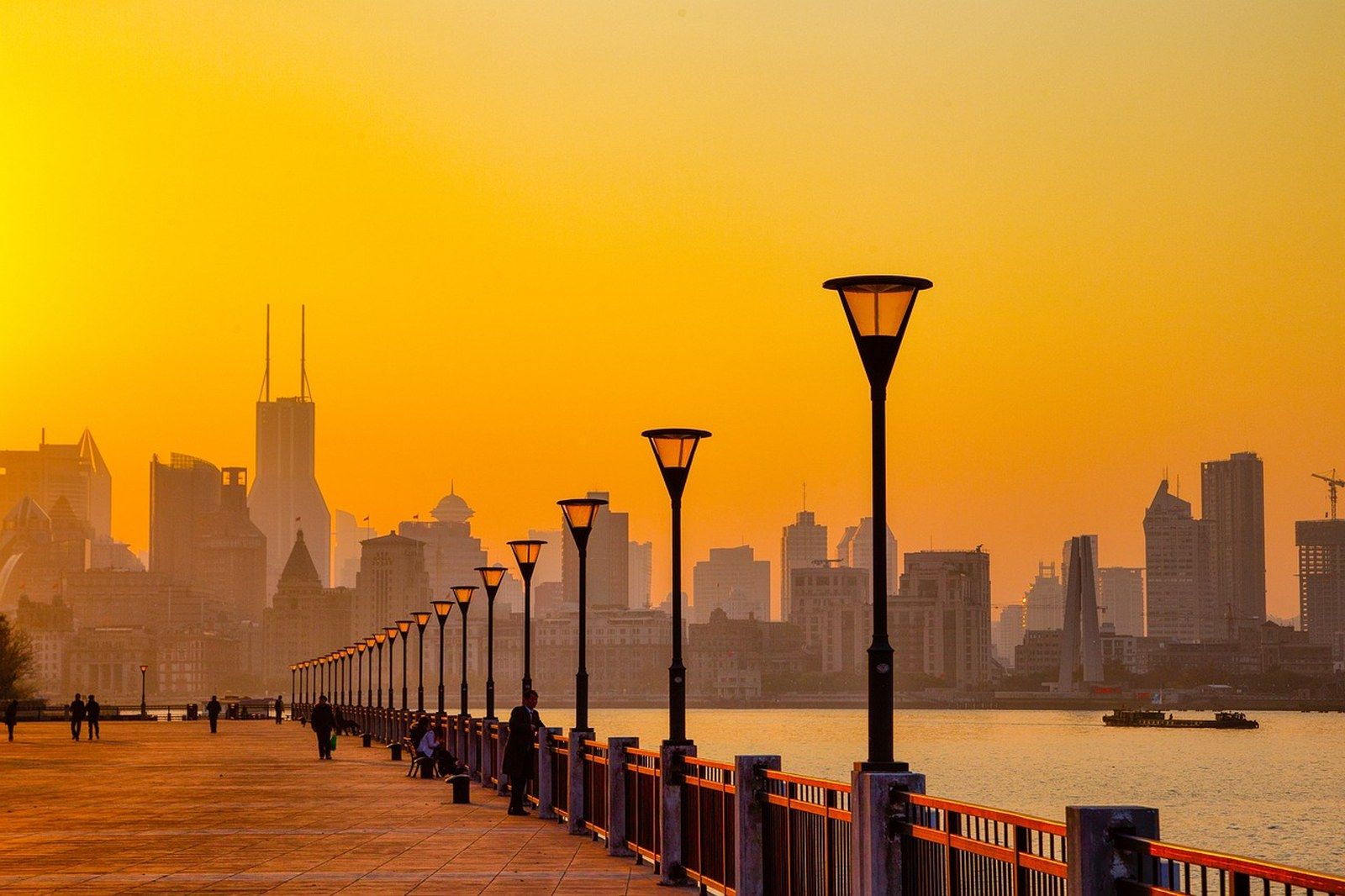
Image sources: the feature photograph of Jinji Lake, the Gate of the Orient, the Huangpu river front and the lakeside view are from Unsplash and Pixabay under licences that require no attribution. All four are real photographs of Suzhou and Shanghai. Visa scope, airline lists, terminal hours and refund thresholds change — confirm with the National Immigration Administration, the airline and the city terminal before you travel. Last verified 30 November 2026.