 China Trip
Libo Xiaoqikong: Tickets, Timed Slots and Which Gate to Enter
Status check (verified 2026-11-08): Xiaoqikong is still on peak pricing until 30 November — ¥120 admission plus a ¥40 shuttle that everybody buys, whether or not the ticket itself is waived. From 1 December admission drops to ¥100 and the shuttle stays at ¥40. Entry is by timed slot booked in advance; there is no ticket window to fall back on and no on-site top-up when the day's quota is gone.
On this page
- What the place actually is
- The price is two numbers, not one
- Booking: a slot, not a ticket
- The passport problem
- Which gate: west in, east out
- When to come
- Two bans worth knowing before you set out
- Why Libo, why now
- FAQ
- Do I need to book Xiaoqikong in advance?
- How much does a day at Xiaoqikong cost?
- Is the ¥40 shuttle really compulsory?
- Can I visit with a passport instead of a Chinese ID?
- Which gate should I enter?
- How long does Xiaoqikong take?
- Is Xiaoqikong worth it in winter?
- Can I fly a drone there?
- What this guide does not cover
- What's worth booking ahead
Most guides to Xiaoqikong are lists of things to look at. That is the easy part — the valley is 39 kilometres of river, forest and waterfall, and looking at it is free once you are through the gate. The hard part, the part that decides whether your day works, is administrative: which of two gates you enter, which of five time slots you booked, and whether the booking system will accept the document you are carrying.
This guide is about the administrative part. It prices the day honestly, explains the booking flow as it actually runs, and is explicit about the one thing a foreign passport changes.
What the place actually is
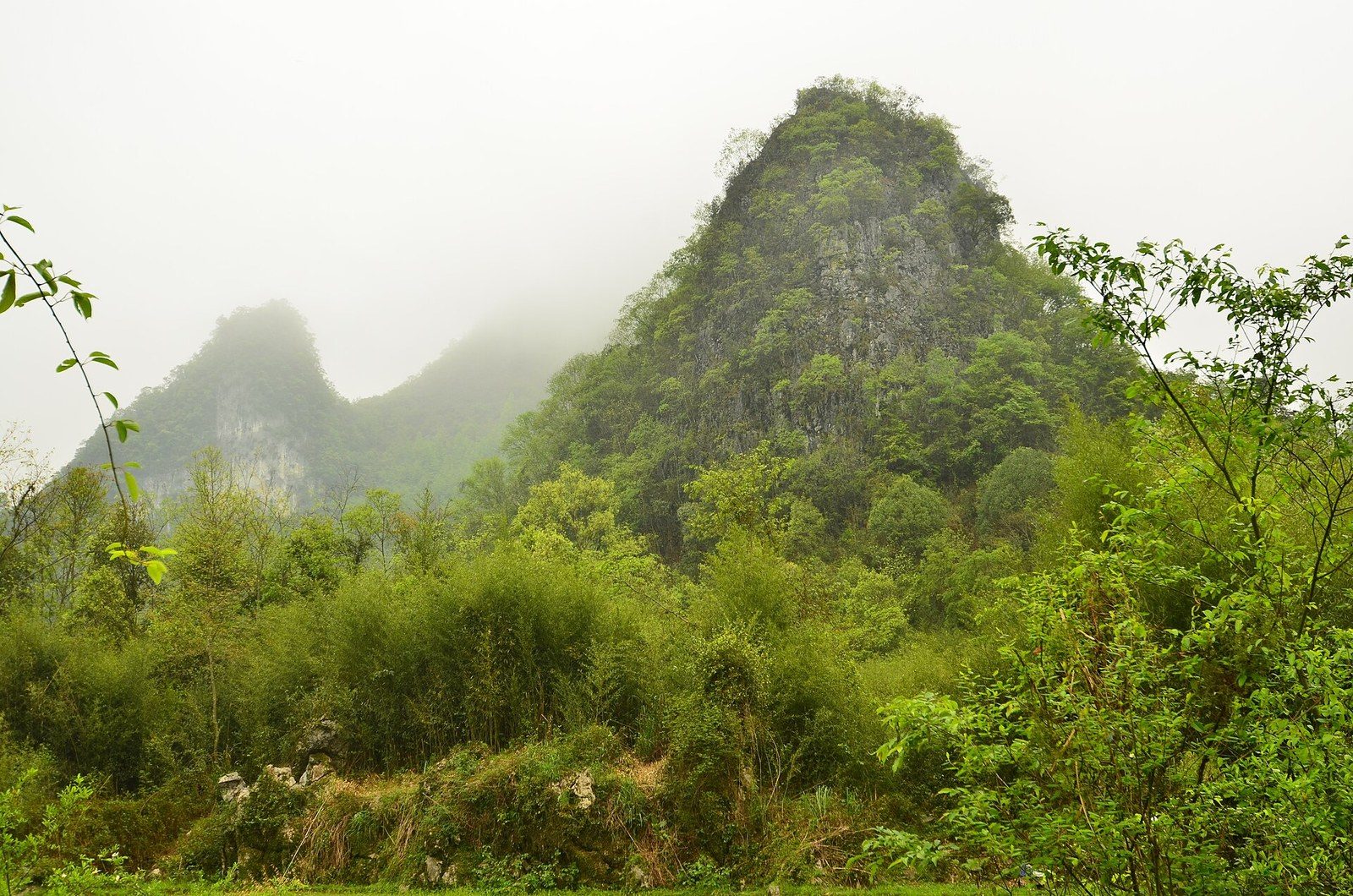
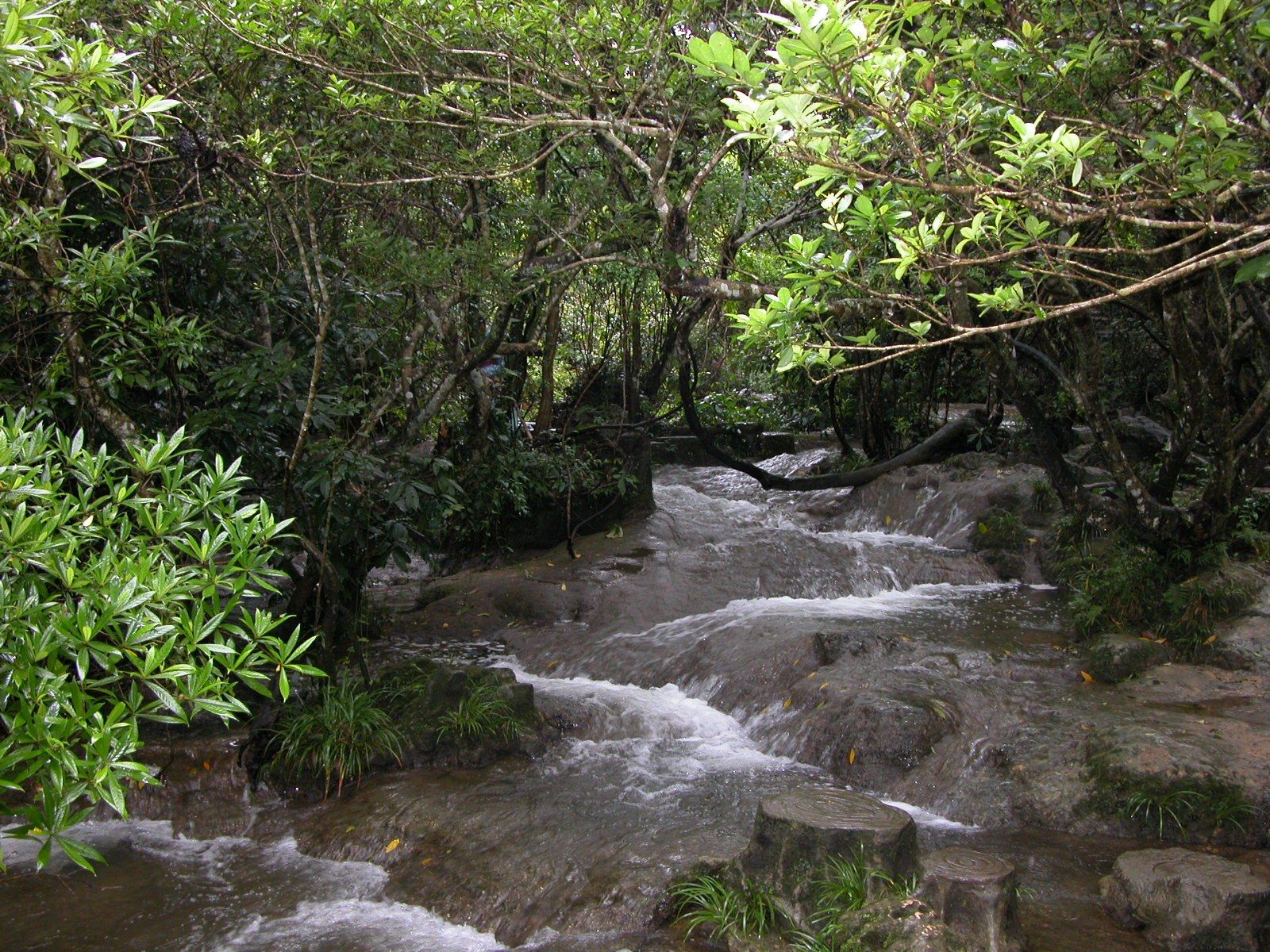
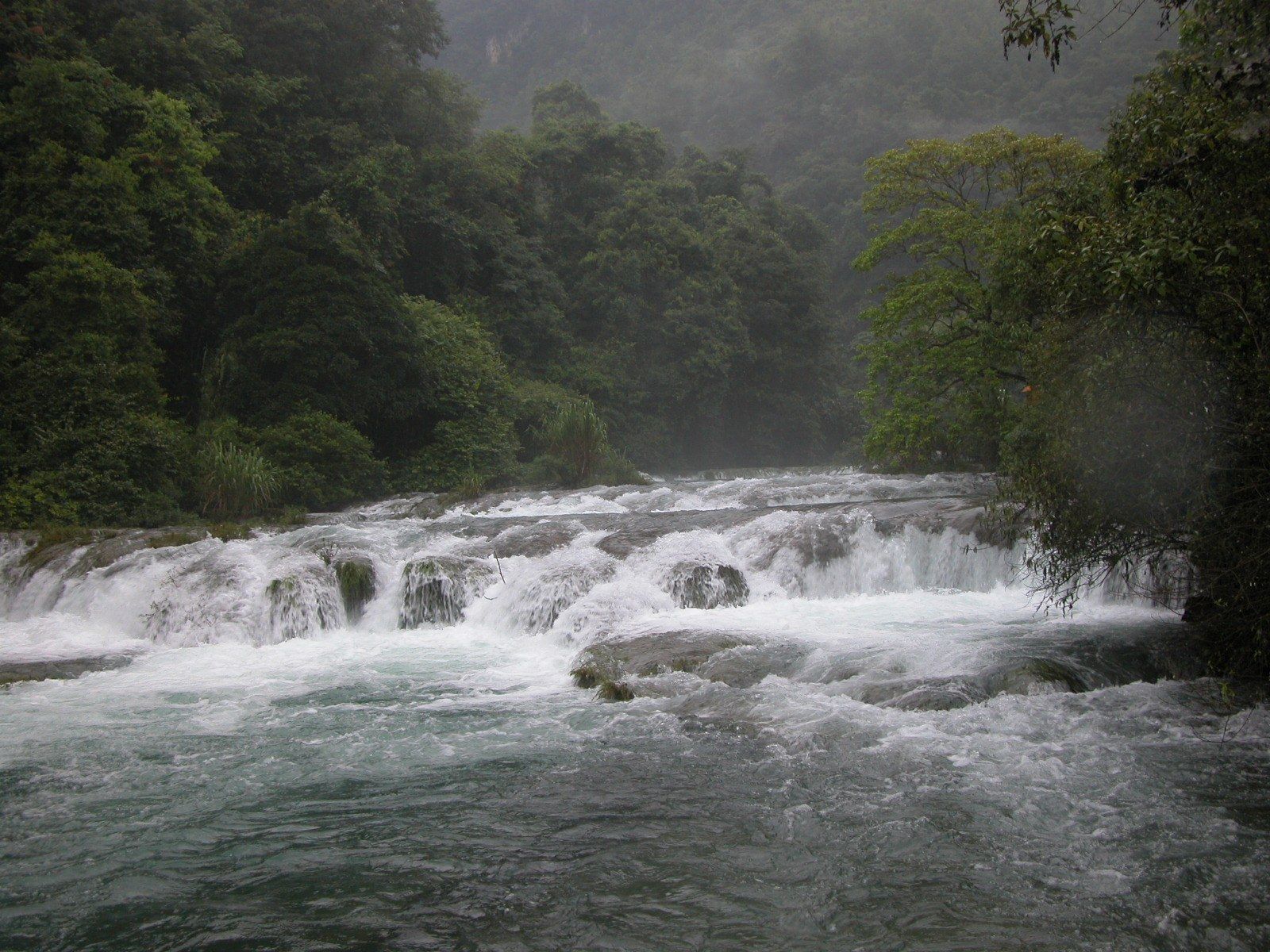
Xiaoqikong (小七孔, "Small Seven-Arch") is the core scenic area of the Libo Karst, itself a component of the South China Karst World Heritage listing. The name comes from a seven-arch stone bridge over the Zhangjiang river at the eastern end of the valley; the scenery that made the listing is the water — a river running over travertine, dropping through stepped cascades, and disappearing into forest at the water-forest section, where trees grow straight out of the streambed.
The scenic area runs 45 kilometres round trip in total: 39 kilometres for the Xiaoqikong valley and 6 kilometres for Daqikong (大七孔, "Big Seven-Arch") next door. The two are ticketed together, which is why the ticket is valid for two days rather than one.
The order of things, west to east, is: Wolong Pond → Yuanyang Lake → Tianzhong Cave → the water forest → the 68-step falls → Laya waterfall → the seven-arch bridge. That order matters, and so does the direction you walk it.
The price is two numbers, not one
Admission is seasonal and the seasons are fixed dates, not weather:
- Peak, 1 March to 30 November: ¥120. Half-price ticket ¥60.
- Off-peak, 1 December to the end of February: ¥100. Half-price ¥50.
- Shuttle: ¥40, all year, and it is compulsory. The published rule is blunt about this — even visitors whose admission is waived buy the shuttle.
So a normal adult day in peak season is ¥160, and there is no version of the visit where it is ¥120. The valley is 39 kilometres long with a road down the middle; walking it is not the plan the site is built around.
The ticket is valid for two days, with face recognition on re-entry, which is the sensible way to use it: Xiaoqikong one day, Daqikong and the surrounding villages the next.
Optional spending, all of it genuinely optional: accident insurance ¥10 (pre-ticked in some booking flows — untick it if you have your own), Tianzhong Cave ¥8, rowing boat on Yuanyang Lake from ¥30, and the Daqikong boat at ¥18–20 one way, which is the only way to see that gorge without a long walk.
Concessions exist and are document-based: admission is waived for children up to 14 and visitors from 60, while 15-to-17-year-olds and full-time undergraduates pay half. All of it requires original documents at the counter, and none of it touches the ¥40 shuttle.
Booking: a slot, not a ticket
The booking system is the part people get wrong, because it is not a ticket shop. It is a timed-entry reservation with a daily cap, run through Yunyou Libo (云游荔波, WeChat and Alipay mini-programs), the provincial Yima You Guizhou platform, or the OTAs the site authorises — Ctrip, Meituan, Douyin.
Five slots, and you enter within yours:
- 08:00–09:30
- 09:30–11:30
- 11:30–13:30
- 13:30–15:00
- 15:00–16:00
Gates are open 08:00–16:00. Turn up in the wrong slot and the gate reader will not let you through — that is the single most common way a booked visit fails. Book three to five days ahead in peak season and around public holidays; on quota-limited promotion days the site publishes a hard cap and it goes the same morning.
And the rule that follows from all this: there is no on-site ticket sales channel and no same-day top-up. If the quota is gone, the official advice is to go somewhere else in Libo that day — Yaoshan ancient village, Maolan, the Deng Enming residence — and try again tomorrow.
The passport problem
Here is where a foreign visitor meets the design of the system.
Entry is ID card plus face recognition. The booking forms are built around a Chinese ID number, one ticket per ID, and the whole chain — reservation, gate reader, re-entry on day two — assumes that number exists. A passport is a different document with a different number and no chip the gate reader is looking for.
What that means in practice:
- Book through a channel that accepts passport numbers. The OTAs generally do; some mini-program flows do not. If a form refuses your document type, that channel is closed to you, not the site.
- Carry the passport itself, not a photo. The fallback for a document the reader cannot process is a member of staff checking it by hand, and that only works with the original.
- Expect the manual lane to be slower. At the gate, and again on day two if you use the second day.
- Concessions need originals at the counter. Age-based and student waivers are checked against documents at the service window, which is a separate queue from the gate.
- Ring before you travel if your case is unusual — a passport-only group, a waiver you are claiming, a same-day arrival. The scenic area publishes two numbers: 0854-3516115 and 0854-3516116.
None of this is a promise that a given booking flow will work for you on a given day. It is the shape of the obstacle, which is more useful than a reassurance.
Which gate: west in, east out
The two gates sit at opposite ends of the valley, and choosing between them is the single biggest comfort decision of the day.
West gate in, east gate out is the standard advice and it is correct: the valley falls eastward, so this direction walks you downhill the whole way, with the shuttle covering the long gaps between the seven stops. Done this way the core route takes four to six hours. Reversed, you spend the day climbing.
The gates are far enough apart that arriving at the wrong one is not a small mistake. Coming from Libo station on the high-speed line, through-buses run to both — published fares are around ¥10 to the east gate and ¥35 to the west gate, which tells you how much further west actually is. Confirm the fare and the departure point at the station rather than trusting a schedule on a blog, yours included. From Libo county town the drive is about 30 minutes.
When to come
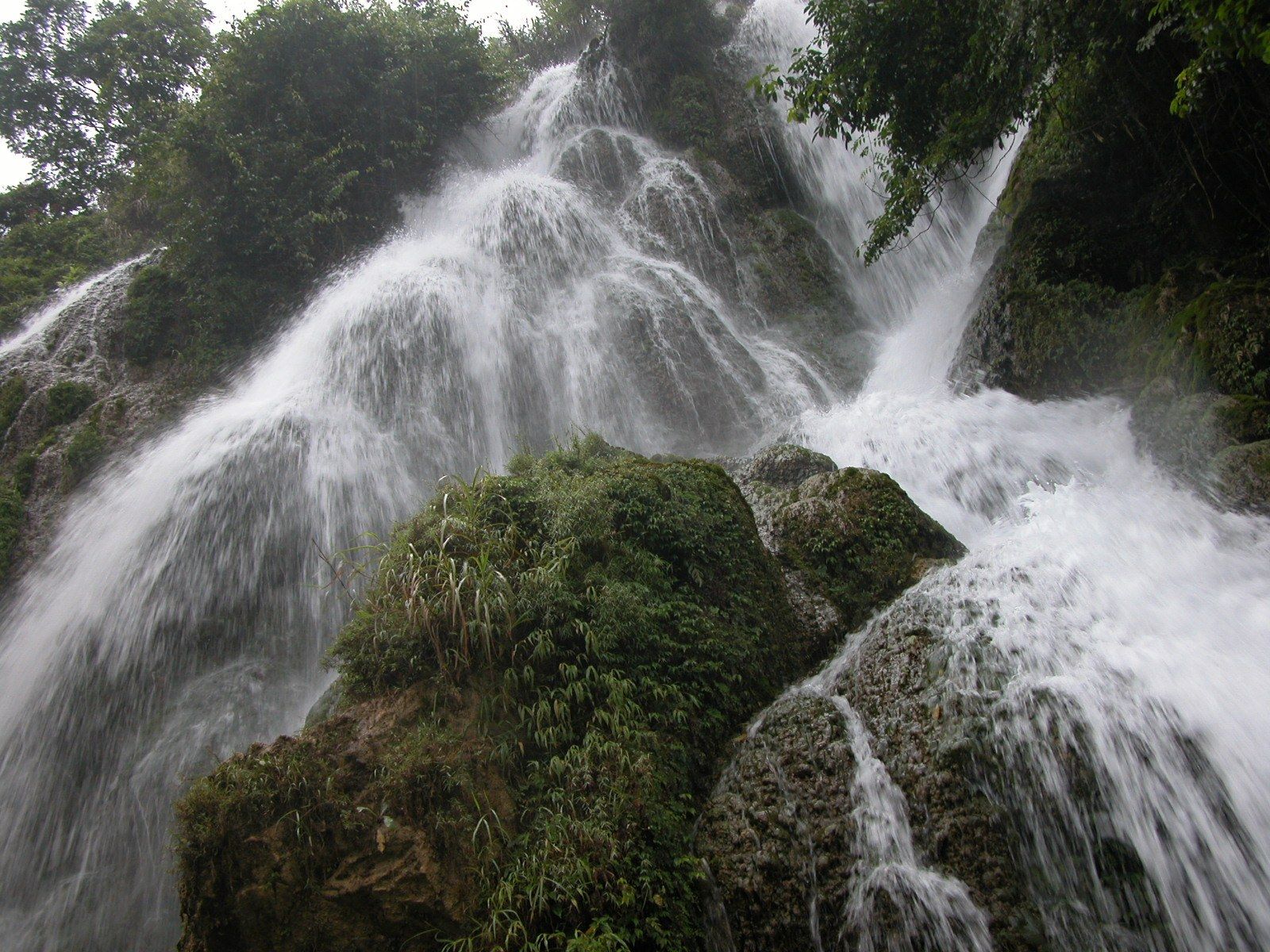
The pricing calendar is the honest answer: 1 December the admission drops ¥20 and the crowds drop with it. The trade is water. This is a river-and-waterfall visit, and it looks its best in and after the wet season — late spring through autumn — while a January visit gets you thin cascades and empty boardwalks.
Two things override the calendar. Public holidays, when the quota disappears and the shuttle queue becomes the day. And rain: the boardwalks are stone, permanently wet, and steep in places. Grip matters more than footwear style, and a rain jacket beats an umbrella on a narrow walkway.
Two bans worth knowing before you set out
- Drones are banned across the whole scenic area. Not restricted — banned. It is a World Heritage site with a standing no-fly rule, and carrying one in is pointless.
- No pets. There is no kennel at the gate.
Add the obvious: this is a wet, shaded valley with leeches in the humid months and mosquitoes throughout, and the river sections have no railings in places.
Why Libo, why now
Guizhou's inbound numbers moved sharply this year: the province reported inbound visitors up 65.7% year on year for the first three quarters, and European and American tour operators were walking the province in early November. That is a provincial figure — it is not a Libo number, and it should not be read as one.
What is more useful on the ground is a service change the province announced on 7 November 2026: across Guizhou, state-owned 4A-and-above scenic areas now accept foreign cards at the ticket window, and so do four-star-and-above hotels. For a valley whose ticket desk is the one place you cannot avoid queueing at, that removes the cash problem — though not the passport problem above.
FAQ
Do I need to book Xiaoqikong in advance?
Yes, and not as a formality. Entry is by timed slot with a daily cap, there is no ticket window, and there is no same-day top-up once the quota is gone. Book three to five days ahead in peak season.
How much does a day at Xiaoqikong cost?
¥160 per adult in peak season: ¥120 admission plus the ¥40 shuttle. ¥140 from 1 December. Add ¥8 for Tianzhong Cave, from ¥30 for the Yuanyang Lake boat, and ¥18–20 for the Daqikong boat if you take them.
Is the ¥40 shuttle really compulsory?
Yes. The published rule applies it to everyone, including visitors whose admission ticket is waived. The valley is 39 kilometres long and the shuttle is the transport system, not an upgrade.
Can I visit with a passport instead of a Chinese ID?
You can visit, but the entry system is built on Chinese ID plus face recognition, so expect a manual document check at the gate and carry the passport original — a photo will not do. Book through a channel that accepts passport numbers, and ring 0854-3516115 or 0854-3516116 if your case is unusual.
Which gate should I enter?
The west gate, and leave by the east gate. The valley falls eastward, so this direction is downhill for the whole route and takes four to six hours. Entering at the east gate means climbing.
How long does Xiaoqikong take?
Four to six hours for the core route at an unhurried pace. The ticket is valid for two days, which is the better plan: Xiaoqikong one day, Daqikong and the villages the next.
Is Xiaoqikong worth it in winter?
It is cheaper — ¥100 instead of ¥120 from 1 December — and much quieter, but the waterfalls are thin and the water forest loses the effect that made it famous. Late spring to autumn is the honest window.
Can I fly a drone there?
No. Drones are banned across the entire scenic area, which is a standing rule for the World Heritage site rather than a seasonal restriction.
What this guide does not cover
- Daqikong in detail. It is six kilometres, ticketed with Xiaoqikong, and a different walk; this guide only covers the boat and the ticket relationship.
- The villages around Libo. Yaoshan and the Buyi settlements are worth a day and are outside the ticketed area.
- Getting to Libo from outside Guizhou. The high-speed connection and the Guiyang through-buses are mentioned only as far as the gate choice depends on them.
- Your exact fare. Every figure above is the published price as of early November 2026. The seasonal switch is by date, but promotion days, quota caps and booking channels change, and the official notice on the day beats this page.
The reason to settle the administration first is that everything good about Xiaoqikong is downstream of it. Get the slot wrong and the day does not happen; get the gate wrong and you spend it climbing; get the shuttle rule wrong and you are standing at a barrier arguing about a ticket you already paid for. Get all three right, and the valley is a long, wet, green walk downhill with a waterfall every twenty minutes.
Some links in this section are affiliate links — we may earn a commission if you book through them, at no extra cost to you. Affiliate disclosure.
What's worth booking ahead
Book the timed slot before you book the train, not after: the slot is the constraint, the train is not. What is worth arranging in advance is the transfer from Libo station, because the two gates sit at opposite ends of a 39-kilometre valley and arriving at the wrong one costs you the morning.
👉 Check Xiaoqikong tickets and Guizhou day trips
Admission tiers, the two-day validity, the five entry slots, the compulsory shuttle and the drone and pet bans are from the Xiaoqikong scenic area's published online entry and ticketing notice (liboxiaoqikong.com), read on 8 November 2026. The booking channels, the absence of on-site sales and the quota rules are from notices issued by the Libo Zhangjiang scenic area management office. The high-speed connection and station bus fares are as published at Libo station and should be confirmed there. The 65.7% inbound figure and the foreign-card acceptance at state-owned 4A-and-above scenic areas and four-star hotels are from Guizhou provincial announcements of early November 2026; the first is a provincial aggregate, not a Libo figure. Prices, slots and rules change; verify before you travel.