Jiuzhaigou Tickets: 41,000 a Day, No Ticket Window, and Two Restock Windows
✅ Status check (verified 2026-10-19): open; peak-season rules run through November 15, 41,000/day cap unchanged. Winter policy not yet announced — re-check before a December trip. Details: Jiuzhaigou open-status check.
On this page
- The numbers
- Booking: two official channels, and no window
- When it is sold out
- Planning the day inside
- Rize Valley — the densest run of highlights
- Zechawa Valley — fewer stops, bigger scale
- Shuzheng Valley — the way out
- Autumn colour is a window, not a season
- Getting there from Chengdu
- Where a tour fits
- Practical notes
- FAQ
- What does a Jiuzhaigou ticket cost?
- Can I buy a ticket at the gate?
- Can I book with a foreign passport?
- When are the autumn colours at their best?
- Check dates and availability
Jiuzhaigou is a chain of travertine lakes and waterfalls in northern Sichuan, at the edge of the Tibetan plateau: three valleys leaving a single junction in a Y, roughly 50 km of road end to end, a UNESCO natural World Heritage Site since 1992.
The hard part is not deciding whether to go. It is getting in. In peak season the park admits 41,000 people a day and stops selling when it hits that number — on 1 October 2026 it hit the cap on the first day of sale, and 2 to 5 October sold out as well. There is no ticket window at the park either: turn up unreserved and you do not get in.
What makes Jiuzhaigou unusual is what happens next — two official channels keep releasing tickets after the cap is reached, a waiting list and a batch of cancellations pushed back twice a day.
The numbers
| Peak season | Off-peak | |
|---|---|---|
| Dates | 1 Apr – 15 Nov | 16 Nov – 31 Mar |
| Entrance ticket | ¥190 | ¥80 |
| Shuttle bus ticket | ¥90 | ¥90 |
| Total per person | ¥280 | about ¥170 |
| Insurance | ¥10, optional | ¥10, optional |
| Daily cap | 41,000 | fewer visitors, rarely an issue |
The ¥190 plus ¥90 pair is what the official channels publish; the ¥170 off-peak total is a third-party figure, so confirm the off-peak shuttle price before you budget around it.
A waived entrance ticket does not include the shuttle — waive the ¥190 and you still pay the ¥90, and concession visitors still have to reserve.
Booking: two official channels, and no window
There is no ticket window at the park — the official phrasing is "no reservation, no trip". Bookings are real-name and timed: one document buys one ticket per day, and you enter by scanning it before 14:00.
- The official WeChat account Jiuzhaigou — menu path "Visit essentials → Ticket booking".
- The Aba Tourism Network mini-program or website,
www.abatour.com.
Nothing else issues tickets: third-party platforms and any on-site counter are not official channels, whatever they advertise.
If you are booking on a foreign passport:
- Expect a Chinese-language interface. Have a translation app, or someone who reads Chinese, in the loop.
- The flow is built around mainland ID cards. Enter the passport number you will actually carry, and check the form accepts it before you pay.
- Link and test your payment method in advance; the 08:00 restock is the worst moment to find your card will not attach.
- Carry the passport itself, not a photo.
When it is sold out
The waiting list. At the 41,000 cap the official platform opens a waiting list; cancellations are reallocated in order, and if nothing comes through the money goes back the way it came.
08:00 and 17:00, twice a day. On capped dates, cancelled tickets return to the pool and are released in a batch at those two times. Set both alarms; two well-timed refreshes beat refreshing all day.
14:00 is a hard stop. Gates check from 08:00 (07:30 on some holidays), last entry 14:00, close 18:00. A ticket for a day you cannot reach the gate in time for is no ticket at all.
Sequence: ticket, then room, then train or flight. Reverse it and you risk a non-refundable room with no ticket to go with it.
Planning the day inside
The park is a Y. Three valleys meet at Nuorilang: Shuzheng on the way in from the gate, Rize to the right, Zechawa to the left. The shuttle is compulsory and private cars are banned, so the strategy is settled: ride to the far end of a branch, then work downhill.
Rize Valley — the densest run of highlights
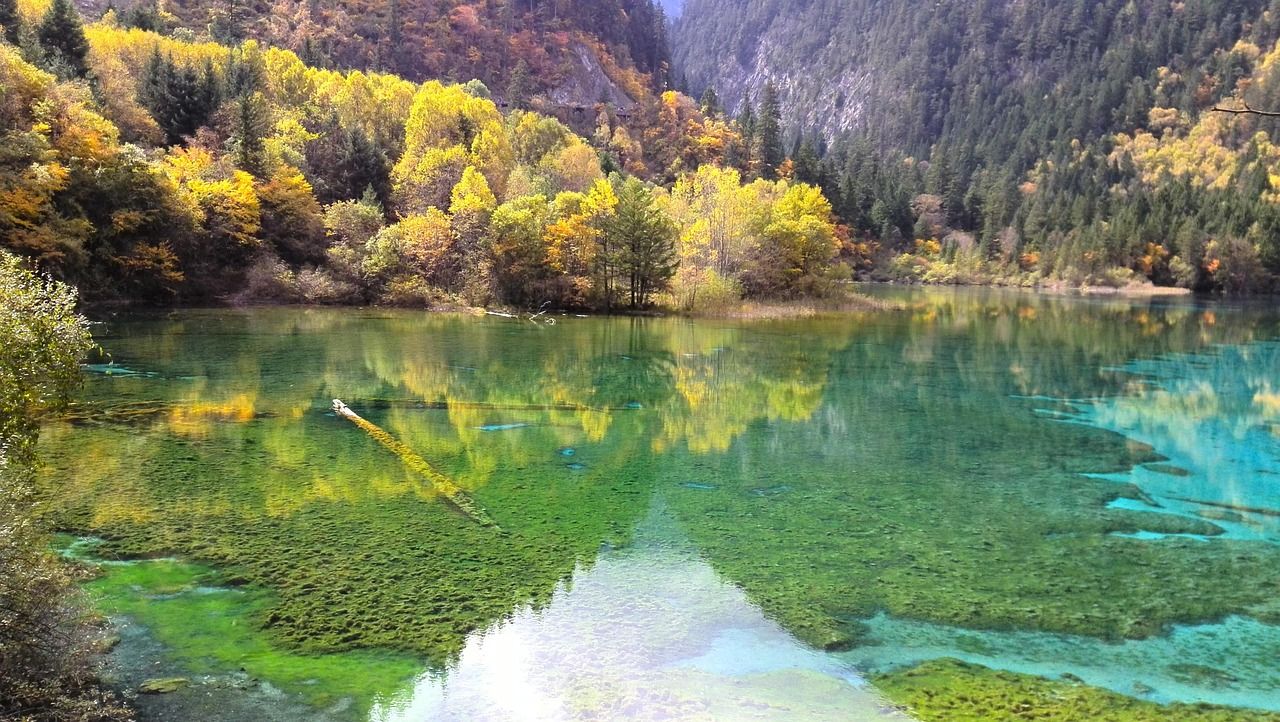
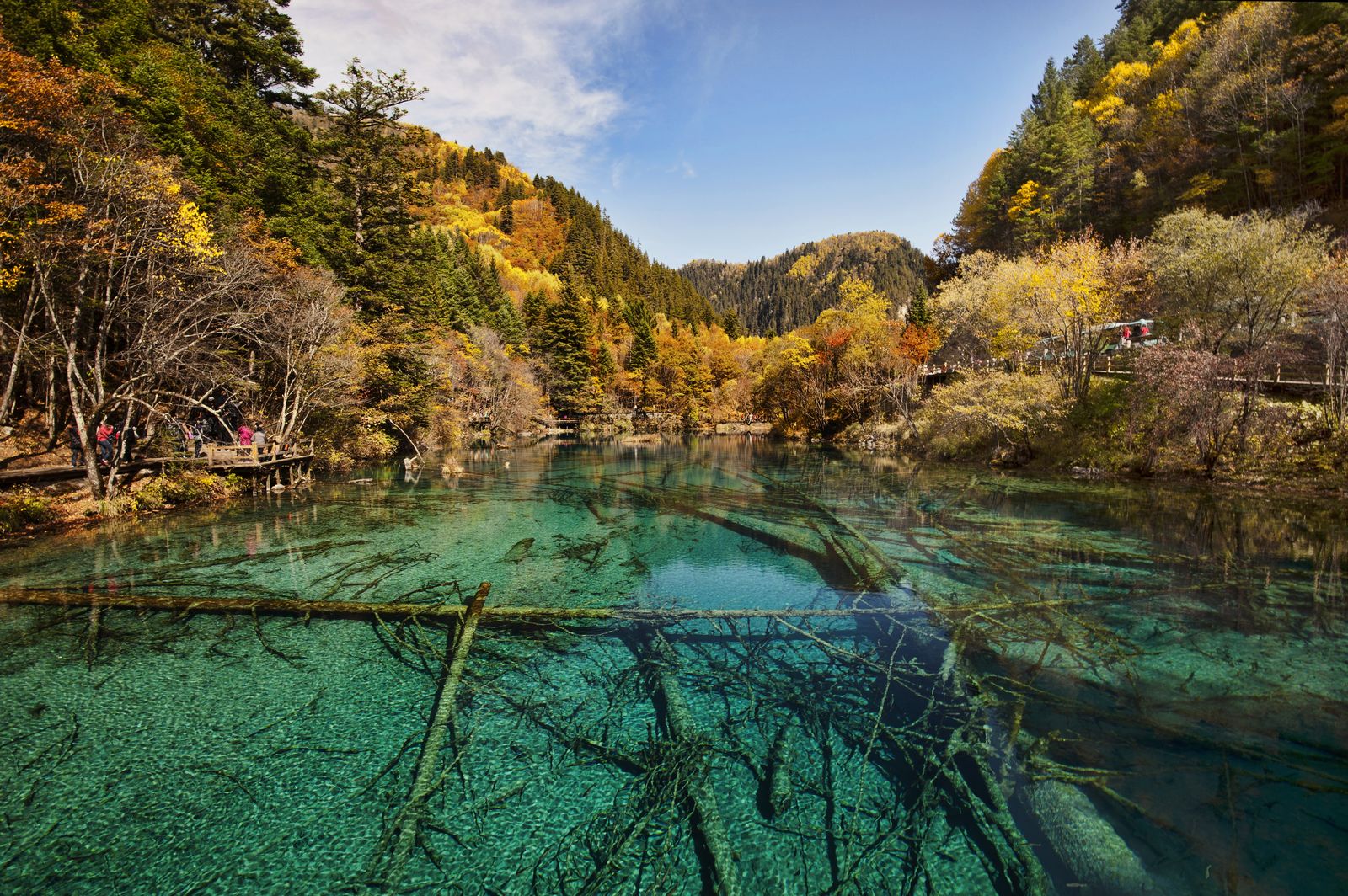
Primeval forest and Fangcao Lake at the far end, then working down: Arrow Bamboo Lake, Panda Lake, Five-Flower Lake, Pearl Shoal Waterfall, Mirror Lake. Five-Flower Lake is what people mean by "the essence of Jiuzhaigou" — colour layered into one sheet of water, with the Tiger's Mouth overlook above it. Mirror Lake is a morning stop: its reflection is only clean in still air.
Zechawa Valley — fewer stops, bigger scale
Long Lake at the end, the largest and deepest in the park at around 3,000 m, ringed by snow peaks. Below it, Five-Colour Pond: small, and the most saturated water in either valley.
Shuzheng Valley — the way out
Nuorilang Waterfall is over 300 m wide with a drop of more than 20 m, among the widest travertine waterfalls in China. Nuorilang is also the only transfer point between the valleys and the only proper food inside — boxed lunches and a buffet at ¥30–40 a head. On the way out: Rhinoceros Lake, Sparkling Lake, Sleeping Dragon Lake, the Shuzheng lakes, Shuzheng Waterfall. Nine Tibetan villages gave the valley its name, and the 7.0 earthquake of August 2017 explains why so much of it looks newly repaired.
Autumn colour is a window, not a season
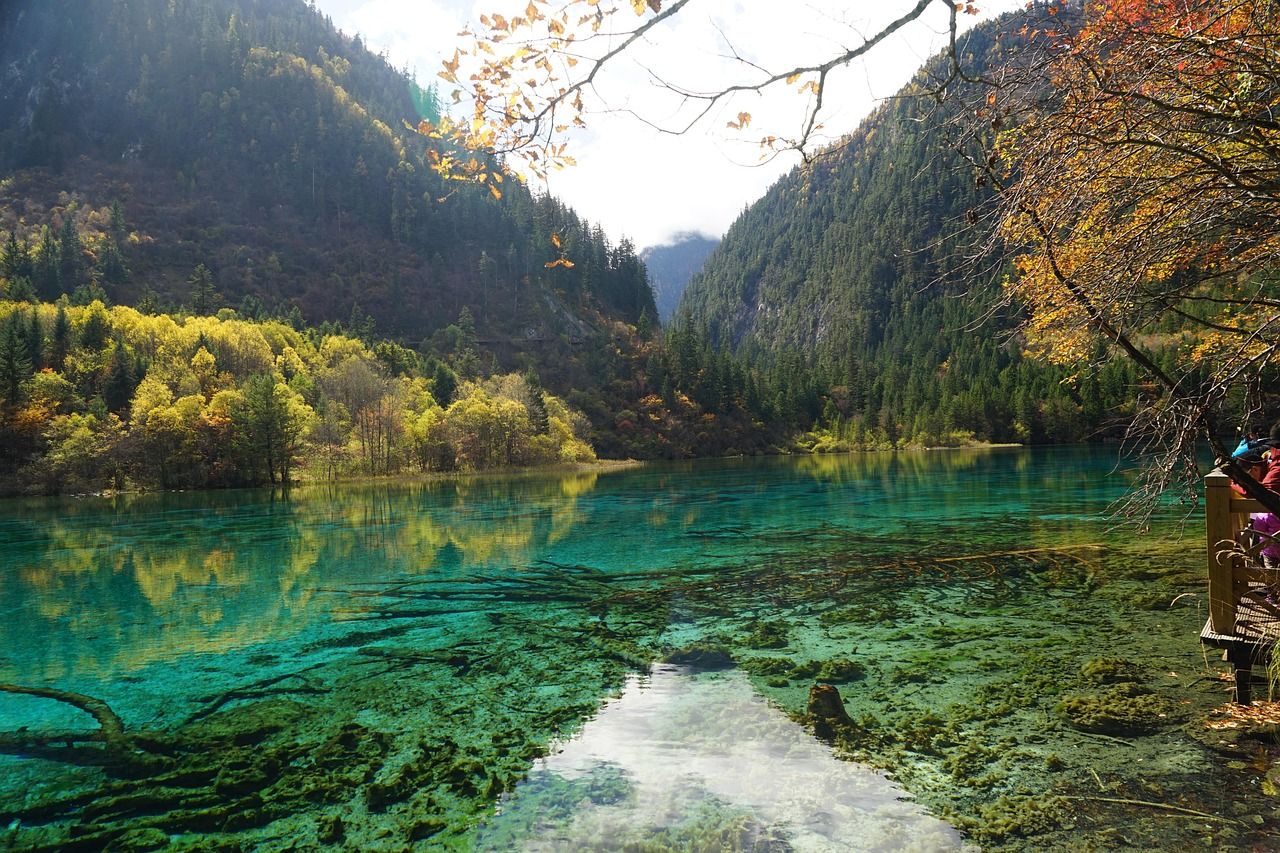
Mid-to-late October into early November is the window, with 20 October to 10 November the safest stretch — slopes changing in bands, gold and orange against unfaded green, dropping into blue-green water. In the National Day holiday in early October most of the leaves are still green, which is why people arrive disappointed.
Late November flips it. The leaves come down, and you may get autumn colour and first snow in one frame. From 16 November it is off-peak: ¥80 entrance, far fewer people, a frozen Long Lake under snow peaks.
Getting there from Chengdu
- Train. Chengdu East to Huanglongjiuzhai, as little as 1 hour 39 minutes, around ¥140 in second class. Then the official shuttle platform Jiulv Yuexing (WeChat mini-program or account, book ahead), about 2 hours to the park gate — against 8–10 hours by long-distance bus. Flying to Jiuzhaigou Huanglong (JZH) instead means another 80-plus km by road, 1–2 hours, for an hour in the air.
- One day inside covers the classic route if you start early and ride to the far end first. Rize and Zechawa both done properly takes two days, and the park generally does not sell a re-entry ticket in peak season, so two days means two days of tickets — third-party guides say so rather than an official notice, so confirm it when you book.
Where a tour fits
Nothing here bends: real-name, one document per person, 41,000 a day, last entry 14:00. What a tour removes is everything around them — chasing the 08:00 and 17:00 restocks, the train-plus-shuttle transfer, a bed in Zhangzha in peak weeks when rooms go almost as fast as tickets, and an English-speaking guide in the valleys, where the difference between two lakes is dissolved calcium nobody on site will explain.
A guide changes the logistics, not the rules — entry is still issued against your own document, one per person, the 14:00 cut-off does not move, and the shuttle inside is compulsory for everyone. So read what a listing includes — entrance ticket, transfers, guide, meals — and check whether the entrance ticket is in the price or an extra to settle on the day.
Practical notes
- Altitude. The gate sits at about 2,000 m and Long Lake a valley higher — not extreme, but take the first day gently.
- Pack for cold mornings. A shell, a light down layer, grippy shoes, sunscreen. Mornings and evenings are much colder than midday.
- Food and beds. The only proper food inside is at Nuorilang (¥30–40 boxed meal or buffet), so eat in Zhangzha Town first or carry something. Guesthouses in the villages there are walkable or a short shuttle from the gate, often from around ¥100; gate-area hotels reach ¥700–800 over holidays.
- No drones, aerial cameras or hot-air balloons without permission from the heritage authority.
- If the ticket never comes: the alternatives the park itself points to are Shenxian Pond, Jiawuhai Panda Park, Jinhou Valley and Aiqinghai.
FAQ
What does a Jiuzhaigou ticket cost?
Peak (1 April – 15 November): ¥190 entrance plus ¥90 shuttle, ¥280 per person, ¥10 insurance optional. Off-peak (16 November – 31 March): ¥80 entrance. A waived entrance ticket does not waive the shuttle.
Can I buy a ticket at the gate?
No. There is no ticket window, and the official line is "no reservation, no trip".
Can I book with a foreign passport?
The system is real-name, one ticket per document per day. Check that the form accepts your passport number before you pay, and bring that same passport to the gate.
When are the autumn colours at their best?
Mid-to-late October into early November, with 20 October to 10 November the safest window.
Some links in this section are affiliate links — we may earn a commission if you book through them, at no extra cost to you. Affiliate disclosure.
Check dates and availability
Jiuzhaigou entry is issued against your passport and released daily against a 41,000 cap, so the only useful comparison is the inclusion list — entrance ticket, rail or road transfer, English-speaking guide, or only some of the three:
👉 Check dates and availability
Disclosure: This article includes an affiliate link. I may earn a commission if you book through it, at no extra cost to you. This guide describes publicly listed information only — I have not personally taken these tours.
Image sources: stock/library photos, credited where required.