 China Trip
Yichang Sanxia Airport: The Quiet Way Into the Three Gorges
Status check (verified 29 November 2026): Yichang Sanxia International Airport (YIH) handles 11 international and regional routes — Russian Far East, Korea, Vietnam, Laos, Malaysia, Thailand, the Philippines and Hong Kong. On 25 November 2026 the port passed 123,000 inbound and outbound passengers for the year, 36 days earlier than it cleared the whole of last year. Of the 72,000 foreign nationals who used the port this year, 82.5% entered visa-free. Yichang is not on China's 240-hour visa-free transit list — the entry route here is the unilateral visa-free scheme, not transit.
On this page
- The short answer
- Eleven international routes, two terminals, one small port
- Where the airport actually sits
- Why 82.5% of the foreign passengers walk in without a visa
- Upstream or downstream: the cruise arithmetic
- What the port's numbers say, and what they do not
- Practical notes for an inbound trip
- What's worth booking ahead
The short answer
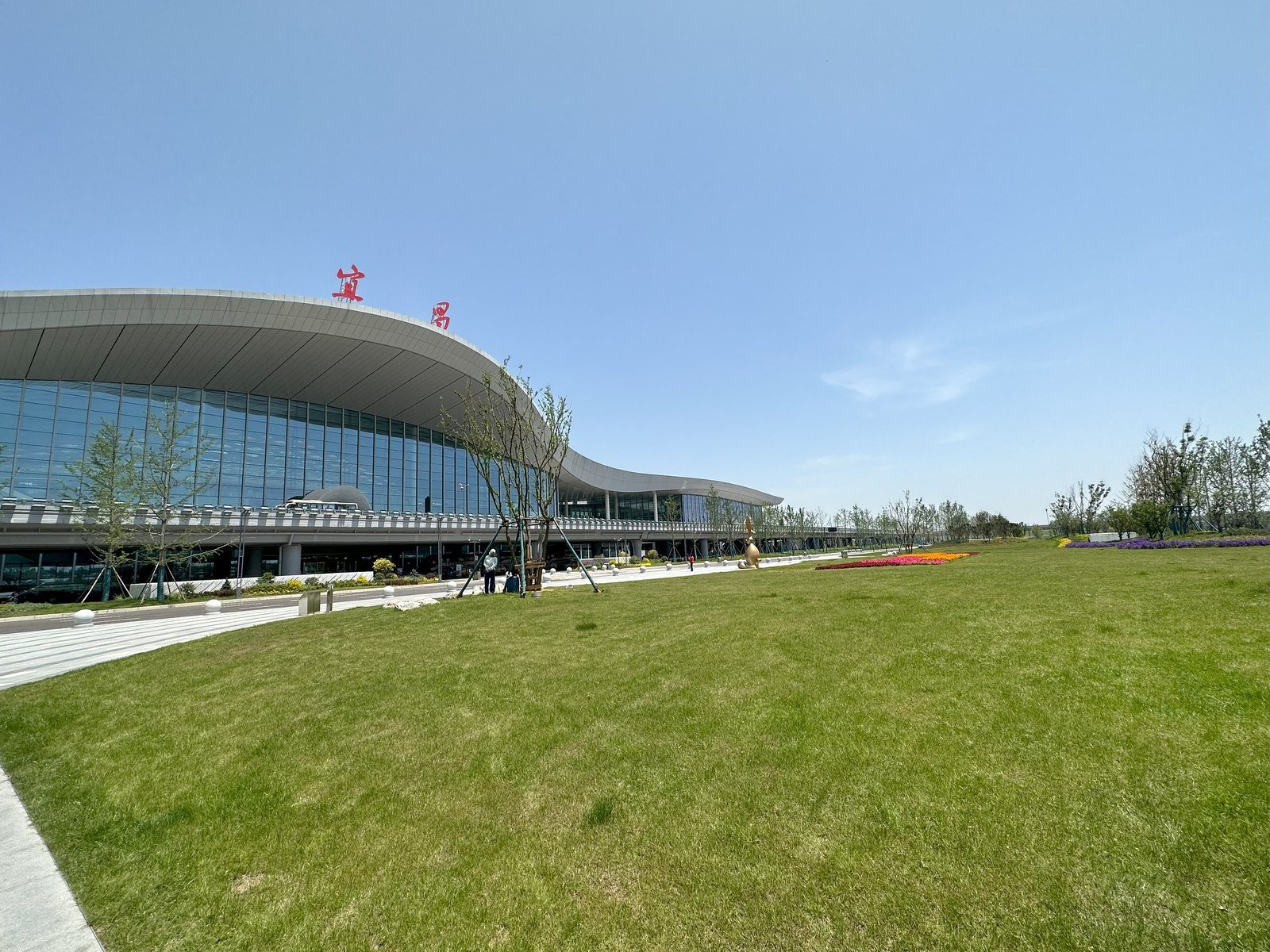
Most foreign visitors reach the Three Gorges through Chongqing or Wuhan, because those are the airports they have heard of. Yichang Sanxia International Airport is the third door, and for the gorge itself it is the closest one: 22 km from the city centre, 55 km from the dam, with a terminal small enough that you are outside with your bag before the belt has finished its second lap.
What makes it worth a paragraph is not the building. It is that a city of four million people, at the downstream mouth of the Three Gorges, has quietly assembled eleven international and regional routes — enough that a traveller from Bangkok, Seoul, Kuala Lumpur or Manila can land here directly instead of connecting through a hub and adding half a day.
The catch is the entry category. Yichang is not a 240-hour visa-free transit port. If your plan depends on that scheme, it does not work here, and you would be turned back at the counter with a valid ticket in your hand. What works is the unilateral visa-free arrangement — which, judging by the port's own figures, is how almost everyone is actually arriving.
Eleven international routes, two terminals, one small port
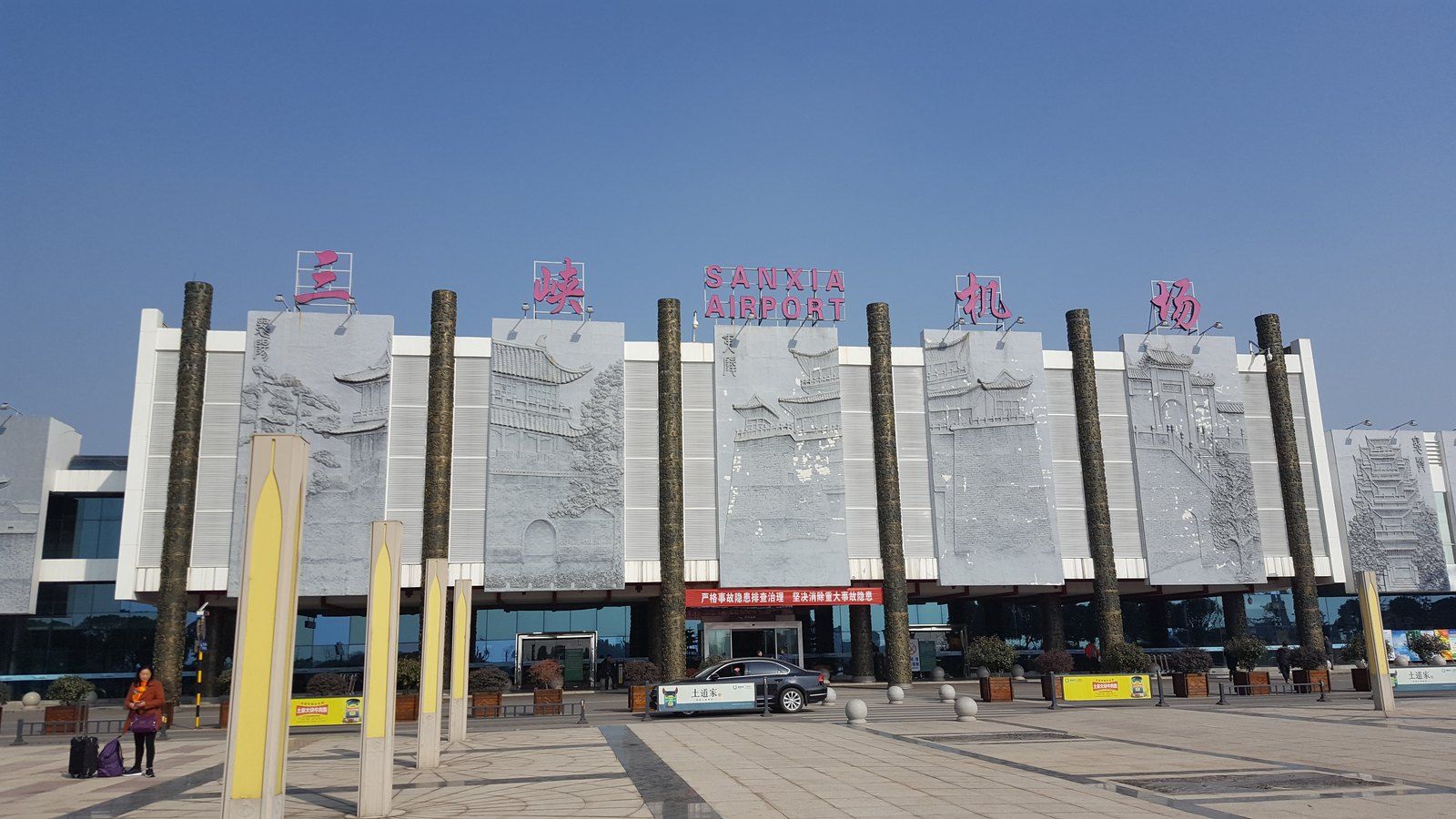
The airport is not new. It opened on 28 December 1996 as a supporting project of the Three Gorges dam, took the name Yichang Sanxia, and was formally upgraded to Yichang Sanxia International Airport on 17 April 2024. It is a 4D regional airport — one 3,200 m runway, 21 stands, 11 of them with jet bridges — and it is run by the HNA airport group with the city holding a minority stake.
The terminals are the visible evidence of how the traffic grew. T1 dates from opening: 16,500 sq m, a low hall with stone relief panels across its face and 三峡机场 / SANXIA AIRPORT picked out in red letters above them. T2 opened on 23 June 2022, 57,300 sq m, which took the airport to 73,800 sq m and a design capacity of five million passengers a year. Both are in use. Check your boarding pass for the terminal letter, not just the airport.
Then there are the routes, which are the reason this article exists. As of late November 2026 the international and regional network reads: Khabarovsk and Vladivostok in the Russian Far East; Incheon and Cheongju in Korea; Hanoi and Vientiane in South-East Asia; Kuala Lumpur and Kuching in Malaysia; Bangkok; Manila; and Hong Kong.
The South-East Asian additions are the recent ones. Kuala Lumpur, Khabarovsk and Manila all opened within five days of each other in September 2026, and two of them do not fly a fixed weekly pattern: Bangkok and Manila share an aircraft on a rolling two-week rotation of Tuesday, Thursday and Sunday, which is an efficient use of a narrowbody and a trap for anyone who assumes "three times a week" means the same three days every week. The Manila service leaves Yichang in the mid-afternoon and lands back late at night. The Hong Kong flight is the one that pushed the port over its annual record on 25 November: HB851, 170 passengers on board.
That is a small network by hub standards and a large one by regional-airport standards. It is also seasonal in places and revised without much notice, so the list above is a map of what is possible, not a timetable.
Where the airport actually sits
The published distances disagree, and it is worth knowing why. Chinese airport references put the field 22 km north-west of the city centre; Wikipedia and several English sources say 26 km. Both are defensible — the airport straddles the boundary of Xiaoting district, Yiling district and Zhijiang city, so "the centre" depends on which centre you measure from. Plan on half an hour to forty minutes by road into Yichang, and rather more in the evening peak.
The more useful number for a visitor is the other one: 55 km to the Three Gorges Dam. That is a road distance to the dam site at Sandouping, upstream of the city, and it is why Yichang rather than Wuhan is the sensible base for the dam and the gorge.
Ground transport is the ordinary Chinese regional-airport mix: an airport shuttle to the city, taxis at the arrivals kerb, and ride-hailing, which in practice needs a Chinese payment app. There is no metro and no rail link at the terminal. Yichang East railway station, on the Wuhan and Chongqing high-speed corridors, is the connection for anywhere beyond the city — and for a gorge cruise it is often the more useful arrival point than the airport, because the cruise terminals are on the river, not at the airport.
The practical point is the one that catches people: this airport is small enough to be quick and small enough to be thin. Few flights a day on your route means few alternatives if yours is cancelled. If you are connecting to a cruise departure with a fixed sailing time, arrive a day early rather than on the day.
Why 82.5% of the foreign passengers walk in without a visa
This is the number that explains the airport's recent growth, and it is worth stating precisely because it is easy to misread.
Between 1 January and 25 November 2026, 72,000 foreign nationals used the Yichang port — 57.5% of all inbound and outbound passengers, up 7.1% year on year, from 54 countries. Of the foreigners arriving, close to 30,000 came in visa-free, which is 82.5% of inbound foreign nationals, up 57.5% year on year. The top three source countries are Thailand, Korea and Malaysia, and 98% of these arrivals give tourism or business as their purpose.
Read that again: four out of five foreign passengers on the inbound side did not apply for a visa. They flew on the unilateral visa-free scheme, which China has extended repeatedly and which, as of late 2026, covers ordinary passport holders of a long list of countries for stays of up to 30 days. That list changes; check it against your nationality before you book, not after.
Two warnings, because both are live failure modes at a small port.
First: the 240-hour visa-free transit scheme does not apply here. That scheme is tied to a published list of ports, and Yichang is not on it. A traveller who books Yichang assuming they can use transit-free entry — usually because they are passing through to a third country — is relying on an arrangement that this airport cannot grant. The unilateral scheme and the transit scheme are different policies with different conditions, and only one of them works at YIH.
Second: a regional airport gets fewer discretionary decisions, not more. Visa-free entry still requires the ordinary things — a passport valid for the period the airline and the border expect, an onward or return ticket, and an address in China. At a port handling a few hundred international passengers a day, there is no queue of people in front of you to absorb a problem, and no second flight in three hours if you are sent back to the departure hall.
Upstream or downstream: the cruise arithmetic
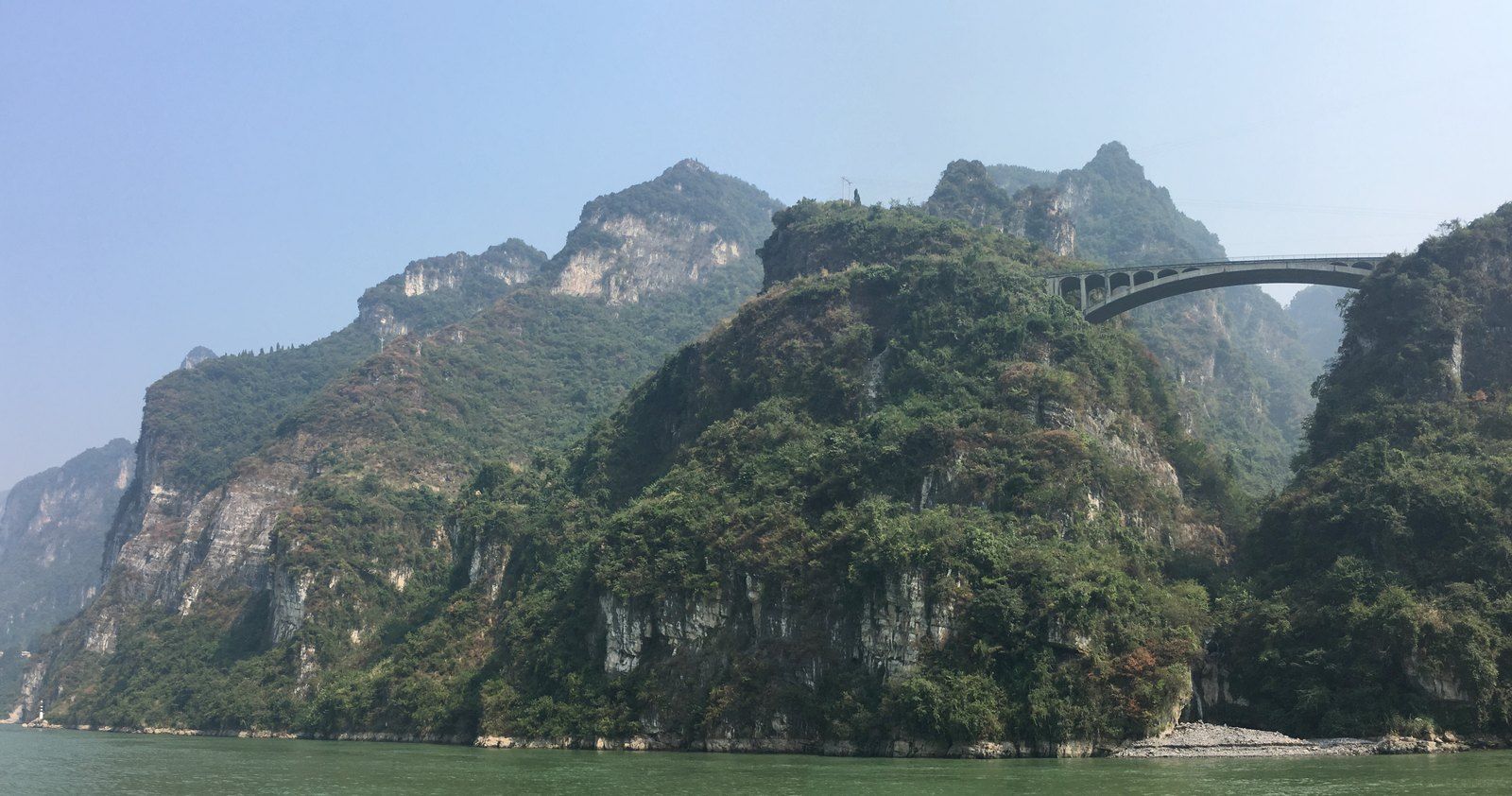
Yichang's role in the gorge is geographic and cannot be argued with. The Three Gorges run roughly 200 km along the Yangtze between Chongqing and Yichang; the dam sits upstream of the city at Sandouping; and the Gezhouba dam, the earlier and smaller of the two, is effectively at Yichang itself. Every cruise on this stretch passes both.
That gives you two directions and a real difference between them.
Downstream, Chongqing to Yichang, is the shorter run — commonly sold as three nights, four days — because the current is with you. You board in Chongqing, pass through the Qutang, Wu and Xiling gorges, and finish at Yichang, which is convenient if you want to fly out of a small airport rather than back to a megacity.
Upstream, Yichang to Chongqing, is the longer one, usually four nights, and it is the direction that puts Yichang first. You board in the afternoon, and by the next morning you are at the dam.
At the dam, ships do not simply sail through. Large vessels use the five-stage ship lock, climbing or descending in steps; smaller ones can use the vertical ship lift, which lifts a vessel whole. Either way it takes time, it happens on a schedule you do not control, and it is the single most interesting hour of the trip for anyone who likes engineering.
Two practical notes. The dam visit is usually a separate excursion, not something you see from the deck — the ship locks through, and passengers go ashore by bus to the observation points. And the direction you choose determines your airport: downstream ends at Yichang, upstream starts there. If you are flying into YIH, the upstream sailing is the one that fits, and it costs you one extra night.
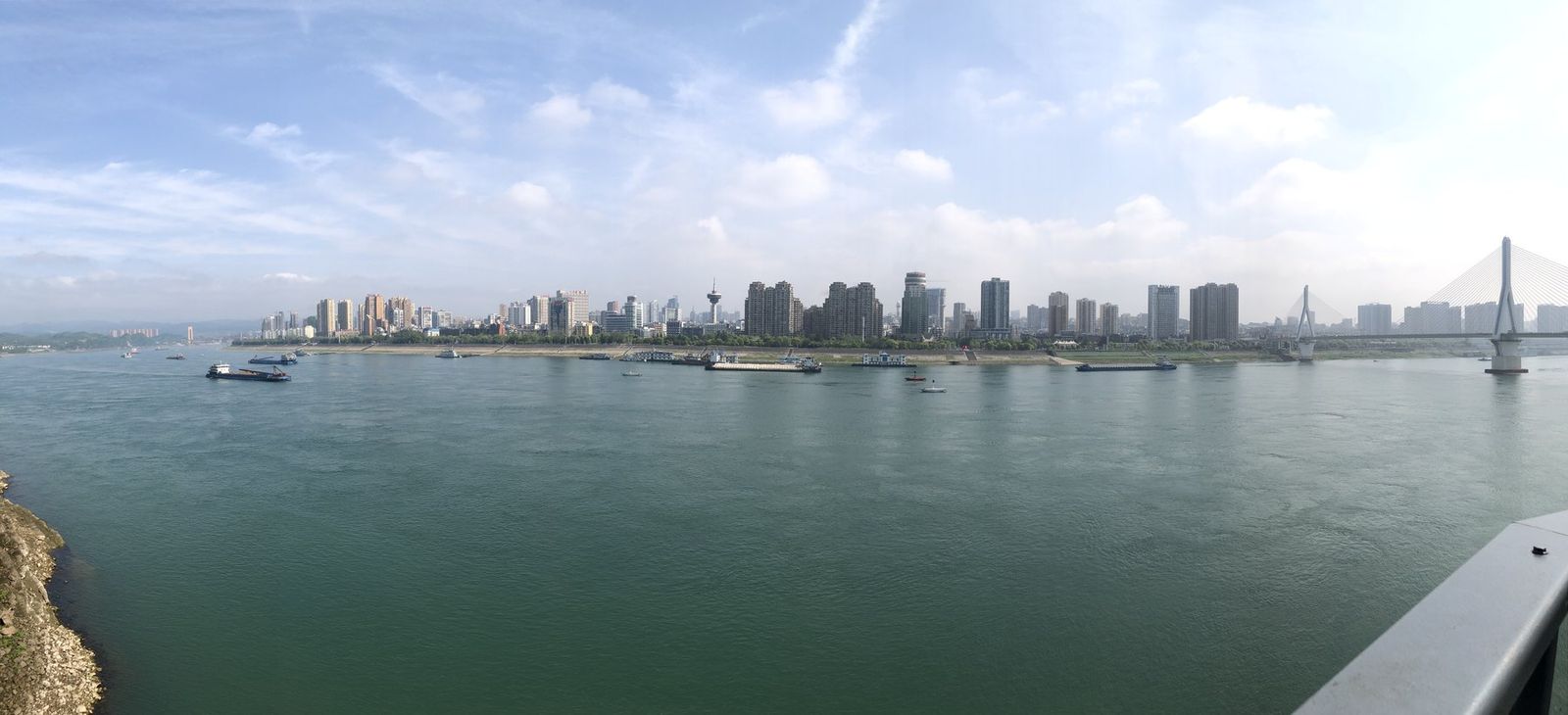
Also worth knowing: the Three Gorges are not the whole of Yichang. The Three Gorges Household scenic area, the Three Gorges Waterfall, and the Sanyou cave are all within day-trip range of the city, and the riverfront at dusk, with the barges working downstream, is the thing most visitors photograph without planning to.
What the port's numbers say, and what they do not
The 25 November milestone was reported as the port passing 123,000 inbound and outbound passengers, 36 days ahead of last year's full-year total. Three cautions about that figure.
It counts people crossing the border, not foreign tourists. The 123,000 includes Chinese residents flying to Bangkok and Hong Kong as well as foreigners arriving. The number that describes inbound tourism is the other one: 72,000 foreign nationals, 57.5% of the total.
The growth is visa-driven, not route-driven. Routes went from a handful to eleven, but the passenger mix moved because the visa-free list expanded. That means the trend is a policy trend, and policy is the thing most likely to change without warning.
Small ports have lumpy numbers. A single weekly widebody or a charter group can move the monthly total by several percent. The direction is real — this is the third consecutive year of growth at the port — but do not read the percentage as a smooth curve.
What the numbers do establish is that Yichang is no longer a domestic airport with a token international flight. It is a working regional gateway with a visa-free passenger base, and it is being marketed that way: the airport has said it intends to keep adding points toward Russia, Mongolia, Japan, Korea and South-East Asia.
Practical notes for an inbound trip
Check which terminal, not just which airport. T1 and T2 are both live. The letter is on your boarding pass and on the airport's own displays.
Do not plan on visa-free transit. Yichang is not a 240-hour transit port. Use the unilateral 30-day scheme, and confirm your nationality is on the current list.
Leave the connection a night. Eleven routes on a regional field means thin frequencies. If a cruise sails at a fixed hour, arrive the day before.
Decide the direction before you book the flight. Upstream sailings start at Yichang and end in Chongqing; downstream sailings end at Yichang. Flying into YIH suits the upstream one.
Bring a payment method that works. Shuttle and taxi are fine with cash or an international card in most cases; ride-hailing and the custom shuttle apps are not. A Chinese payment app, or a hotel that will book a car, removes most of the friction.
Expect the dam to take a day. It is 55 km out, the excursion is by bus and on foot, and the security check at the site is its own queue.
Some links in this section are affiliate links — we may earn a commission if you book through them, at no extra cost to you. Affiliate disclosure.
What's worth booking ahead
Whether your route is actually operating. The network is eleven routes and some are seasonal. Kuala Lumpur, Khabarovsk and Manila opened in September 2026; Bangkok and Manila share an aircraft on a rolling Tuesday–Thursday–Sunday pattern that shifts between weeks.
Which terminal your flight uses. T1 and T2 are both in service, and the letter changes with the flight, not with the airline.
Your visa category. The unilateral 30-day scheme covers a list of nationalities that is revised; the 240-hour transit scheme does not apply at Yichang at all. Confirm both against your passport before booking.
The sailing date, not just the season. Upstream and downstream cruises depart on fixed days, and the dam's lock schedule is not yours to move.
👉 Check Three Gorges cruises, Yichang transfers and dam day trips
Image sources: the feature photograph of the T2 terminal is by W457137120 under CC0; the T1 terminal, the Yichang skyline and Xiling Gorge are by Fxqf and Fredlyfish4 under CC BY-SA 4.0, all via Wikimedia Commons and credited in the captions. All four are real photographs of Yichang and its airport. Route lists, frequencies, terminal assignments and visa rules change — confirm with the airline, the airport and the National Immigration Administration before you travel. Last verified 29 November 2026.