 China Trip
Wuyishan's Seoul Route Is Back: Who the 240-Hour Transit Fits
Status check (verified 2026-11-05): On 4 November 2026 flight SC7686 from Seoul landed at Wuyishan with 60 passengers and 10 crew, restoring a link that had been suspended for nearly a year. The service is a charter, not a scheduled year-round route: 48 flights between 4 November 2026 and 22 January 2027, twice weekly, about 2 hours 50 minutes each way. Separately, Wuyishan has been one of the ports covered by China's 240-hour visa-free transit since 17 December 2024.
On this page
Two things happened to the same small airport in Fujian, and they are easy to confuse. One is a flight. The other is an immigration rule that has nothing to do with that flight, applies to 54 nationalities, and — this is the part people get wrong — does not let you fly in and out from the same country.
If you are trying to work out whether Wuyishan can be part of a China trip without a visa, the answer depends almost entirely on where you fly to next, not on where you fly from.
What actually resumed, and how long it lasts
The route is Seoul to Wuyishan, and it is being run as a charter. That word matters more than the destination.
A charter has an end date built into it. This one stops on 22 January 2027. The schedule also shifts partway through: the first 36 flights operate on Wednesdays and Saturdays, and the last 12 switch to Tuesdays and Fridays. If you are looking at a trip in February 2027, there is nothing to book yet, and no announcement that there will be.
So the honest reading is: for the next eleven weeks, Wuyishan has a direct link to Seoul twice a week; after that, it goes back to being an airport you reach through another Chinese city. Anyone planning a spring trip should treat this as a window, not a fixture.
That is not a reason to ignore it. It is a reason to check the date before you build an itinerary around it.
The 240-hour rule: three conditions, and the one that disqualifies most trips
On 17 December 2024 China's National Immigration Administration extended visa-free transit stays from 72 and 144 hours to 240 hours — ten days — and added 21 ports, taking the national total to 60 ports across 24 provinces. Wuyishan was one of the 21.
The scheme has three conditions, and all of them have to hold:
- you hold a passport from one of the 54 eligible countries
- you are in transit to a third country or region — not back to where you came from
- you leave within 240 hours, with an onward ticket to prove it
The third condition is where people fall over, and the second is where most plans quietly die. Seoul → Wuyishan → Seoul is a round trip, not a transit. It does not qualify, no matter how short the stay. Neither does Shanghai → Wuyishan → Shanghai.
What does qualify: Seoul → Wuyishan → Bangkok, or Tokyo → Wuyishan → Singapore, or London → Wuyishan → Hong Kong. The onward leg has to leave China for somewhere that is not the country you arrived from. The policy's wording is "a third country or region", which is what allows onward travel to Hong Kong, Macau or Taiwan — but confirm that with your airline at check-in, because the check-in agent, not the immigration officer, is the person who decides whether you board.
One more thing that catches people: 240 hours is not extendable. It is ten days from entry, and the clock does not pause.
What "the whole of Fujian" actually buys you
Here is the part that changed in December 2024 and is still widely misreported.
Before the change, foreign travellers entering Fujian on transit visa-free arrangements were confined to Xiamen city. After it, the permitted stay area for Fujian is the entire province — and travellers can move between the designated areas of all 24 participating provinces, not just the one they entered.
For a Wuyishan arrival this is the difference between a mountain trip and a route. Land at WUS, spend three days in the Wuyi range, then take the train south to Fuzhou or Quanzhou or Xiamen and fly out from there. Fujian now has six ports in the scheme — Xiamen Gaoqi airport, the Wutong ferry terminal and the international cruise centre, plus Fuzhou Changle, Quanzhou Jinjiang and Wuyishan — so you are not obliged to leave the way you came in.
That flexibility is the actual value of the policy, more than the ten days themselves. Ten days in one mountain range is a long holiday. Ten days across a province with three airports is a trip.
Landing at WUS: a small airport with a short ride
Wuyishan airport is small, and close. The resort strip at Sangu, where most of the hotels and guesthouses are, is under twenty minutes away by road; the park's own entrances are a little further. Compared with the hour-plus transfers that most Chinese gateway airports impose, this is unusually civilised.
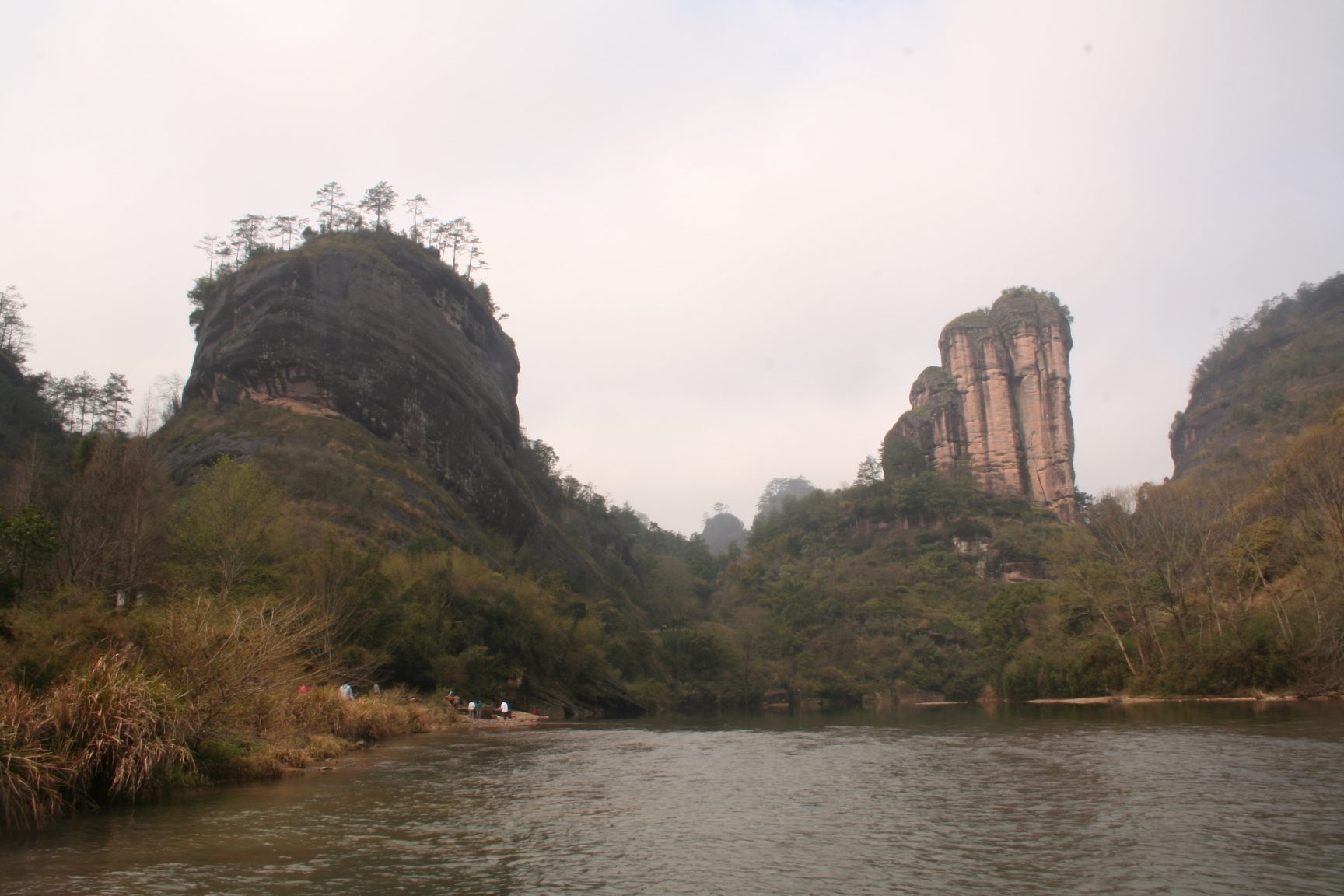
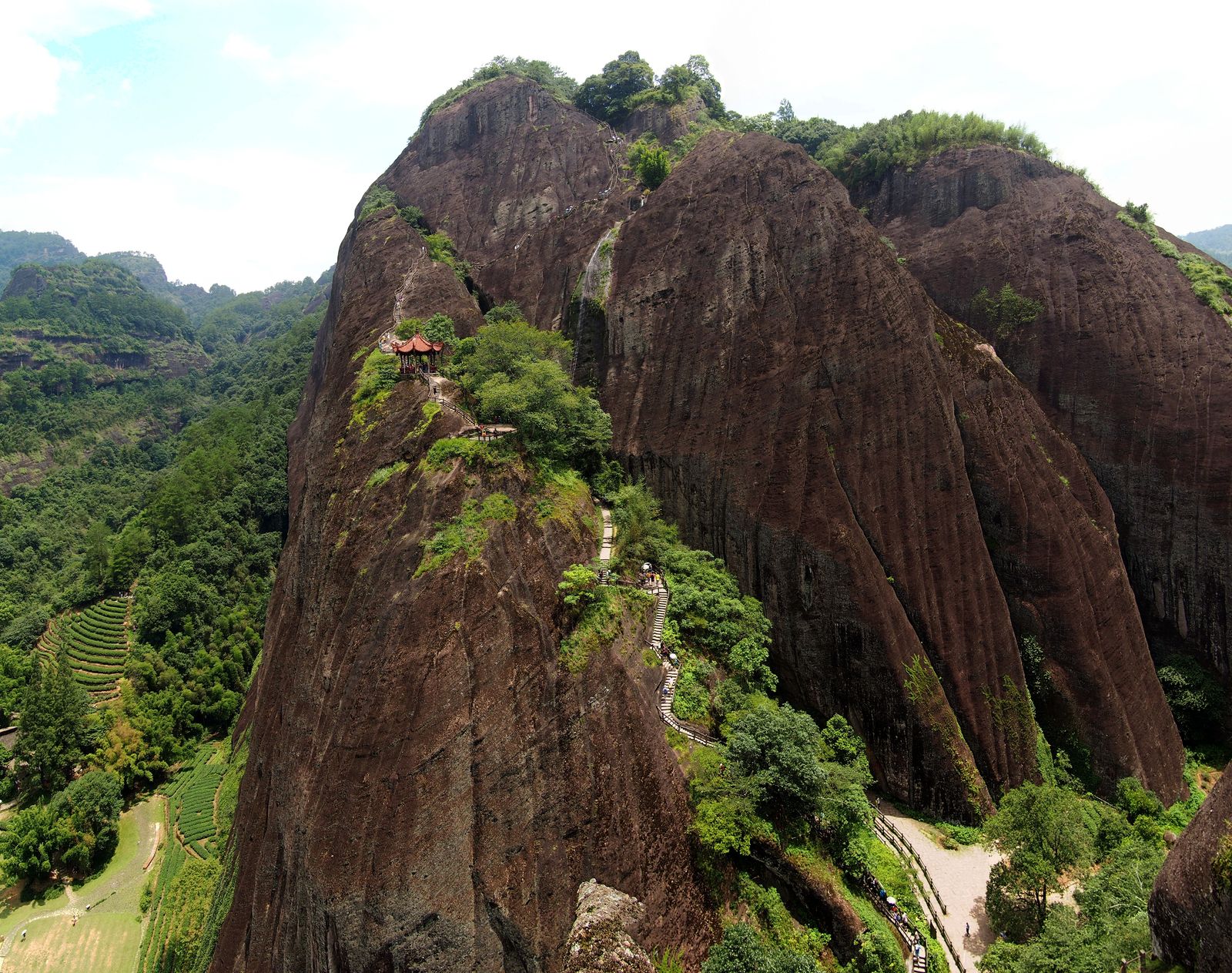
The park itself is a UNESCO World Cultural and Natural Heritage site, inscribed in 1999 for a landscape of red sandstone peaks cut by a river that bends nine times through them. It is not a hiking destination in the alpine sense — the highest viewpoint is under 500 metres above the valley — but the topography is strange enough that the walking never feels like a city park.
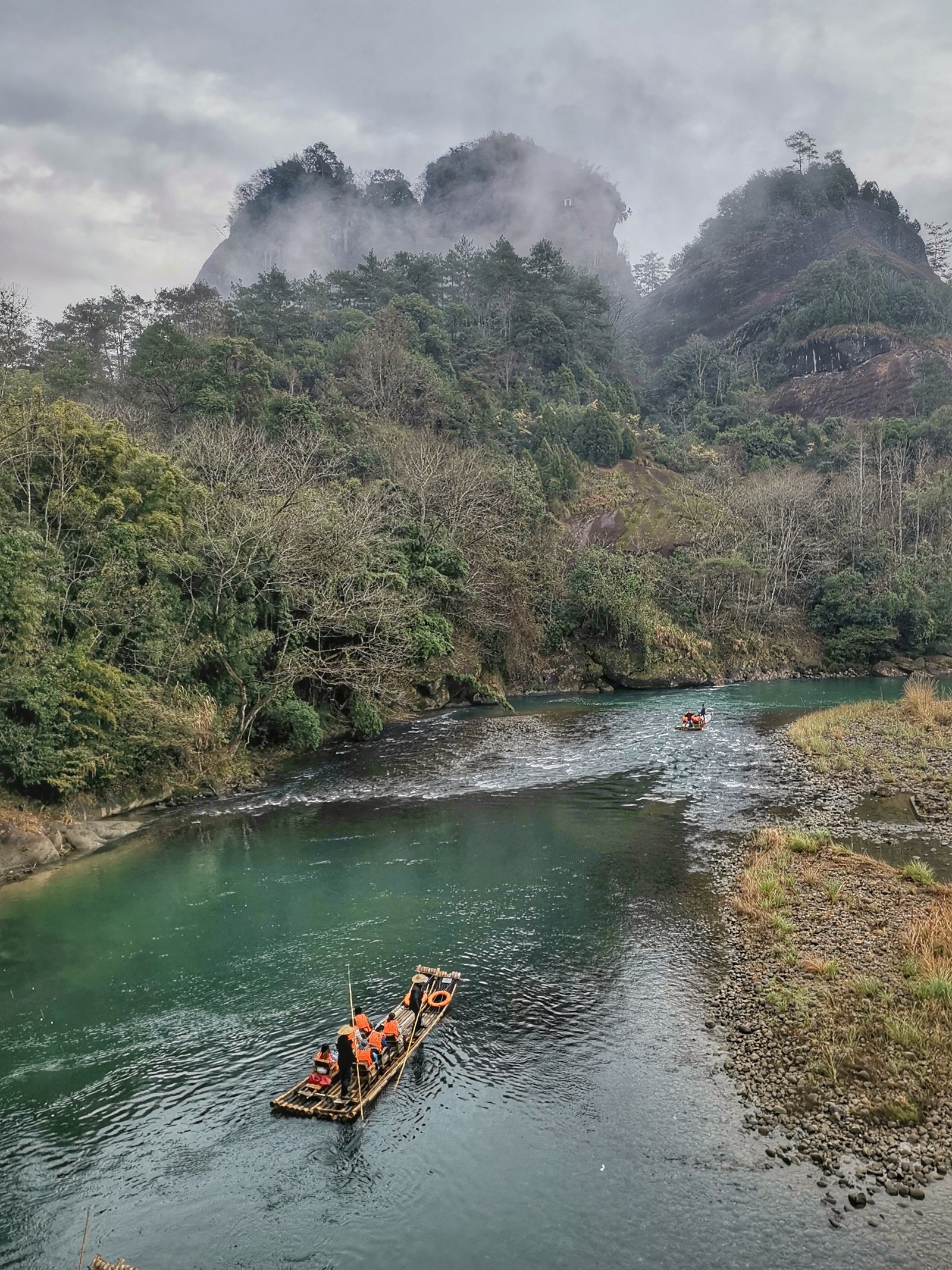
Practical shape, as listed by Trip.com sellers in late 2026 and worth re-checking before you go: the main gate ticket is currently free, but entry requires a real-name reservation through the official WeChat mini-program, and there is no ticket window to fall back on. What you actually pay for is the shuttle bus (around ¥70, ¥85 or ¥95 for one, two or three days) and the Nine-Bend raft (around ¥130 per person, ninety minutes). Private cars are not allowed inside; the shuttle is not optional.
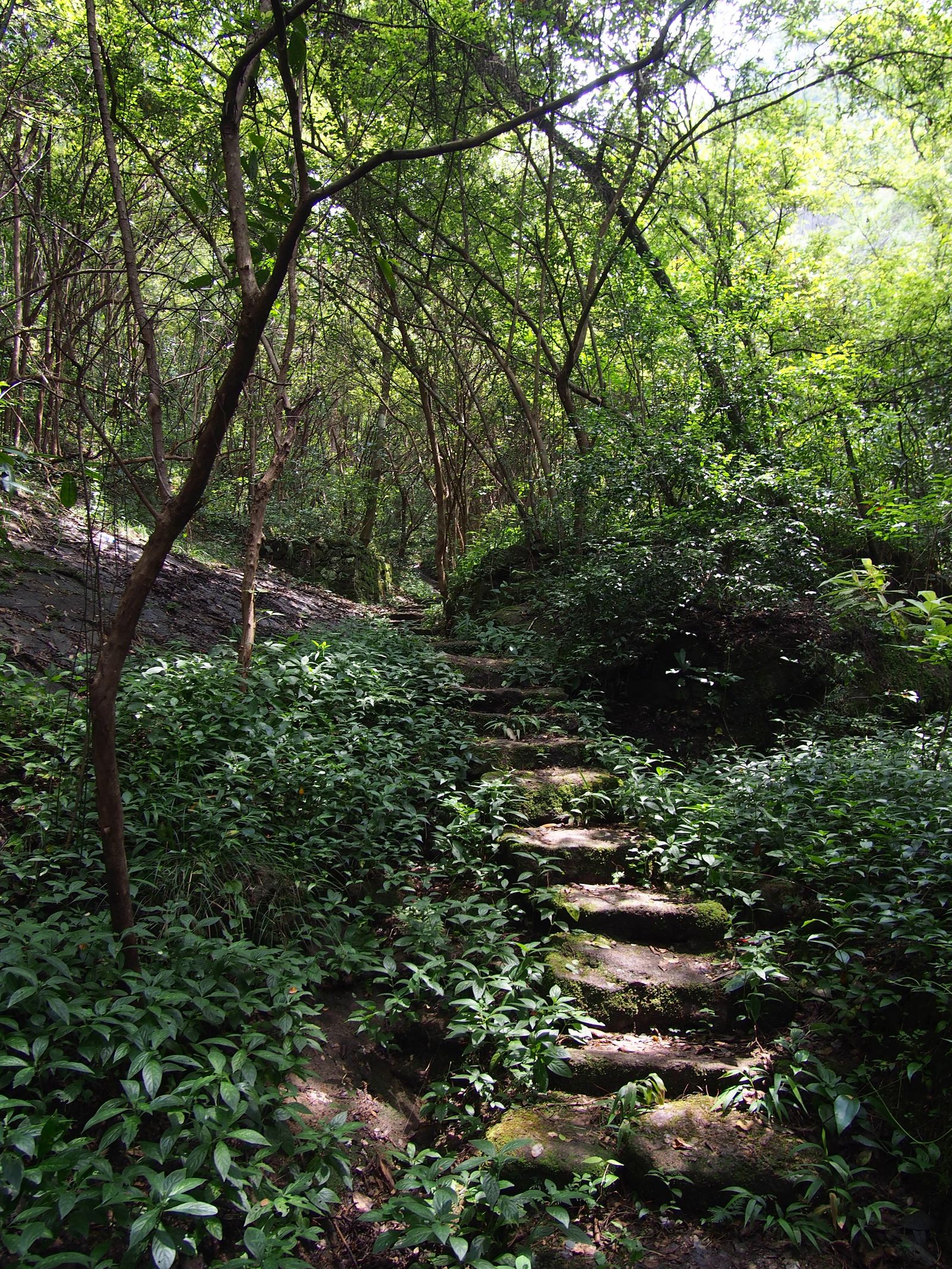
Two operational notes that matter more than they sound. Raft tickets sell out — book three to seven days ahead, and take the earliest departure you can get, because the mist sits on the water until mid-morning and the light is gone by eleven. And the mountain is slippery after rain: the stone steps on Tianyou Peak are cut into the rock and have been polished by a few million pairs of shoes.
A ten-day shape that works
Ten days is the ceiling, so build backwards from your onward flight.
Days 1–3, Wuyishan. One morning on the raft, one morning on Tianyou Peak (go early; the stair is single-file in places), and one slow day in the tea valleys — the walk from the Da Hong Pao mother trees through to Shuilian Cave is flat, shaded and about four kilometres. This is the least strenuous mountain itinerary in China that still looks like this.
Days 4–6, Fuzhou. Three hours by high-speed train. The city is under-visited by foreign travellers and has the oldest surviving urban quarter in the province at Sanfang Qixiang, plus a nineteenth-century foreign concession on Nantai Island.
Days 7–9, Quanzhou or Xiamen. Quanzhou was the port Marco Polo sailed home from, and its old town is a UNESCO site in its own right; Xiamen is the easier, more obviously coastal option with an airport you can leave from.
Day 10, fly out. Xiamen Gaoqi is the natural exit — it is a 240-hour port in its own right, so the onward leg is straightforward.
If you only have a long weekend rather than ten days, the same logic compresses: land, do the raft and the peak, leave from Xiamen instead of doubling back to Wuyishan.
What this does not change
- This is transit, not a tourist visa. The 240 hours exist because you are passing through on the way to somewhere else. If China is the destination and not the connection, a different rule applies — and for most nationalities that means a visa, or one of the unilateral visa-free arrangements, which have their own country list and their own time limits.
- The flight is a charter with an end date. 22 January 2027 is on the schedule, and nothing has been announced beyond it.
- The ten days cannot be extended, and the clock starts at entry.
- The eligible-country list changes. It is set by policy and revised several times a year. Check your own passport against the current National Immigration Administration list rather than against an article — including this one.
- Prices move. The gate, shuttle and raft figures above are what sellers were listing in late 2026, not a published tariff.
The reason Wuyishan is worth the trouble is not that it is convenient — it is that it is one of the few places in China where a ten-day transit window and a genuinely strange landscape overlap. The reason to be careful is that the two facts that make it work, a charter flight and a policy port list, are both temporary in different ways, and only one of them comes with a published end date.
Flight details, passenger figures and the charter end date are from China News Service reporting of 4 November 2026. The 240-hour transit rules, the port list and Fujian's province-wide stay area are from the National Immigration Administration's announcement of 17 December 2024 and the Fujian provincial government's briefing of 18 December 2024. Gate, shuttle and raft prices are as listed by Trip.com sellers in late 2026 and were not independently confirmed with the park. Immigration rules change; verify before you travel.