China Arrival Card for Foreign Visitors: Do You Still Need One, and Can You File It Online?
✅ Policy check (verified 2026-10-21): online filing (live since 20 November 2025) and the seven exemption categories are unchanged, and the service is free — any site charging for it is not official. Source: NIA ten-measure notice.

On this page
- Do I need a China arrival card?
- The arrival card is not a visa
- How to file it online before you travel
- If you did not file one: what happens at the airport
- Who is exempt: seven categories
- At Guangzhou's ports during the Canton Fair
- Two things people forget after landing
- FAQ
- Do I still have to fill in a China arrival card?
- Can I file it before I fly?
- What happens if I don't file it online?
- Does an arrival card get me into China?
- Is the arrival card the same as a visa?
- Check dates and availability
Every foreign traveller entering mainland China still has to file an arrival card — the short form that records who you are, which flight brought you in, where you are staying and when you plan to leave. What changed recently is how you file it. Since 20 November 2025 the card can be completed online before you fly, at ports across the country, instead of on the plane with a borrowed pen.
The short answers, up front: yes, you still need one, and yes, you can file it before you land. The online form takes about two minutes. The paper version at the airport takes roughly five to eight minutes per person, and official guidance puts the time saved by filing ahead at 60–80%.
This guide follows the order you will actually meet the process: whether you need the card at all, how to file it online, what to do if you didn't, who is exempt, and the two follow-up tasks that catch people out after landing.
Do I need a China arrival card?

Essentially every foreign national crossing a mainland port does, including travellers arriving visa-free. The card does not grant entry on its own — it is a record, not a permission — and filing one does not guarantee you will be admitted, because the border inspector always has the final say. But it is a required document for the vast majority of visitors, so plan for it rather than around it.
The card covers the entry moment only. It says nothing about what you do afterwards, and it is not the same thing as your visa.
The arrival card is not a visa
This is the mix-up that causes the most confusion, so keep the two separate in your head.
- Your visa — or your visa-free eligibility — decides whether you can come at all.
- The arrival card only records who you are on this trip: where you flew in from, where you are staying and when you are leaving.
Neither one replaces the other. Travellers entering visa-free still file an arrival card. And filing a card does not, by itself, get you past the desk — border inspection retains full discretion over who is admitted.
How to file it online before you travel
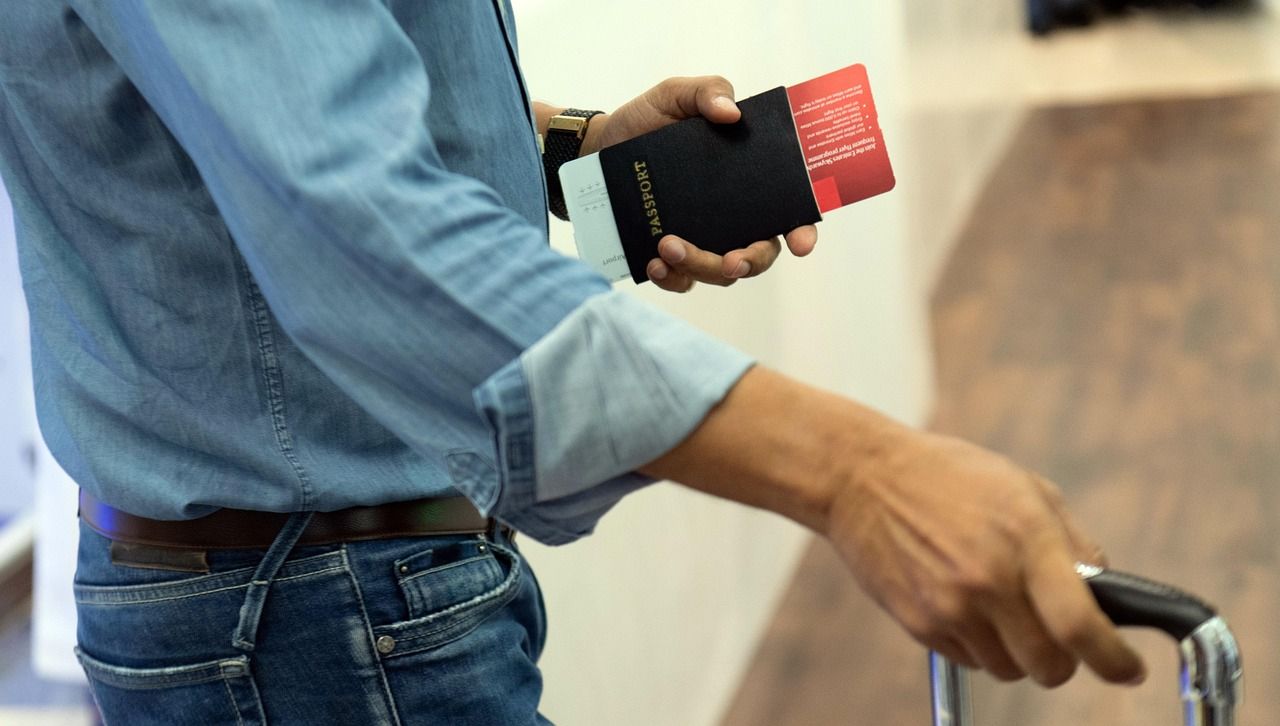
Filing ahead is done through the official channels, not through a third-party site:
- The National Immigration Administration government website
- The National Immigration Administration government service platform
- The "NIA 12367" mobile app
- The official WeChat mini-program
- The official Alipay mini-program
- The arrival card QR code, scanned with your phone
Once you submit, the system generates an electronic QR code. At the port, the officer either pulls your details up automatically or reads the code with dedicated equipment, so you never hand over a paper card at all.
The online form is bound to your flight and address. If either changes, refile before you travel — more on that below.
If you did not file one: what happens at the airport
Missing the online step will not keep you out. At the port you have three fallbacks:
- Scan the QR code on site and fill the form on your phone.
- Use the on-site self-service device.
- Fill out a paper arrival card by hand.
The only real cost is time. You are doing at the airport what you could have done before you left home, and at busy periods that queue is exactly what the online option is designed to avoid. If you want the smoothest arrival, file online and skip all three.
Who is exempt: seven categories
The following do not file an arrival card:
- Holders of a Foreign Permanent Resident ID card
- Holders of a Mainland Travel Permit for Hong Kong and Macao Residents (non-Chinese nationality)
- Travellers on a group visa, or entering under group visa-free arrangements
- Travellers in 24-hour direct transit who do not leave the restricted area of the port
- Cruise passengers who enter and leave on the same ship they arrived on
- Travellers entering through the fast-track lanes
- Foreign-national crew of inbound and outbound transport vehicles
Everyone else files one.
At Guangzhou's ports during the Canton Fair
If you are flying into Guangzhou this autumn, there is a little local context worth knowing. The 140th Canton Fair opened in the city on 15 October, in its 70th anniversary year, and Guangzhou border inspection published 16 service measures to handle the crowds. Three of them touch ordinary travellers:
- Online filing is being promoted at the ports, with assistance desks added for anyone who struggles with the form. Baiyun border inspection says its online filing rate has already passed 95%.
- Baiyun International Airport, Pazhou Ferry Terminal and Nansha Ferry Terminal have set up counters for the 240-hour temporary entry permit for foreign nationals, designed to handle the permit and the border inspection formalities together, on the spot, without a separate trip. Baiyun also offers an appointment service.
- The 12367 call centre's Guangzhou desk runs a Canton Fair hotline with round-the-clock multilingual advice. Baiyun's T2 and T3 terminals and Pazhou Ferry Terminal have fast-track enrolment points, and enrolment completed at one is shared nationwide — useful if you later cross at a different port.
If you are not arriving in Guangzhou, treat this as a sign of the general direction rather than a rule that applies to your airport. The online channels listed above work at ports nationwide.
Two things people forget after landing

Accommodation registration. The arrival card only covers the moment you cross the border. If you stay somewhere other than a hotel — a guesthouse, a short-term rental, a friend's flat — you must register your accommodation with the local authorities within 24 hours of moving in. Hotels report your stay for you, which is why most visitors never think about this. Do not assume the arrival card covers it. It does not.
Refile if your itinerary changes. The online form is tied to your flight and your first address. If your flight or your first night's accommodation changes, file the card again before you depart. Otherwise your details will not match what the officer sees, and you may be pulled aside to have them checked — precisely the delay the online form was supposed to spare you.
FAQ
Do I still have to fill in a China arrival card?
Yes, if you are a foreign national entering a mainland port. Only the seven categories listed above are exempt.
Can I file it before I fly?
Yes. Since 20 November 2025 the card can be filed online through the official channels at ports nationwide, and it takes about two minutes.
What happens if I don't file it online?
Nothing that stops you entering. You file on the spot instead — by scanning the QR code on your phone, using a self-service device, or filling a paper card. It simply costs more time.
Does an arrival card get me into China?
No. It is a record, not a permission. Your visa or visa-free eligibility decides whether you can come, and border inspection has the final say.
Is the arrival card the same as a visa?
No, and they do not substitute for each other. Visa-free travellers still file an arrival card, and a filed card does not guarantee admission.
Some links in this section are affiliate links — we may earn a commission if you book through them, at no extra cost to you. Affiliate disclosure.
Check dates and availability
Once you are through the inspection area, every first arrival in China runs into the same practical question: how to get from the airport to your hotel with your luggage, before you have a local SIM or a working data plan. Pre-booked airport transfers are worth comparing if you land late at night, if you would rather not negotiate a taxi after a long flight, or if the signs at your arrival city are not in a language you read. Booking platforms list private transfers and meet-and-greet pickups by city and airport, so you can line one up before you fly:
👉 Check dates and availability
Disclosure: This article includes an affiliate link. I may earn a commission if you book through it, at no extra cost to you. This guide describes publicly listed information only — I have not personally taken these tours.
Image sources: stock/library photos, credited where required.