 China Trip
Dalian Airport Entry: 83% Arrive Visa-Free, and 30 Minutes to Town
Status check (verified 2026-11-04): Dalian's air port of entry passed one million inbound and outbound travellers for the year on 3 November 2026 — the third consecutive year it has been the first airport in northeast China to reach that mark. Of the 398,000 foreign nationals processed, 83.4 per cent entered visa-free, up 18 per cent year on year. Since 5 November 2025, Zhoushuizi has also been one of ten Chinese airports operating 24-hour direct transit without immigration formalities.
On this page
Most articles about a Chinese airport tell you where the taxi rank is. This one is about something less visible: what the composition of the arrivals tells you about how the border actually works here, and which of the two transit options you are even eligible for.
Start with the denominator, because it is where most retellings go wrong.
What the million figure does and does not mean
The one million is total inbound plus outbound passenger movements at the airport's port of entry, not one million foreign tourists. The foreign share is 398,000. The 83.4 per cent applies to that 398,000 — it means four in five foreign nationals who landed at Dalian this year did not need a visa to do it.
That is a different claim from "83 per cent of everyone arriving was visa-free". Chinese passport holders make up most of the remaining passenger volume, and they are not entering on a visa at all.
Both numbers are worth keeping because they explain the terminal you walk into. A port where visa-free entry is the default for foreigners is a port built for short-haul, high-frequency, repeat traffic — and Dalian's route map matches: 16 international and regional routes covering five countries and regions, with four new Russia routes added this year, including Vladivostok, Khabarovsk and Yakutsk.
Practically, this is why signage at Zhoushuizi leads with Russian rather than English, and why the staff at the information desk are more likely to switch into Russian or Korean than into English. If your Mandarin runs out, that is not a problem here — but do not assume the English-speaking queue is the fast one.
The 24-hour transit rule, and the three conditions
China's 24-hour direct transit arrangement lets a traveller pass through without going through entry formalities, and since 5 November 2025 it has applied at ten airports, Dalian Zhoushuizi among them — the first in northeast China.
The conditions are strict and all three must hold:
- an international connecting ticket departing within 24 hours
- the traveller does not leave the restricted area of the port
- the onward flight goes directly to a third country or region
Miss any one and the arrangement does not apply; you enter normally, on whatever visa or visa-free basis you are entitled to. The third condition is the one that catches people: flying in from Seoul and back out to Seoul is a round trip, not transit, and no amount of a five-hour layover changes that.
Compare it honestly with the 240-hour transit policy, which is a different scheme with its own list of eligible ports and its own requirement of an onward ticket to a third country. They are often mentioned in the same breath and they are not the same rule. If your plan involves leaving the airport, you are looking at the 240-hour policy, not this one.
At the counter
Dalian's border inspection put in eight self-service terminals for the foreign nationals' arrival card, so the form can be completed on the spot rather than hunted down on the plane. There is also a multilingual youth service team, and the airport runs what it calls fast-in, fast-out handling for international flights.
For a first arrival, the order of operations is: arrival card (or terminal), then the immigration queue, then baggage, then customs. The self-service terminals save time only if you reach them before joining the queue — they sit in the arrivals hall, not after passport control.
From the terminal into the city
Zhoushuizi is close. The airport sits about 10 kilometres from the centre, and Metro Line 2 stops directly beneath the terminal — you do not walk out to a car park to find it.
| Mode | Cost | Notes |
|---|---|---|
| Metro Line 2 | ¥3–5 | Airport station is under the terminal; 25–40 min to Qingniwaqiao |
| Taxi | ¥20–40 | To Zhongshan Square; about ¥30 to Xinghai Square |
| Airport shuttle / ride-hailing | varies | The fallback once the metro has stopped |
The metro is the sensible default in daylight and the wrong choice late at night: the last trains run at around 22:30, and a late arrival will not make it. That is the single most common way people lose an hour here — landing at 23:00 and standing in front of a closed metro entrance with luggage.
If you are arriving late, book the car before you land rather than negotiating at the kerb.
The city terminal at Dalian North
Since August 2026 there has been a second option, and it works in the departure direction: a city air terminal at Dalian North railway station where you can check in and drop bags before taking a free shuttle to the airport.
This is useful in a specific case — if your trip ends with a high-speed train into Dalian North and an afternoon flight out, you can clear the luggage at the station and spend the intervening hours in the city rather than at the airport. It is not useful on arrival; the shuttle runs one way.
If you have two days
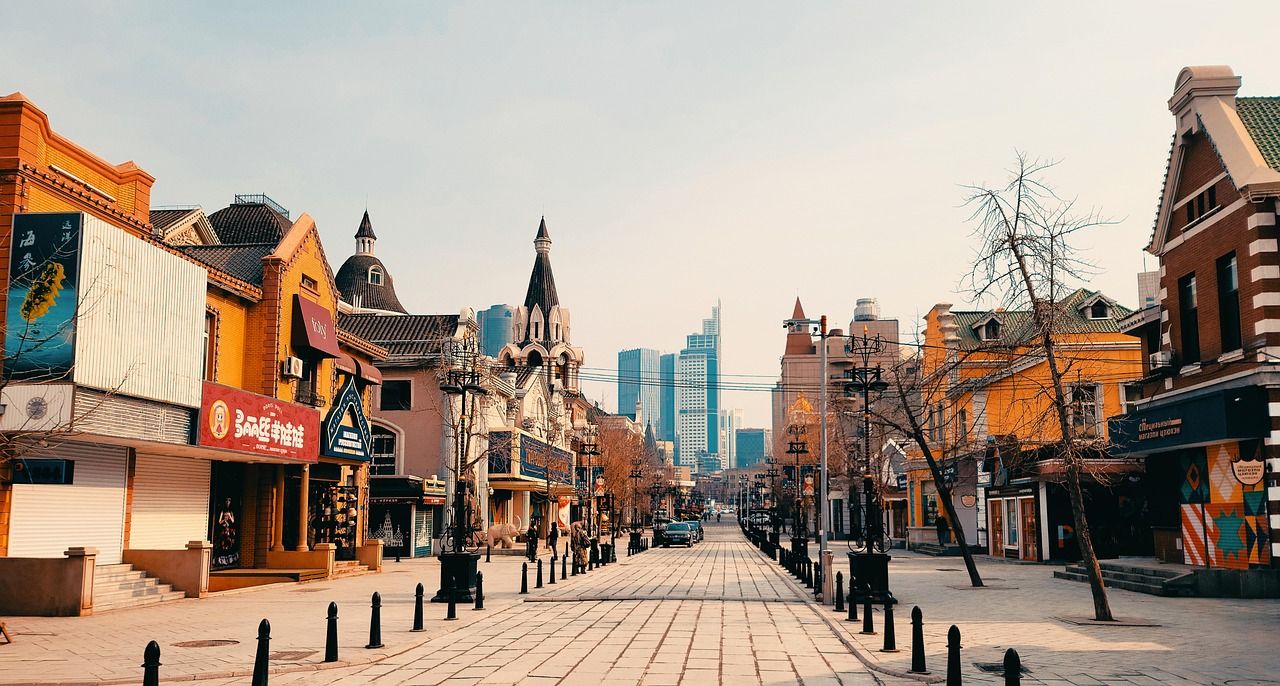
Two days is enough to understand why the city has the route map it has. Day one is the old city and the water: Russian Street for the brick facades built during the brief Russian period, then Binhai Road along the cliffs, then Xinghai Square in the evening when the bay bridge lights come on.
Day two, take tram 201 — a century-old line with wooden-bodied cars, ¥1 a ride — and then head out towards Lüshun if you have the time.
What this does not change
- Visa-free entry is not guaranteed entry. The 83.4 per cent describes who was admitted, not who is entitled. Border officers can still ask for accommodation bookings, an onward ticket and proof of funds, and the arrival card is a legal declaration.
- The 24-hour transit rule is not a city pass. It assumes you stay inside the restricted area. The moment you want to leave the airport, different rules apply.
- The 30 minutes is a metro estimate, not a promise. It holds for the airport-to-Qingniwaqiao run outside peak hours, and it assumes the train is running.
- The visa-free list is a moving target. Which nationalities can enter China without a visa, and for how long, is set by policy that changes several times a year. Check your own nationality against the current list before booking, not against an article — including this one.
The useful thing about a port like Dalian is not that it is fast. It is that the traffic through it is predictable: mostly short-haul, mostly visa-free, mostly repeat. That tells you what the queues will look like, and it tells you that the airport was designed for people who already know where they are going.
Port figures, transit conditions, fares and terminal facilities were checked against official and state-media reporting on 2026-11-04. Immigration rules change; verify before you travel.