 China Trip
Xi'an's Changan Twelve Shichen: A Tang Market You Can Touch
Status check (verified 26 November 2026): The venue is open daily, 10:00–22:00, last entry 21:00, and one ticket allows re-entry all day. Two things are not fixed in advance: the winter timetable of its three-hour live game, and the opening date of its second phase, which is still being built. Check the official mini-programme on the morning of your visit for the game's slots.
On this page
- The short answer
- What ¥68 buys, and what it does not
- A street built as a set of actions, not a set of objects
- The three-hour game that decides your timetable
- What works without a word of Chinese
- Two metro stations, and one quiet window
- Eating inside: the persimmon is the point
- What is not open yet
- Why a shopping-plaza basement ended up on the national list
- Practical notes for an inbound trip
- What's worth booking ahead
The short answer
Most of Xi'an's famous sights are things you look at from behind a barrier. The Terracotta Army stands in a trench behind glass; the city wall is a wall. Changan Twelve Shichen is the reverse: 20,000 square metres of Tang-dynasty street built indoors, one floor below a shopping plaza, where the ticket buys three hours of things to do rather than an object to photograph.
¥68 for an adult, ¥38 for a student, and you can walk out for lunch and come back on the same ticket. Inside: a market of stalls, a wine house with a pipa player, a stage running dance pieces through the day, and a cast of live actors who will stop you in the street and ask you to finish a line of poetry.
For a foreign visitor the relevant fact is narrower than the marketing. Almost nothing inside requires Chinese. A salute is learned by watching. Breaking a bread into a bowl is done with your hands. When you fail at the poetry, someone else in the crowd finishes it for you.
What ¥68 buys, and what it does not
The gate ticket is the cheap part. It covers the street, the roving performances and the games. It does not cover two things that most visitors end up paying for.
Hanfu. Wearing Tang clothing is optional, and the venue sells it as a bundle rather than a rental: packages combining entry with costume and hair styling run ¥88 to ¥155, the upper end including a photo session. You can also rent outside and walk in wearing it. The building is heated, so a thin Tang-style layer in December is comfortable rather than brave.
The live game. The three-hour immersive game is priced separately, and its ¥108–¥138 band includes the gate ticket, which is why booking it as an add-on after buying entry costs more than it should.
Two smaller notes worth knowing before you pay. Some booking platforms list a from ¥63 rate — the same ticket, discounted — so compare before buying at the door. And the ticket is valid for the whole day with re-entry, which is unusual in China and is the single most useful thing about it: the street sits ten minutes' walk from a night-time pedestrian mall, and the obvious plan is to do both in one evening.
A street built as a set of actions, not a set of objects
The design logic is stated plainly by the operator: not "Tang poetry in books" but "Tang poetry in daily life". In practice that means the street is organised around things you can pick up.
The mass layer is a circuit of games — pitch-pot arrows, chuiwan, the word game feihualing, Luban locks, weiqi boards. Winners are paid in flying cash, the Tang name for a draft note, and the notes buy drinks, souvenirs or a session in the immersive game. It is a closed economy with no cash value, which is exactly why children take it seriously.
The deep layer is the long-form game, and it needs a block of time rather than a lap of the hall.
Around both, the performance programme: the venue describes eight categories and more than a hundred shows a day, and the named pieces are the ones to look for — the Feather Garment dance, Ten Thousand Envoys, Banquet of Ultimate Bliss, Song of the Pipa, Bring in the Wine. They are not one long seated production. They happen in the lanes and on the stages in rotation, which means you do not queue for a seat, you walk into the next one — and you will not see all of them in three hours.
The three-hour game that decides your timetable
Datang Never Sleeps is the reason some visitors stay all day. It runs as two sessions, 13:30 and 18:00, lasts about three hours, and follows 16 story branches with a cast of more than a hundred live actors playing figures from the period — the detective Di Renjie, the poet-politician Shangguan Wan'er, the physician Sun Simiao.
You are not watching it. You are inside it, choosing which strand to follow, and the branches do not all resolve.
One caution we will not soften: the two-slot timetable was published for the summer season, and winter sessions are adjusted. Do not build a train connection on the 18:00 session without checking the same day. The venue's own mini-programme is the only schedule that counts.
What works without a word of Chinese
This is the part that has made the venue a case study rather than just an attraction. In the China News Service report of 25 November, the foreign visitors are doing five things: learning the chashou salute, tearing a yangrou paomo bread into a bowl, drinking a persimmon, watching Tang music and dance, and being stopped by an actor playing Li Bai who opens with "Heaven gave me talents, let them be used" and waits for the reply.
Every one of those is physical rather than verbal. The salute is a hand position. The bread is torn by hand and the kitchen does the rest. The poetry has a crowd that will cover for you.
Two more things that carry across a language gap: the souvenir shop will generate an acrostic poem from your name in Chinese metre while you wait, and the flying-cash games are scored by hand, not by instructions.
The venue has also built the boring infrastructure that inbound travel actually needs — an overseas booking channel, multilingual guidance, foreign-card payment and departure tax refund. That last item matters more than it sounds: Xi'an is a departure point for international flights, and a refund counter turns a souvenir into a cheaper souvenir.
Two metro stations, and one quiet window
Line 4 to Datang Furong Garden, exit A (north-west), 525 metres on foot. That is the shortest approach and the one to use in winter.
Line 3 to Dayanta, exit C (south-east), 1.1 kilometres. The Big Wild Goose Pagoda stop works if you are coming from the pagoda or the Shaanxi History Museum, but the last stretch is an exposed walk.
The entrance is on the basement level of Mandi Plaza, 9 Yannan 1st Road, Yanta district, on the eastern side of the Datang Everbright City pedestrian street. Selfie sticks and pets are refused at security; leave both behind rather than at the bag check.
Weekday 14:00 to 16:00 is the quiet window. Weekends and public holidays fill with local families, school groups and hanfu photographers, and the difference is not marginal. If you want the street photographable, come early; if you want the games without waiting, come at two.
Eating inside: the persimmon is the point
The food is market food, not a historical reconstruction, and it mixes Tang references with ordinary Xi'an eating. The item to order is the fire-crystal persimmon, a Lintong variety with skin thin enough that the fruit is drunk rather than bitten — served as fruit, as a smoothie, and as the base of a sour plum drink. Shuipen yangrou, lamb in a clear broth, is the savoury counterpart.
None of it is destination dining. All of it is fast, cheap and eaten standing, which is what a market street is for. If you want a real meal, the surrounding Qujiang district has the restaurants, and re-entry on the same ticket means you can leave for it.
What is not open yet
A second phase is under construction, built around the wedding of Princess Taiping and designed to connect through to the Tang-style avenue beyond. It is advertised, not finished.
That matters for one practical reason: reviews and photographs circulating online mix the two. What you can buy a ticket to today is phase one. If a page describes a much larger site with a wedding procession, it is describing the plan.
Why a shopping-plaza basement ended up on the national list
The venue is one of the first national pilot sites for smart-tourism immersive experiences, a designation from the culture and tourism ministry. The practical meaning is that its "immersion" is assessed rather than asserted — visitor flow, interaction, digital content.
It has also travelled: from 20 to 22 November 2026 it took its souvenirs to the New Zealand–China Commodity Expo in Auckland as part of a Shaanxi provincial delegation, presenting itself abroad as a window onto the Tang capital.
The demand behind that is measurable. A China Tourism Academy survey found more than 60% of inbound visitors name "experiencing Chinese culture" as a core motivation, and the National Immigration Administration counted 22.91 million foreign entries in the first half of 2026, up 20.4% year on year.
Xi'an has the monuments those visitors come for. It has far fewer places where a non-Chinese speaker can spend three hours doing rather than looking. That gap is the entire product.
Practical notes for an inbound trip
Entry rules first, tickets second. Visa-free entry, the 240-hour transit arrangement and regional schemes carry different nationality and port lists, and the lists are revised without much notice. Xi'an has an international airport and is a valid transit port, but whether your passport qualifies is decided by the current official list, not by a blog. Check the National Immigration Administration before booking flights.
Book the game, not just the gate. If the three-hour session is the reason you are going, buy the package that includes entry, and confirm the session time the same morning.
Do not schedule a flight on the evening of the game. Three hours starting at 18:00 ends at the point when you would need to be at the airport.
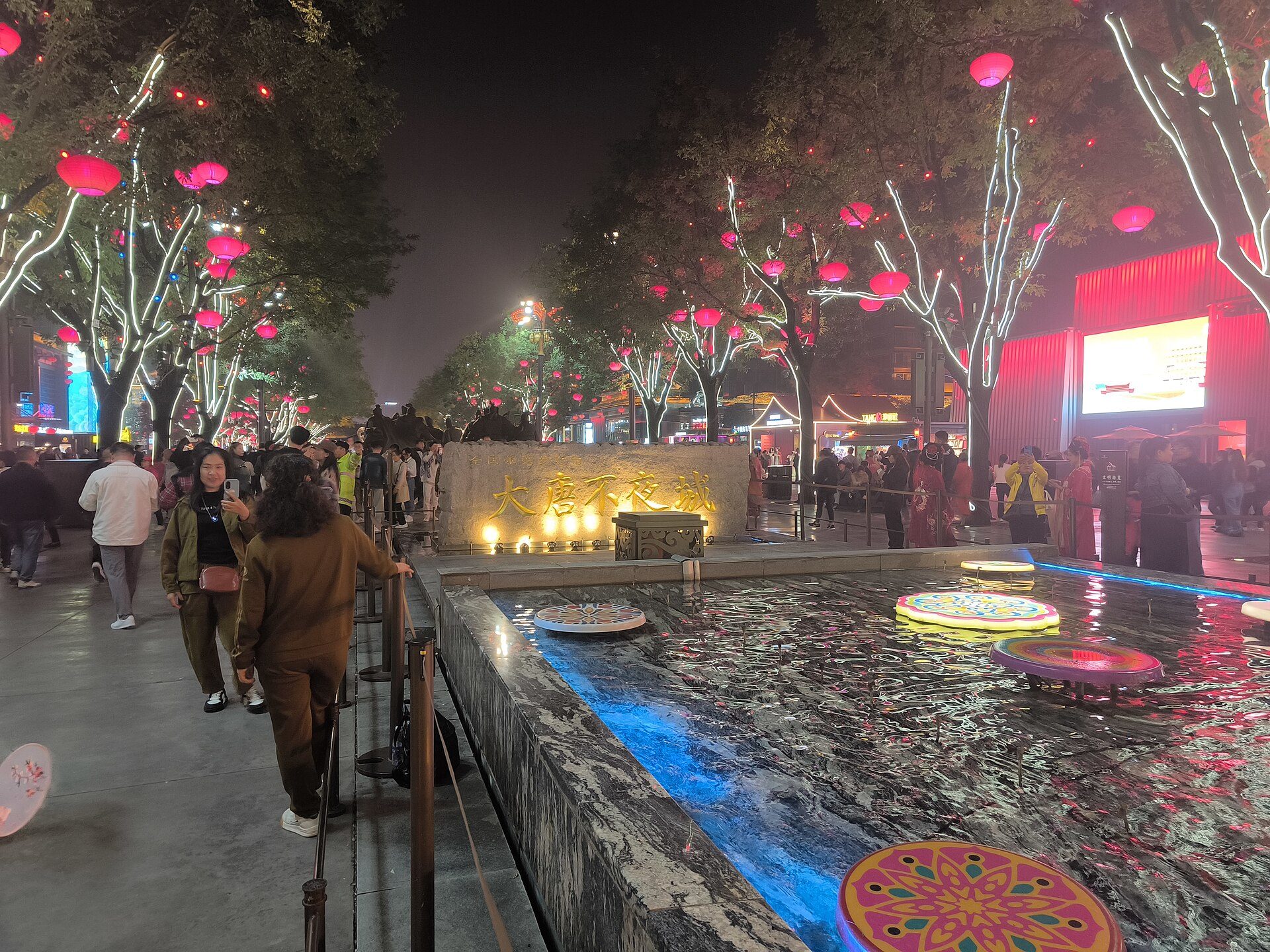
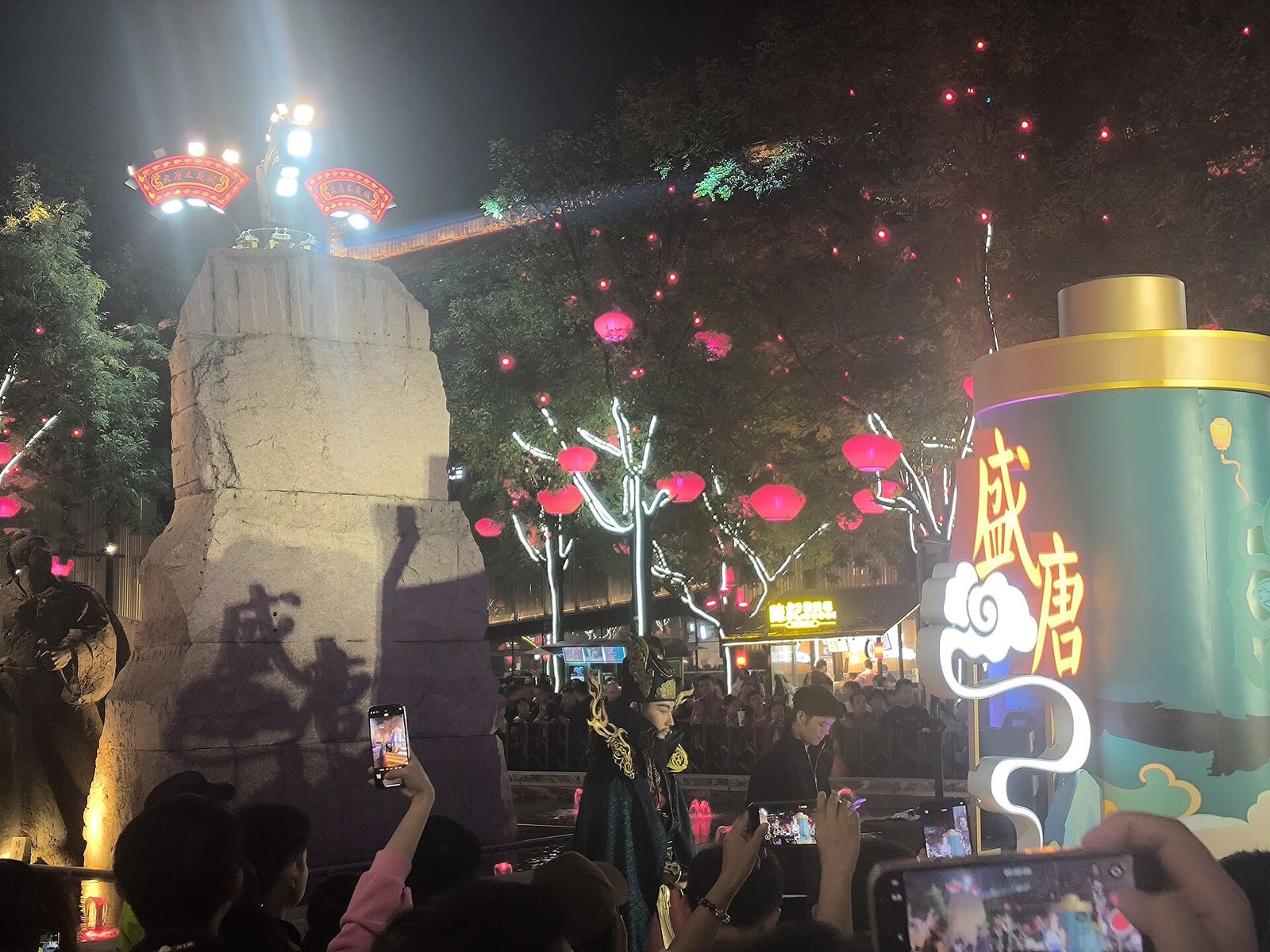
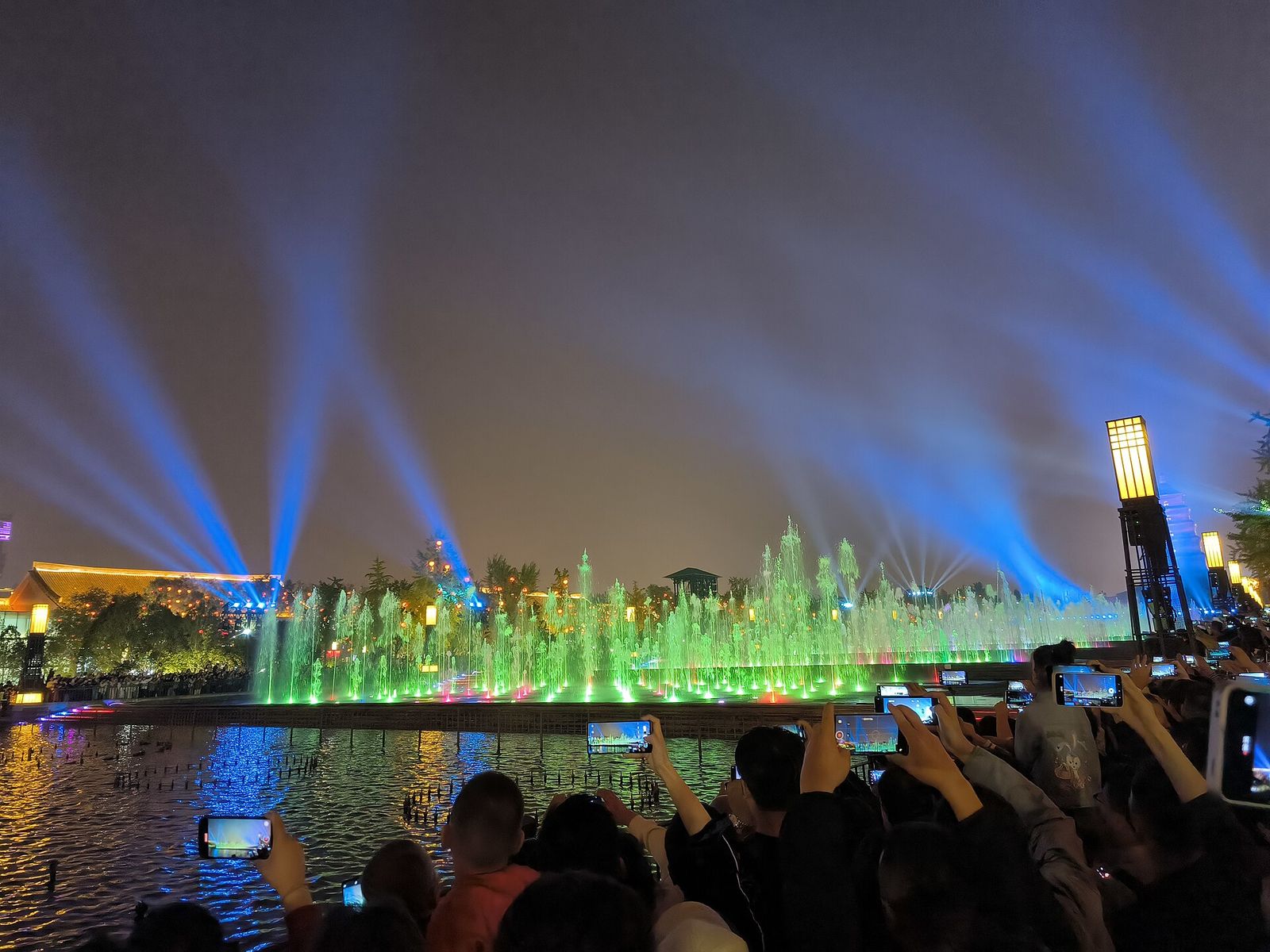
Pair it with the street outside. The Datang Everbright City pedestrian mall is a ten-minute walk and free; the venue closes at 22:00, the street does not. Doing the indoor block in the afternoon and the outdoor street after dark is one continuous evening, and it is what locals do.
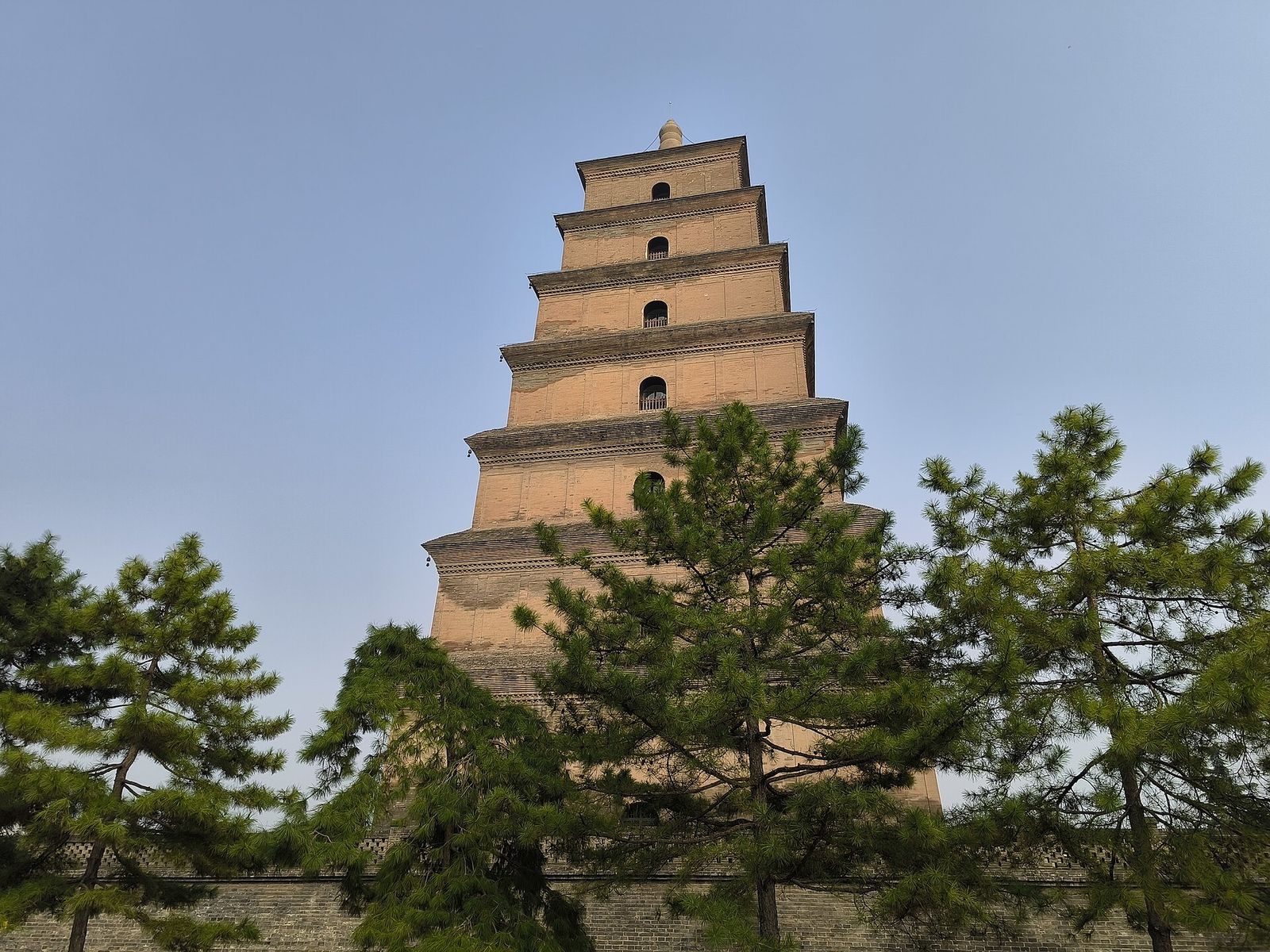
Give the Big Wild Goose Pagoda its own slot. It is one metro stop or a twenty-minute walk away, and it is the actual Tang monument — the contrast with a rebuilt street is the point of the day.
Some links in this section are affiliate links — we may earn a commission if you book through them, at no extra cost to you. Affiliate disclosure.
What's worth booking ahead
The game's session times. Published for summer, adjusted for winter. Two slots a day is not many, and the 18:00 one is the popular one.
Whether you want the hanfu bundle. Costume packages sell out earlier than gate tickets on weekends.
Your visa category. Visa-free entry, 240-hour transit and regional schemes have separate country lists, and the lists move.
The second phase. Still under construction; anything you read about a much larger site is describing the plan, not the ticket.
👉 Check Xi'an day tours, Tang dynasty experiences and guides
Image sources: the feature photograph and the three inline photographs are from Wikimedia Commons under CC BY-SA 4.0 and CC BY 4.0, taken in Xi'an by 源義信 and credited in the alt text; all four are real photographs of the quarter around the venue, and none claims to show its interior. Ticket tiers, session times and visa rules change — confirm in the venue's official mini-programme and with the National Immigration Administration before you travel. Last verified 26 November 2026.