Yu Garden or the Bazaar? The Shanghai Spot Where "Free" and "Ticketed" Are Two Different Places
Status check (verified 2026-10-23): the ticketed Yu Garden and the free Yuyuan bazaar are two adjacent but separate places. The garden charges around ¥30–40 and closes in the early evening; the bazaar around the Nine-Turn Bridge is free and open all day. Do not pay anyone at the bazaar gate who offers you an "internal channel" into the garden — there is no such thing.
On this page
- The two places, side by side
- Why it matters right now
- What you actually see, and what you might miss
- A practical first-timer's morning
- Getting there
- FAQ
- Is Yu Garden free?
- How much is the Yu Garden ticket?
- What are the Yu Garden opening hours?
- Do I need a guide?
- How long do I need?
- Is Yu Garden worth it for a first-timer?
A lot of first-time visitors to Shanghai ask one question the moment they arrive: "Is Yu Garden free?" The honest answer is two answers at once, because the name covers two places that most English guides blur into one.
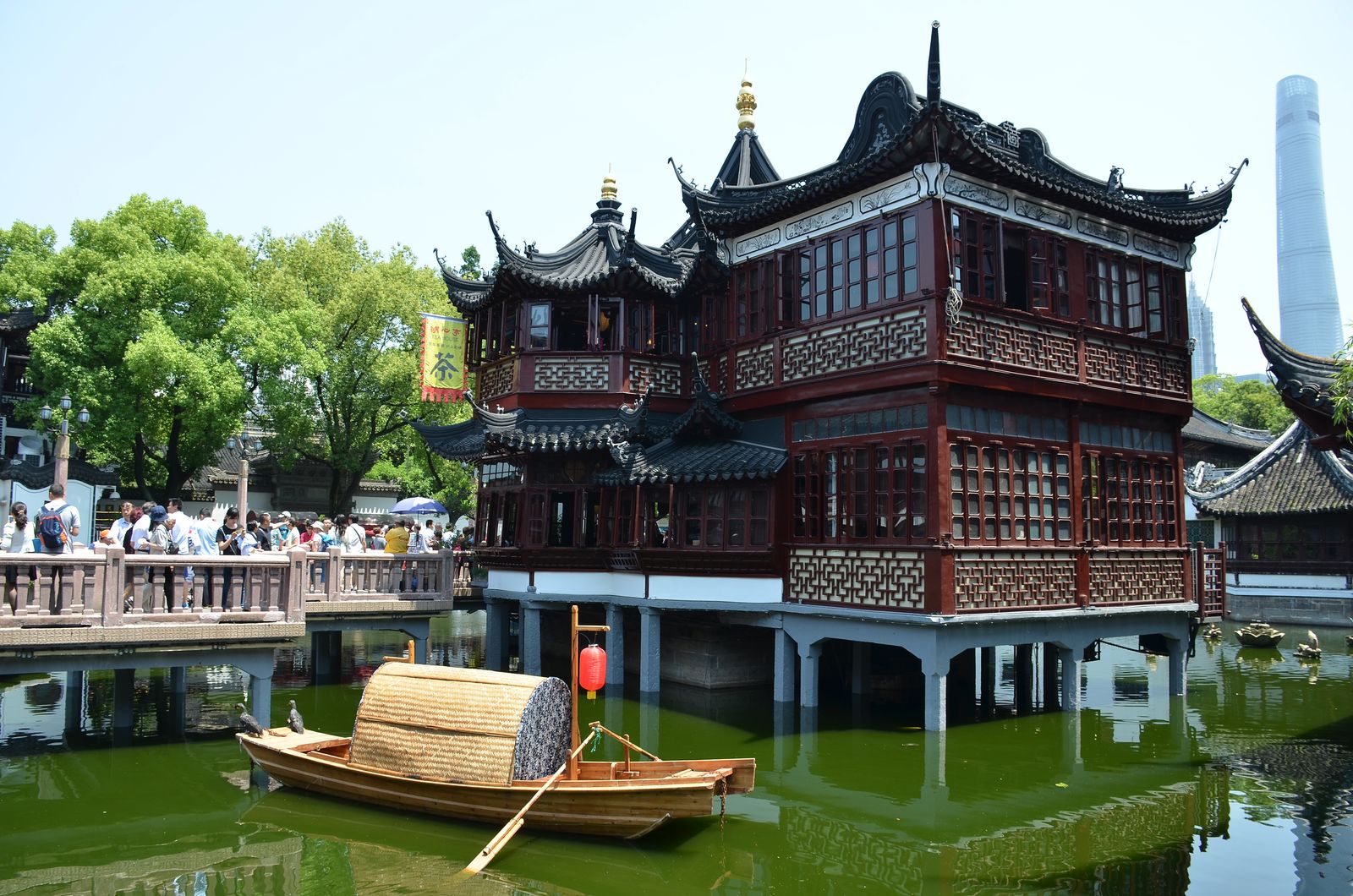
Yu Garden — the Ming-dynasty classical garden — is the ticketed one. The Yuyuan bazaar — the rebuilt shopping streets, the Nine-Turn Bridge, the Mid-Lake Pavilion, the snack stalls and the old-brand shops — is free. You can photograph the famous bridge, eat xiaolongbao and leave without spending a yuan on entry. The garden itself is a separate gate, a separate ticket, and a separate kind of visit.
The two places, side by side
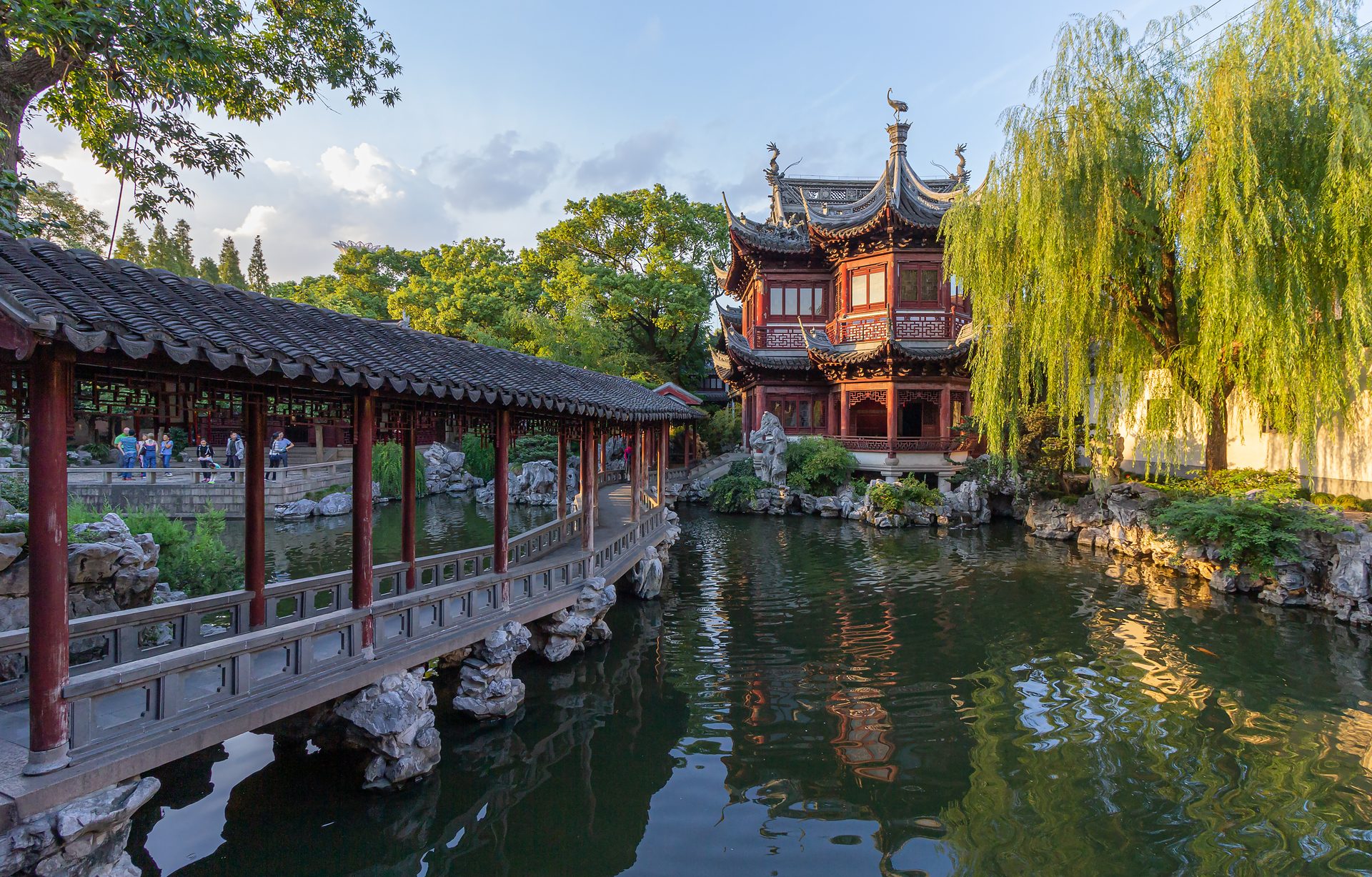
Yu Garden is a Ming classical garden begun in 1559 by a Ming official, Pan Yunduan, who built it for his ageing father — the name's "yu" comes from a phrase meaning "to bring joy to one's parents." It is one of the "Four Famous Gardens of the Jiangnan region," about two hectares of halls, courtyards, ponds and rockeries. The entry ticket is roughly ¥40 in high season and ¥30 in low season (confirm the day's price at the gate), and it opens around 8:30, closing around 17:30 in low season and 18:00 in high season. The nearest metro is Yu Garden on Line 10, about a ten-minute walk.
The bazaar is everything outside the garden's paid gate: the Nine-Turn Bridge (Jiuqu Qiao), the Mid-Lake Pavilion (Huxinting) — one of the city's most photographed tea houses — the food stalls and the long-running Chinese-medicine and craft shops. It is free, it stays open all day, and this is where most of the "Chinese-style" photo studios and dressing-up shoots that fill foreigners' feeds actually happen, not inside the garden.
One line to remember: to see the halls, rockeries and ponds, buy a ticket; to walk the bridge and eat dumplings, spend nothing.
Why it matters right now
Shanghai's inbound numbers make the context plain. In the first three quarters of 2026, Shanghai's border inspection cleared 4.68 million inbound foreign visitors, up 20.7% year on year, with visa-free arrivals over 3 million — 64.5% of the total. That is a lot of first-time visitors arriving at the same question.
And what they want has shifted. A CCTV report on 22 October described the change directly: foreign visitors to China are moving from "seeing the sights and tasting the food" toward hands-on, immersive experiences — and Yu Garden is held up as the example. At the Gold Square in the bazaar, visitors now line up for "pai ba xu," a traditional wellness practice where an instructor guides you through tapping specific points — armpits, elbows, groin — with a mugwort hammer; in the old Chinese-medicine shops they grind spice blends and make their own scented sachets; and several of the Chinese-style photo studios report foreign customers are now more than half of their business.
For a foreign visitor, Yu Garden is no longer "look at an old garden." It has become the doorway into doing Chinese life rather than just photographing it.
What you actually see, and what you might miss
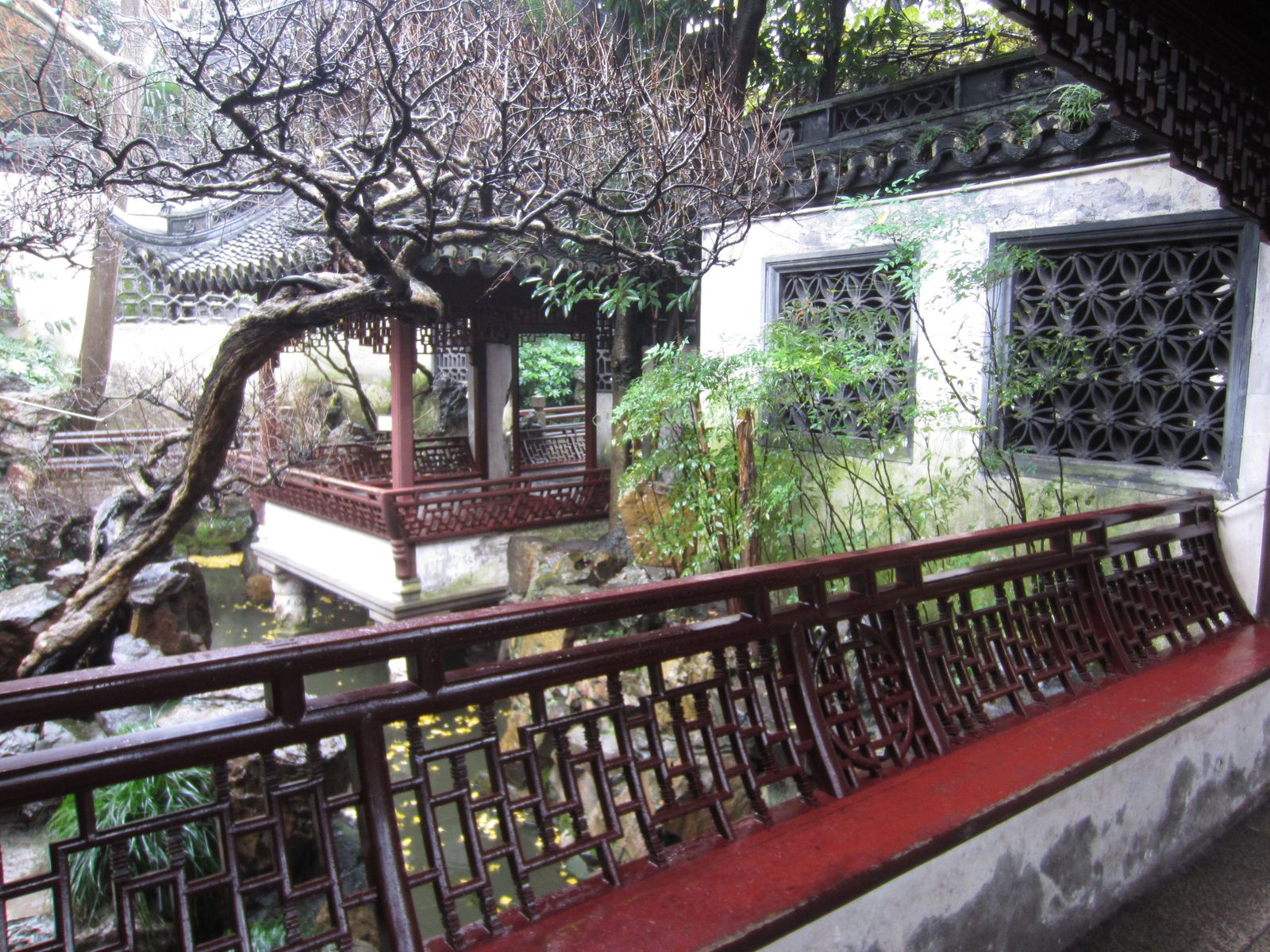
Inside the garden the highlights are the Sansui Hall (the main hall), the Yangshan Hall — the classic spot for the full view of the garden — and the Great Rockery, one of the largest in the Jiangnan gardens. The Dianchun Hall carries a layer of history as the site associated with the Small Swords Society uprising of the 1850s. Most interpretation signs inside are in Chinese, so if you want the history rather than just the scenery, book an English-speaking guide rather than walking it alone.
Outside, in the bazaar, the City God Temple (Chenghuang Miao) commercial district is right next door and merges with the same streets. That is where the crowds, the food and the dressing-up photo studios concentrate.
A practical first-timer's morning
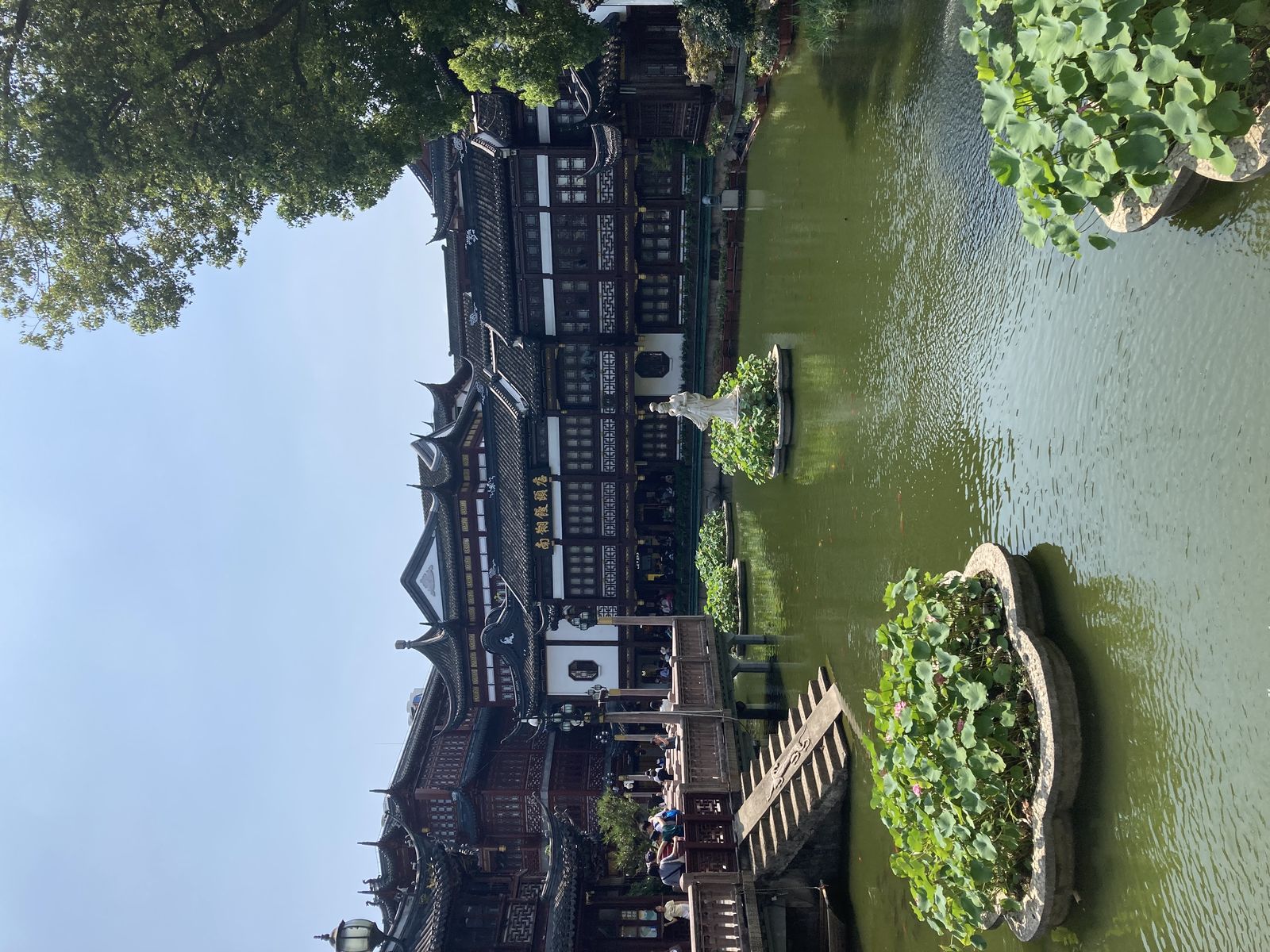
Go early. The crowds are thinnest first thing, and the light on the bridge and the white walls is best before midday. Avoid weekend afternoons and national holidays, when the area becomes shoulder-to-shoulder.
Give it one to two hours for the garden, and half a day if you add eating and wandering the bazaar. The garden is compact — you are not hiking.
On money and scams. The Nine-Turn Bridge and Mid-Lake Pavilion zone is the tourist heart, and the snacks around it are priced accordingly. Step a few streets outward and prices drop. If someone outside the garden offers a paid "internal channel" or a "skip-the-line" shortcut, it is a routine hustle — the only legitimate entry is the official ticket window.
On language. The bazaar and surrounding shops have moved from bilingual to multilingual service, and most vendors manage basic English or a translation app. The garden's signage is the exception, which is exactly why a guide earns its fee here.
Getting there
Yu Garden is in the old city of Shanghai, in Huangpu district, at 168 Fuyou Road. The simplest route is metro Line 10 to Yu Garden station, then a ten-minute walk. It pairs naturally with the Bund (a short taxi or metro ride away) and the South Bund fabric market if you are planning custom tailoring on the same day.
FAQ
Is Yu Garden free?
Not the garden itself. The ticketed Ming garden charges about ¥30–40. The surrounding Yuyuan bazaar — the Nine-Turn Bridge, Mid-Lake Pavilion and the shopping streets — is free and open all day. People routinely confuse the two.
How much is the Yu Garden ticket?
Roughly ¥40 in high season and ¥30 in low season. Confirm the day's price at the official ticket window; figures change.
What are the Yu Garden opening hours?
Around 8:30 to 17:30 in low season and 8:30 to 18:00 in high season. The bazaar has no fixed closing time.
Do I need a guide?
Not to enjoy it, but if you want the history — and not just photos of a pretty garden — yes. The interior signage is mostly Chinese, and an English-speaking guide turns the halls from scenery into a story.
How long do I need?
One to two hours inside the garden, half a day with the bazaar. Go early to beat both the crowds and the heat.
Is Yu Garden worth it for a first-timer?
Yes — if you go expecting an experience rather than a photo stop. It is a classical garden and a living Chinese-life bazaar in one visit. If you only want the famous bridge photo, the free bazaar gives you that without a ticket.