Xuan'en, Hubei: Four Sights, Four Ticket Prices, One 4.6× Surge
Status check (verified 2026-10-29): Shiziguan (狮子关) has not been selling its full-route ticket since 4 August 2026. Because of water levels the scenic area runs a half route only and charges ¥30, paid on site. The ¥120 gate price and the ¥110 online price you will still find on travel platforms describe the old full route. Every other price in this article is the current published one.
On this page
- What the numbers say
- The four sights, and what each ticket buys
- Shiziguan: the ¥30 ticket is the whole story
- Pengjiazhai: the village that is a national relic
- Wujiatai: the free one
- Yaotianyan: the ¥150 question
- The county town at night
- Getting there
- Getting around
- Where to sleep and eat
- Two things to be honest about
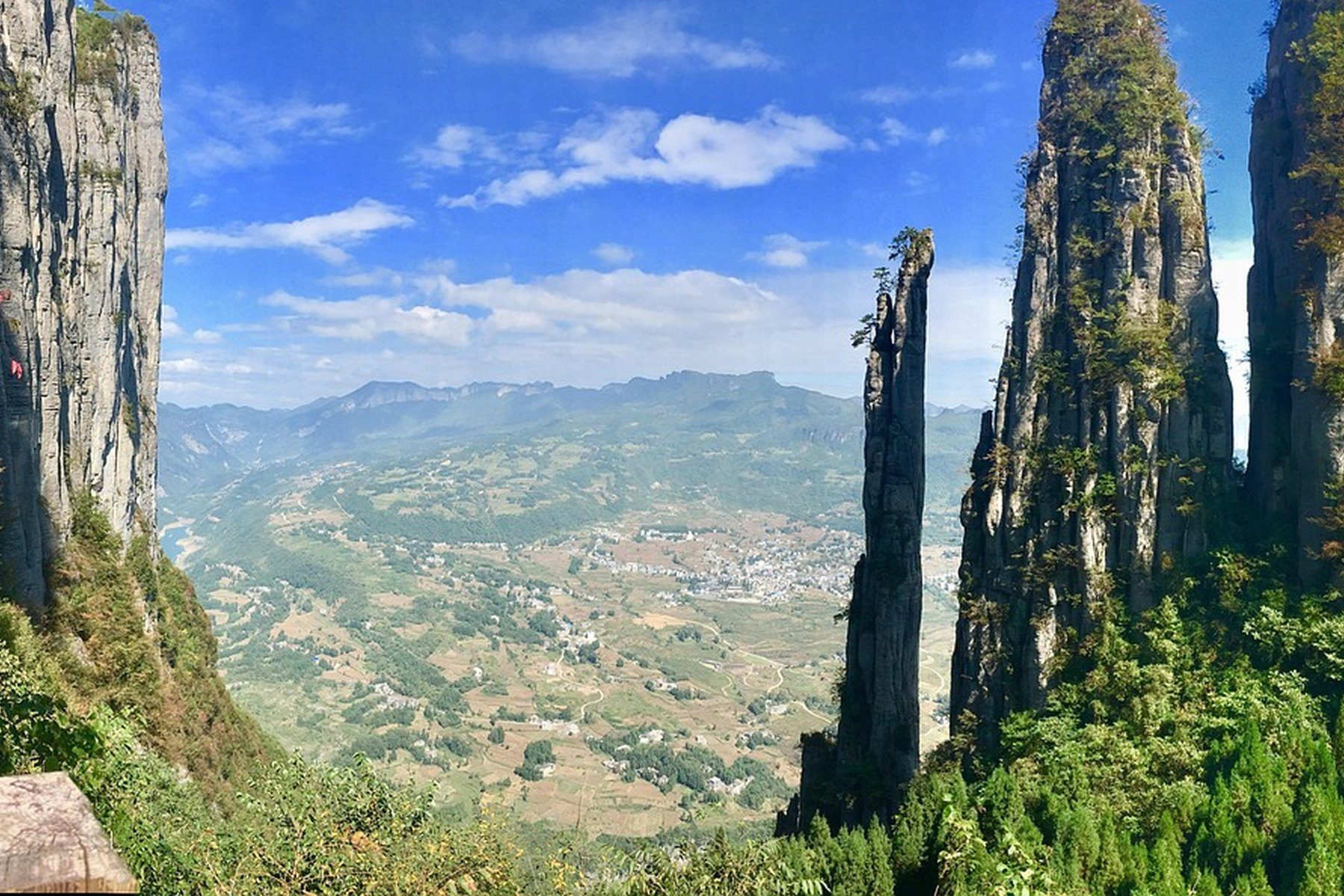
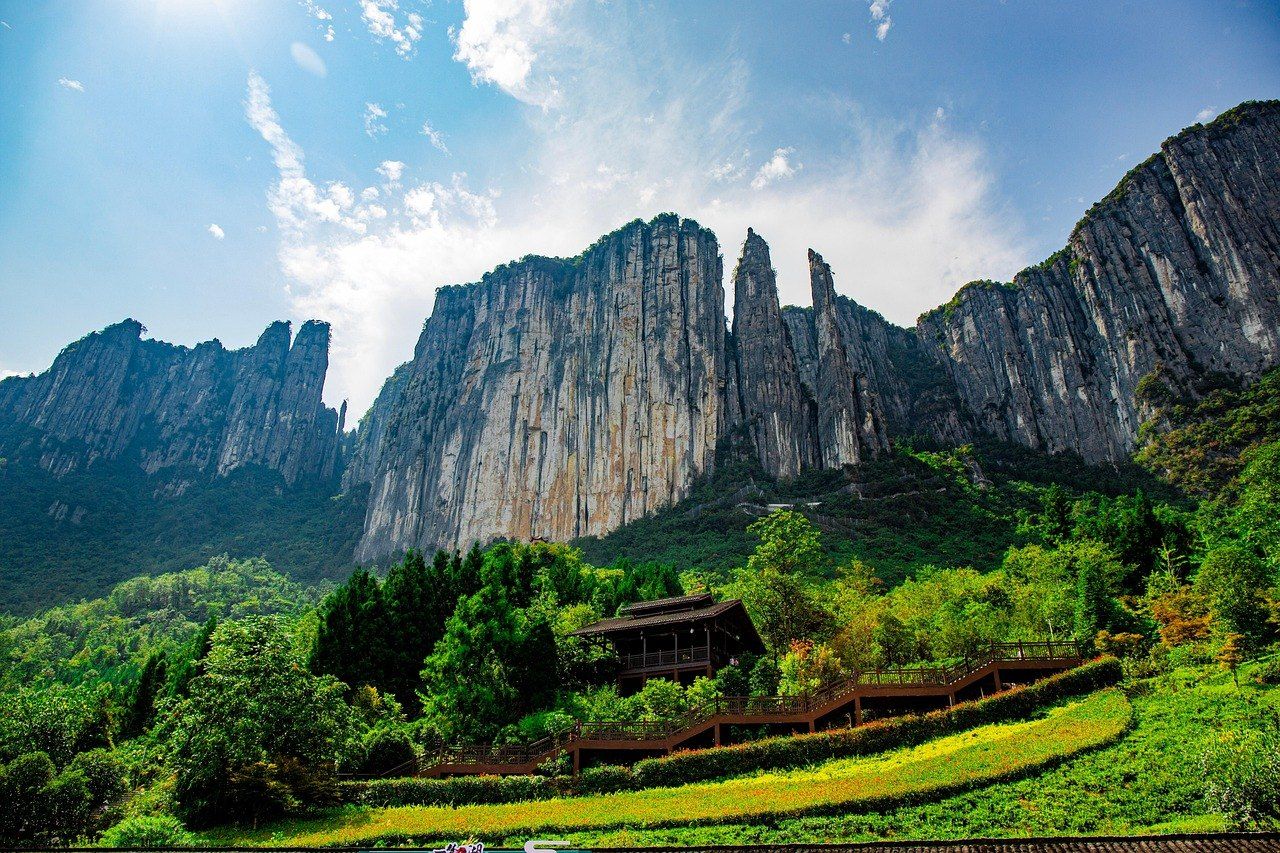
Xuan'en is a county in Enshi Tujia and Miao Autonomous Prefecture, in the far west of Hubei — the part of the province that looks like a different province: karst gorges, rivers running green, and villages built of dark timber on slopes too steep to farm properly. It has one 4A-rated scenic area that is simply the county town itself, plus three sights in the countryside around it.
It also has a number that most foreign travellers have never heard and that Chinese travel media found last week: 4,096 inbound visitors in September and October, against 732 in the same two months last year. That is a 4.6-fold increase, in a county of about 350,000 people.
What the numbers say
The county's year-to-date figure is 10,100 inbound visitors, up 32%. The autumn jump is what changed the picture, and the source breakdown tells you more than the total:
| Origin | Visitors (Sep–Oct) | Share |
|---|---|---|
| Hong Kong | 2,152 | 52.5% |
| Thailand | 1,356 | 33.1% |
| Malaysia | 246 | — |
| Taiwan | 215 | — |
| Singapore | 58 | — |
Hong Kong and Thailand together are 85.6% of it. A further 6,000-plus inbound visitors are booked to arrive in batches.
That composition matters if you are deciding whether to go. This is not a place that filled up because English-language travel media discovered it; it filled up because two nearby, price-sensitive markets that like mountains and rivers put it on a coach itinerary. The practical consequence runs the other way from the usual overcrowding story: the scenery is now shared with tour groups, but the English-language signage and foreign-language guiding have not caught up. Chinese visitors are fine. Anyone relying on English should carry the ticket prices and opening hours written down before arriving.
The four sights, and what each ticket buys
| Sight | Price | What you are paying for | Hours |
|---|---|---|---|
| Wujiatai tea terraces (伍家台) | Free | 10,000 mu of tea hills, imperial tribute-tea origin, best photographs | Daytime; tea-picking extra |
| Pengjiazhai (彭家寨) | ¥95 (child/senior ≈¥45) | A 200-year-old Tujia stilted-house village, national key cultural relic | 08:30–17:00 (17:30 weekends), last tickets 16:30 |
| Shiziguan (狮子关) | ¥30, on site | Half route only since 4 Aug 2026; the floating bridge | 08:00–17:30, last entry 17:30 |
| Yaotianyan (矅天眼) | ≈¥80 base; ≈¥150 with the lift | A 290 m sinkhole with a waterfall inside | Daytime |
The four tickets differ by a factor of four and buy four completely different experiences. Two of them — the free one and the ¥30 one — are cheap for reasons that have nothing to do with quality.
Shiziguan: the ¥30 ticket is the whole story
This is the one detail worth reading twice. Shiziguan's published gate price is ¥120, and online platforms sell it at ¥110. Both describe the full route, which has not operated since 4 August 2026, when water levels forced the scenic area onto a half route. The ticket became ¥30 and is issued on site, not through the platforms.
So a package you buy online at ¥110 today is either an old listing or a reseller selling a product that no longer matches what you get at the gate. Buy at the gate, pay ¥30, and expect a shorter walk than the photos suggest.
The floating bridge is the reason most people come. Driving it has vehicle-type and speed restrictions, and those change with conditions — the scenic area posts them day by day. If you would rather not deal with that, the viewing platform gives you the same view of the bridge without the car.
Pengjiazhai: the village that is a national relic
Pengjiazhai sits in Shadaogou township, and it is not a rebuilt attraction. The stilted timber houses are more than 200 years old, built into the slope above the water, and the settlement is listed in the seventh batch of national key cultural relics — the Chinese designation that puts a site under state protection rather than under a tourism company's renovation budget.
What that means on the ground: you walk through an inhabited village, not a set. The hand-waving dance and wedding-custom performances are free to watch and are staged inside the village rather than in a theatre. Weekday closing is 08:30–17:00, weekends 17:30, last tickets at 16:30 — the 16:30 cut-off is the one that catches people who arrive after lunch.
Wujiatai: the free one
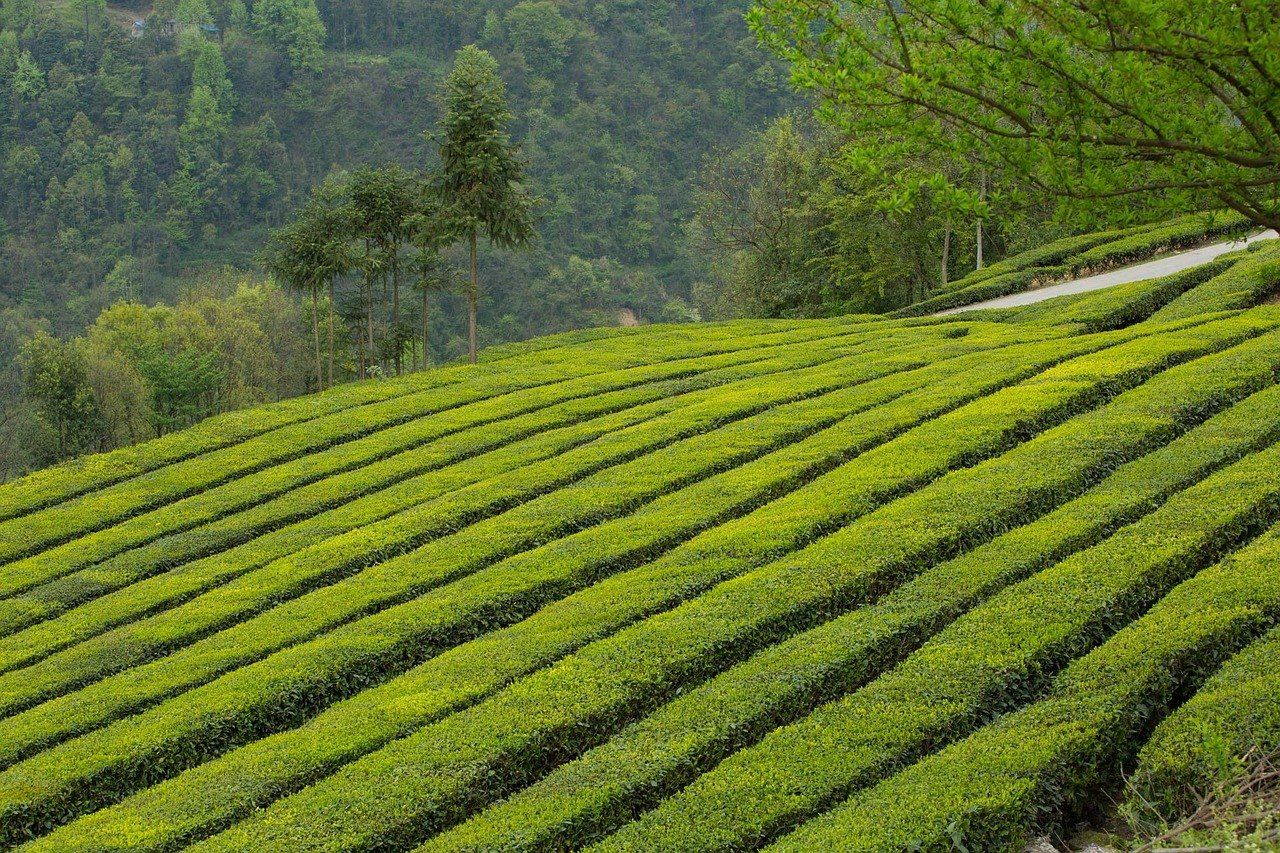
Wujiatai is the county's tea country: terraces across a hillside, the origin of a tea that was sent to the Qianlong court as tribute, and the only one of the four sights that costs nothing to enter. Tea-picking and processing are charged separately.
The Long'en Pavilion overlooks the whole slope and is where the photographs come from. Autumn adds ginkgo to the green. If you have half a day left and no appetite for another ticket, this is where it goes.
Yaotianyan: the ¥150 question
Yaotianyan is a sinkhole about 290 m deep with a waterfall inside it. The base ticket is roughly ¥80; the package with the sightseeing lift is roughly ¥150.
The ¥70 difference is not a comfort upgrade, it is a decision about whether you can walk out. The lift exists because the descent and the climb back are the hard part. If your fitness is average, the package is the realistic option; the people who regret the cheap ticket are the ones at the bottom looking up.
The county town at night
The county seat, Xianshan Gongshui, is itself a 4A-rated scenic area, and its main event is after dark. The Moda Tower and Wenlan Bridge are lit, and on the Gongshui River a chain of bamboo rafts runs as a single lit dragon — about ¥90 per person. The musical fountain on the river is free, 19:00–22:00.
This is the part most visitors remember, and it costs nothing if you skip the raft. Staying in the town rather than out by a scenic area is what makes it possible: the walk from a riverside hotel to the lit bridge is the whole point.
Getting there
- By high-speed rail: the nearest station is Enshi. From the station, the bus to Xuan'en county town is about ¥26 and takes 1.5 hours; a shared car is about ¥30 and takes 1 hour.
- By air: fly into Enshi Xujiaping Airport, then transfer by road.
- By car: about 45 km and 50 minutes from Enshi city; about 4.5 hours from Wuhan.
Getting around
Between the four sights, driving time is 30 to 60 minutes each, and there is no convenient public transport. A car or a hired driver is close to mandatory — this single fact decides your itinerary. Trying to string Shiziguan, Pengjiazhai, Wujiatai and Yaotianyan into one day means spending it in the car.
Two days is the number that works: one for the countryside sights, one for the town and the river at night. Budget roughly ¥500–800 per person for two days and one night, excluding travel to Enshi.
Where to sleep and eat
Hotels cluster along the Gongshui River in the county town, which puts the night walk outside your door.
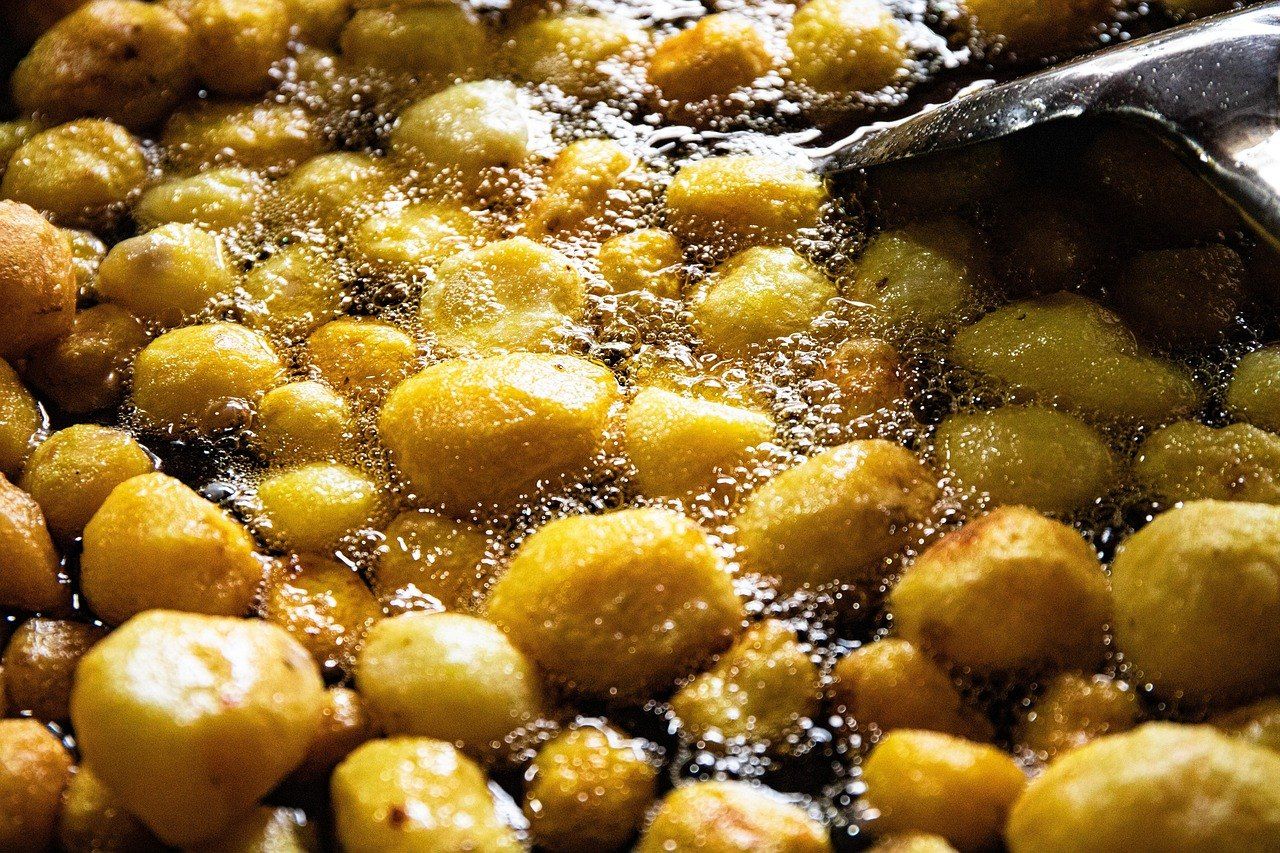
Food is the reason not to eat at the hotel: Xuan'en grilled fish — river fish killed and grilled to order, about ¥40–50 per person — is the local signature. Zhangguan hezha, a ground-soybean dish simmered with minced pork and a county-level intangible heritage item, runs about ¥35 per person. Kang potato, the local breakfast default, is about ¥8.
Two things to be honest about
One: don't treat it as a half-day stop on the way to Enshi Grand Canyon. The four sights are in different townships and the county-town night is a headline act, not a filler. Bolted onto a canyon itinerary it becomes a day of driving.
Two: the foreign-language infrastructure has not caught up with the visitor numbers. With Hong Kong and Thailand supplying 85% of inbound traffic, English signage and guiding are thin, and most inbound visitors arrive on organised coaches with a Chinese-speaking guide. Going independently in Chinese is straightforward; bringing a non-Chinese-speaking friend means writing the ticket prices and cut-off times down in advance.
Prices, opening hours and last-entry times were checked on 2026-10-29 against the scenic areas' published notices and platform listings, and can change without notice — confirm on the day. The inbound-visitor figures are the county's own, reported by International Online on 2026-10-28, not provincial statistics; "inbound" here follows the Chinese statistical convention and includes Hong Kong, Taiwan and Macao residents as well as foreign nationals.